

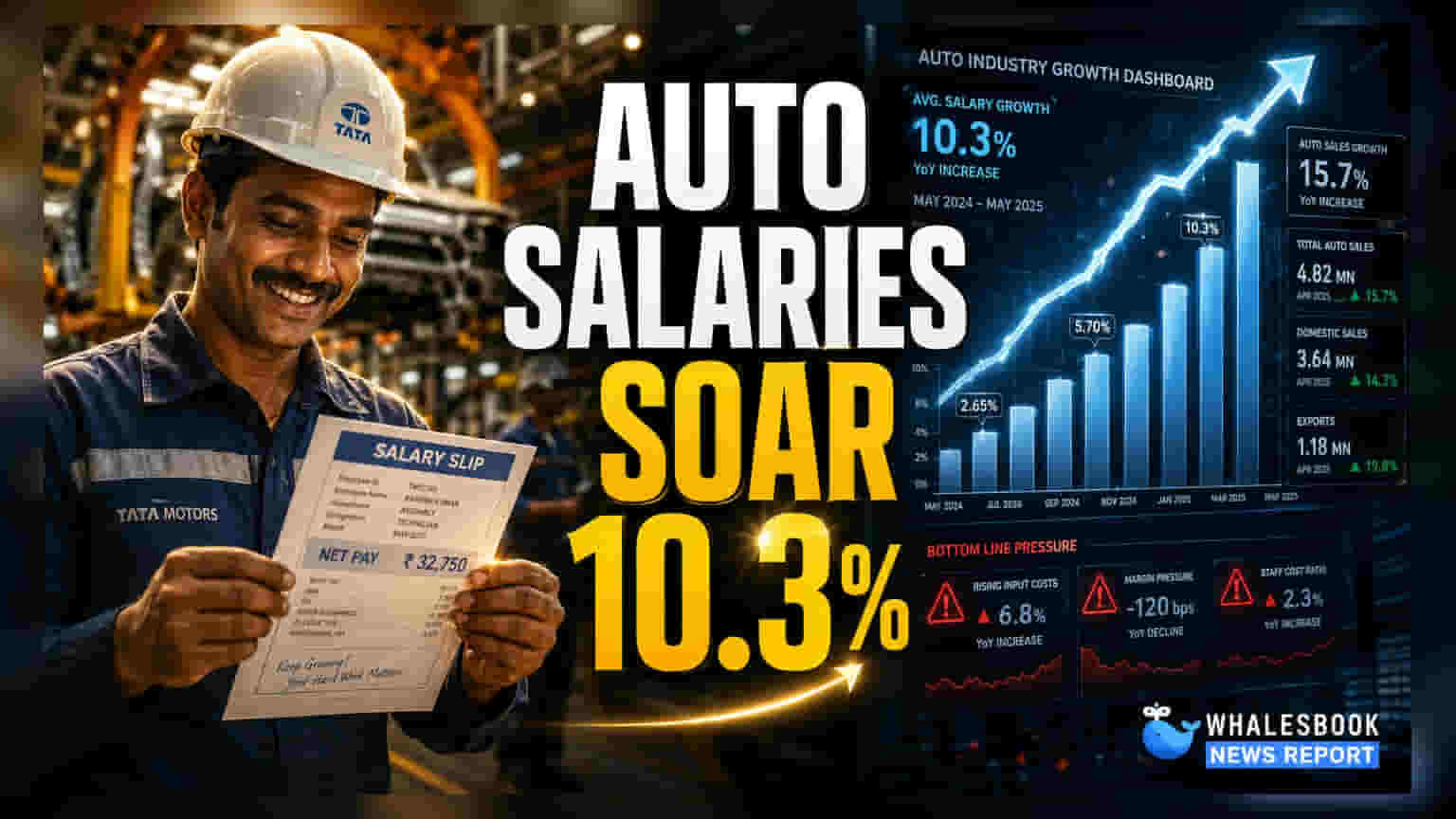
Indian automobile companies are projected to offer average salary increases of 10.3% in 2026, outpacing the 9.1% average for Corporate India. This follows a 12% rise in vehicle sales during fiscal 2026. While the sector remains strong, companies are focusing on performance-based pay to manage rising employee costs amid evolving labor regulations.
What Happened
India's automobile sector is set to provide average salary increments of 10.3% for 2026, marking the fifth straight year of double-digit pay growth for the industry. A recent Deloitte study highlights that these increases exceed the 9.1% average projected for the broader corporate sector. This trend comes after vehicle sales grew by 12% in the fiscal year ended March 31, 2026, supported by recovering rural demand and government-led policies, including Goods and Services Tax (GST) adjustments.
Sales Growth and Compensation Strategies
The consistent pay hikes reflect the strong business performance seen throughout the last fiscal year. Leading manufacturers are balancing the need to retain skilled talent with the goal of protecting profit margins. For instance, JSW Motors is planning salary increases in the 10% to 10.2% range for 2026, an upward move from its previous year's range of 9.5% to 10%, as it gears up for new vehicle launches. Similarly, VE Commercial Vehicles has implemented an average hike of about 10%, though management has noted the importance of monitoring employee-related expenses even as production volumes remain high.
The Performance-Based Shift
While the sector is growing, it is not immune to cost pressures. Companies are increasingly adopting performance-based compensation structures to differentiate between top talent and the broader workforce. Hyundai, for example, is maintaining its pay hike structure in line with the previous year, prioritizing internal performance metrics to reward employees while keeping a close eye on its total cost budget. This cautious approach reflects the broader challenge of managing expenses in a sector sensitive to raw material prices and geopolitical shifts.
Attrition and Talent Retention
In 2025, the automotive industry saw an attrition rate of 12.5%. Industry data suggests this number may stabilize in 2026, as talent mobility is expected to decrease due to the current global geopolitical climate. For investors, the ability of these companies to control turnover costs while maintaining output is a key metric. Reducing attrition is crucial for preserving the long-term productivity and operational efficiency of large-scale manufacturing facilities.
What Investors Should Track
Investors should monitor whether companies can maintain their profit margins as wage bills rise alongside potential fluctuations in commodity prices. The transition toward electric vehicle production, which requires specialized talent, may continue to influence hiring and compensation costs in the coming quarters. Furthermore, any updates regarding new labor codes and their impact on long-term employee benefits will be an important factor for the sector’s financial outlook.