

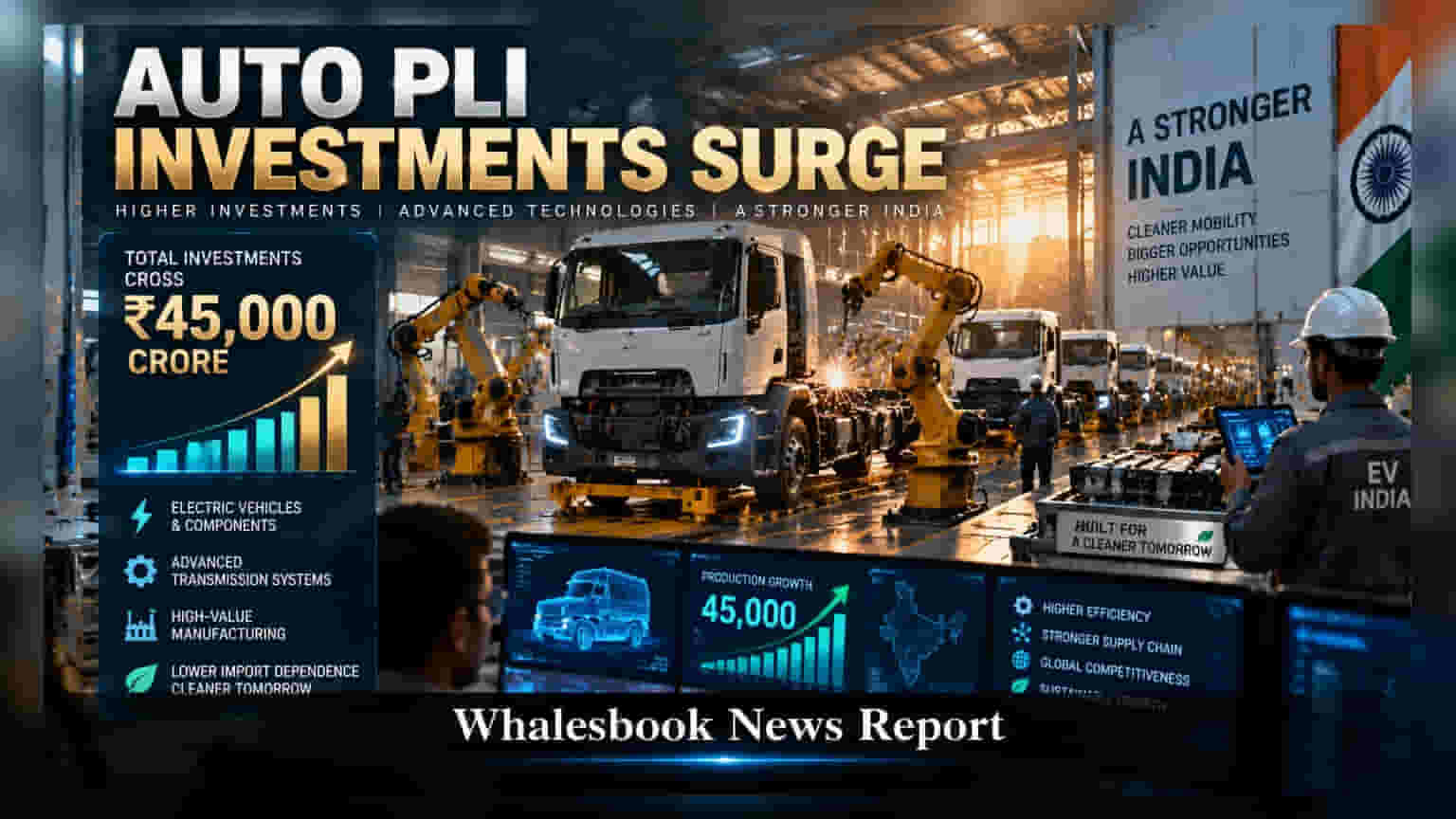
Private investment under India's Auto PLI scheme has crossed Rs 45,000 crore, exceeding the original government incentive outlay of Rs 25,938 crore. The push focuses on electric vehicles and advanced automotive technologies to reduce import reliance. Investors should watch how this capacity expansion impacts profit margins, raw material costs, and long-term demand for auto component manufacturers.
Investments in the Indian automotive sector under the government's Production Linked Incentive (PLI) scheme have now crossed Rs 45,000 crore, according to Union Minister H.D. Kumaraswamy. This investment milestone highlights the private sector's response to the policy, which was originally launched with a government incentive outlay of Rs 25,938 crore in 2021. The program aims to transform the domestic industry from basic vehicle assembly to the production of high-value Advanced Automotive Technologies (AAT).
Shift Toward Advanced Technologies
The capital influx is driving a noticeable shift in manufacturing priorities. Companies are increasingly focusing on technology-heavy areas, including electric vehicle components and advanced transmission systems. This transition is intended to lower the country's dependence on imported parts and crude oil. For investors, this represents a structural change in how auto component manufacturers operate. Rather than focusing solely on traditional internal combustion engine parts, companies are now reallocating resources to align with these new, government-supported technology standards.
Impact on Operational Efficiency
The adoption of electric propulsion, particularly in commercial vehicles like buses and heavy-duty trucks, is changing the cost structure for fleet operators. Lower operational and maintenance costs for electric fleets provide a stronger business case for adoption compared to traditional diesel vehicles. This trend has the potential to boost profitability for logistics and public transport companies over time. However, the overall success of these investments will depend on the sustained demand for these newer technologies and the ability of manufacturers to keep their products priced competitively.
Monitoring Project Execution and Risks
While the rise in investment signals sector expansion, investors should remain cautious about potential risks. Large-scale capacity building carries the risk of cost overruns and delays in project commissioning. Furthermore, the Indian automotive component industry remains heavily dependent on global supply chains for critical raw materials, such as battery minerals. Any disruption in these supply chains or a significant increase in raw material costs could put pressure on profit margins. Additionally, the ability of companies to effectively scale their new facilities and achieve high utilisation rates will be a key factor in determining long-term financial health. The next important step for investors will be to track company-specific updates on project commissioning dates, the impact of these new facilities on operating margins, and how effectively firms manage their debt levels while funding these expansions.