

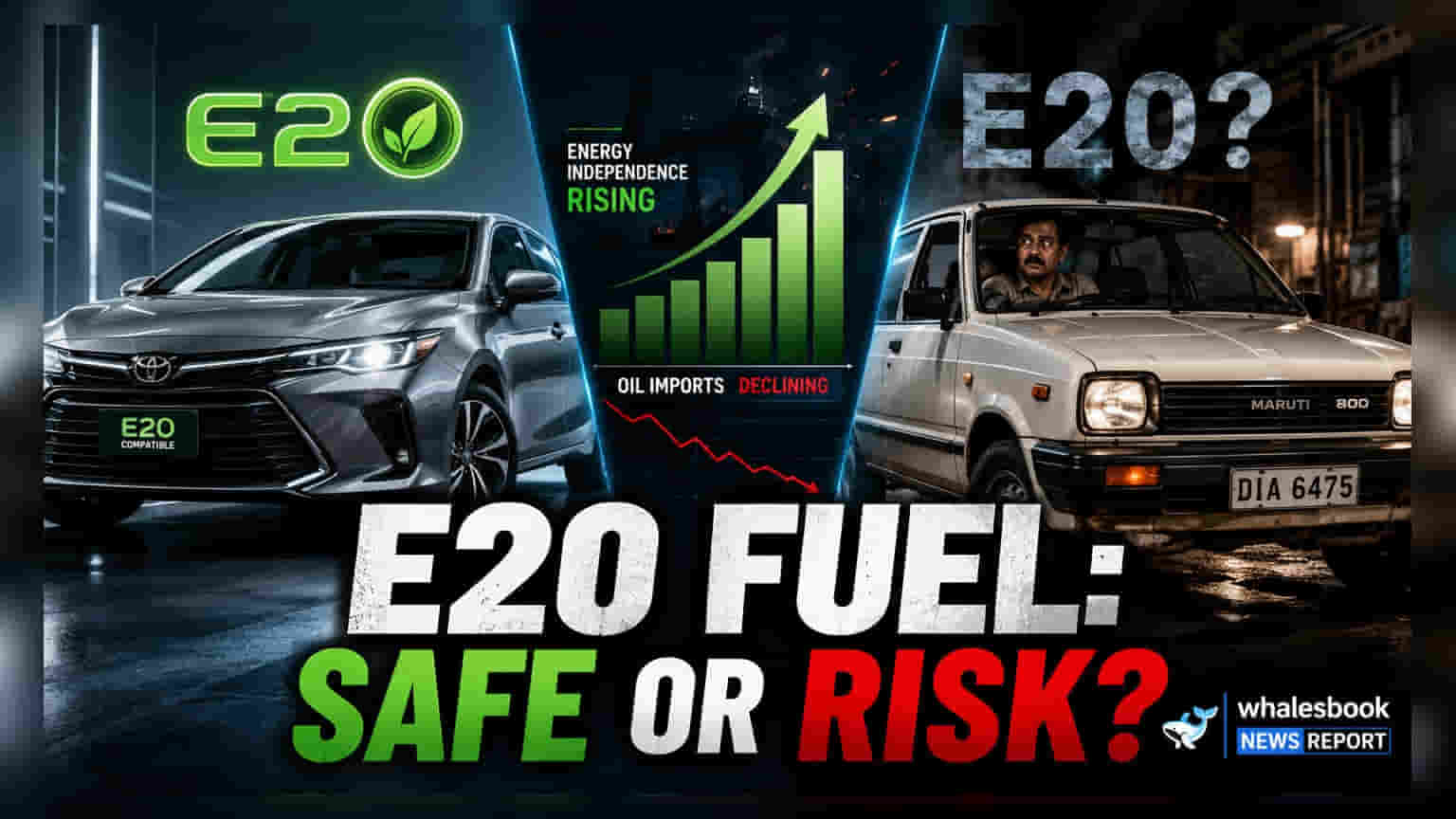
Automakers have confirmed that E20 ethanol-blended petrol is safe for older vehicles, while acknowledging a minor 3-3.5% drop in fuel efficiency. The industry is currently conducting tests for higher E22 and E25 blends as India aims to lower its crude oil import dependence.
What Happened
Leading automobile manufacturers in India have issued a clarification to address concerns regarding the use of E20 fuel—a blend containing 20% ethanol and 80% petrol—in older vehicles. During a recent industry briefing, representatives from major carmakers stated that vehicles manufactured prior to 2023 are capable of handling E20 blends. This move comes as the government pushes for higher ethanol blending to reduce the country’s high expenditure on crude oil imports and promote cleaner energy alternatives.
Impact on Fuel Efficiency
While industry leaders emphasized the safety of the E20 blend, they acknowledged a modest decrease in fuel efficiency. Data discussed by industry insiders suggests a reduction of approximately 3% to 3.5% in mileage. This decrease occurs because ethanol has a lower energy content compared to pure petrol. Automakers maintain that this is a small trade-off for the broader economic and environmental benefits, such as reducing the nation's import bill and supporting the agricultural sector which supplies the ethanol.
Engineering and Future Testing
Manufacturers are already looking toward the next phases of the blending program. With E20 targets reached ahead of schedule, the Automotive Research Association of India (ARAI) is conducting compatibility testing for E22 and E25 blends. Results for these higher concentrations are expected by December. Industry representatives, including those from Maruti Suzuki, noted that vehicles currently on the road often have a higher safety buffer than what is strictly mandated, allowing them to handle slight variations in fuel composition without mechanical damage.
Addressing Market Concerns
Concerns regarding potential engine damage or fuel system issues in older cars have circulated in social media and consumer forums. However, major manufacturers like Hyundai Motor India have stated that they have not observed any significant rise in customer complaints related to fuel compatibility. The industry's position is that the current blending policy is the result of years of testing and is aligned with global practices adopted in countries such as Brazil and the United States.
What Investors Should Track
Investors tracking the automotive and oil marketing sectors should monitor three key areas. First, the outcome of the ARAI testing for E22 and E25 blends, as this will influence future policy and vehicle engineering requirements. Second, any potential shifts in consumer demand patterns if fuel efficiency continues to be a point of friction for buyers. Finally, the margin impact for Oil Marketing Companies (OMCs) as they balance ethanol procurement costs and government-mandated blending targets.