

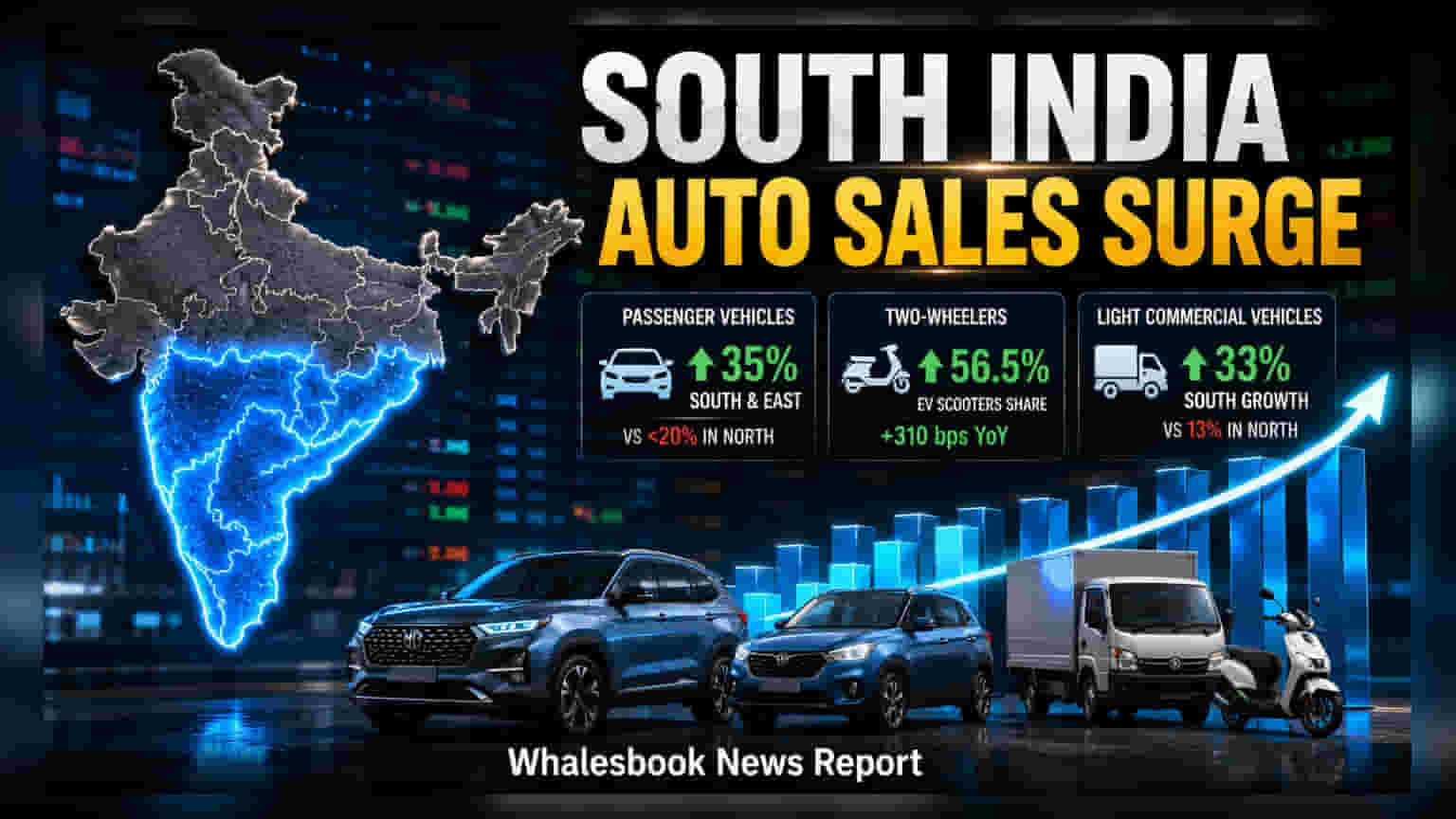
South India led automotive demand in the first quarter of fiscal 2027, significantly outperforming Northern states. Passenger vehicle volumes rose 25% nationally, but the Southern region saw a sharper 35% growth, boosted by high EV adoption and GST adjustments. Investors should note that regional sales concentration may impact company revenue growth in upcoming quarterly results.
The first quarter of the 2027 fiscal year revealed a clear regional divide in India's automotive sector. While national growth remained steady, South India emerged as the strongest market, outpacing Northern states in passenger vehicles, commercial vehicles, and two-wheelers. Data from recent market reports indicates that structural changes, including a rapid shift toward electric scooters and regional economic adjustments, are driving this difference in performance.
In the passenger vehicle segment, national volumes grew by 25% compared to the same period last year. However, the contrast between regions was stark. Southern and Eastern markets posted growth of 35% and 29% respectively, while Northern states, including Delhi, Haryana, and Madhya Pradesh, struggled with growth rates below 20%. This suggests that consumer demand and purchasing power in the South are currently supporting faster adoption of new vehicles.
The two-wheeler market followed a similar trend, showing a 20% national expansion. A key factor in the South is the accelerated move toward electric mobility. In Southern markets, electric scooters now account for 56.5% of total two-wheeler sales, reflecting a 310 basis point increase from the previous year. This rapid adoption suggests that the Southern region has a more robust infrastructure or higher consumer preference for electric alternatives, which is actively boosting volume numbers.
Commercial vehicle sales also highlighted this regional performance gap. Nationally, light commercial vehicles grew by 21%, but the South recorded a surge of 33%. In contrast, Northern regions managed only 13% growth in this category. This difference points to distinct levels of industrial and logistics activity, where Southern markets are seeing higher demand for transportation of goods. Tax revisions following GST adjustments have also acted as a supporting factor for these sales, though the impact varies by geography.
For investors, these regional trends are important. Companies with a higher concentration of their sales network in the South may report stronger volume growth in their upcoming quarterly results compared to those heavily dependent on the Northern market. While demand looks healthy, there are risks to watch. The auto sector is still dealing with pressure from fluctuating raw material costs, which can weigh on profit margins. Additionally, analysts point out that a high growth rate in the previous year creates a tough base for comparison, which might lead to more moderate growth in the future.
Another point for investors to monitor is the health of the component supply chain. There are concerns regarding liquidity and working capital constraints among smaller auto-component suppliers. If these smaller players face funding issues, it could lead to production delays for original equipment manufacturers (OEMs). The sustainability of this demand, especially the pull-forward effects of past policy changes, will also be a key factor in future earnings reports.