 Whalesbook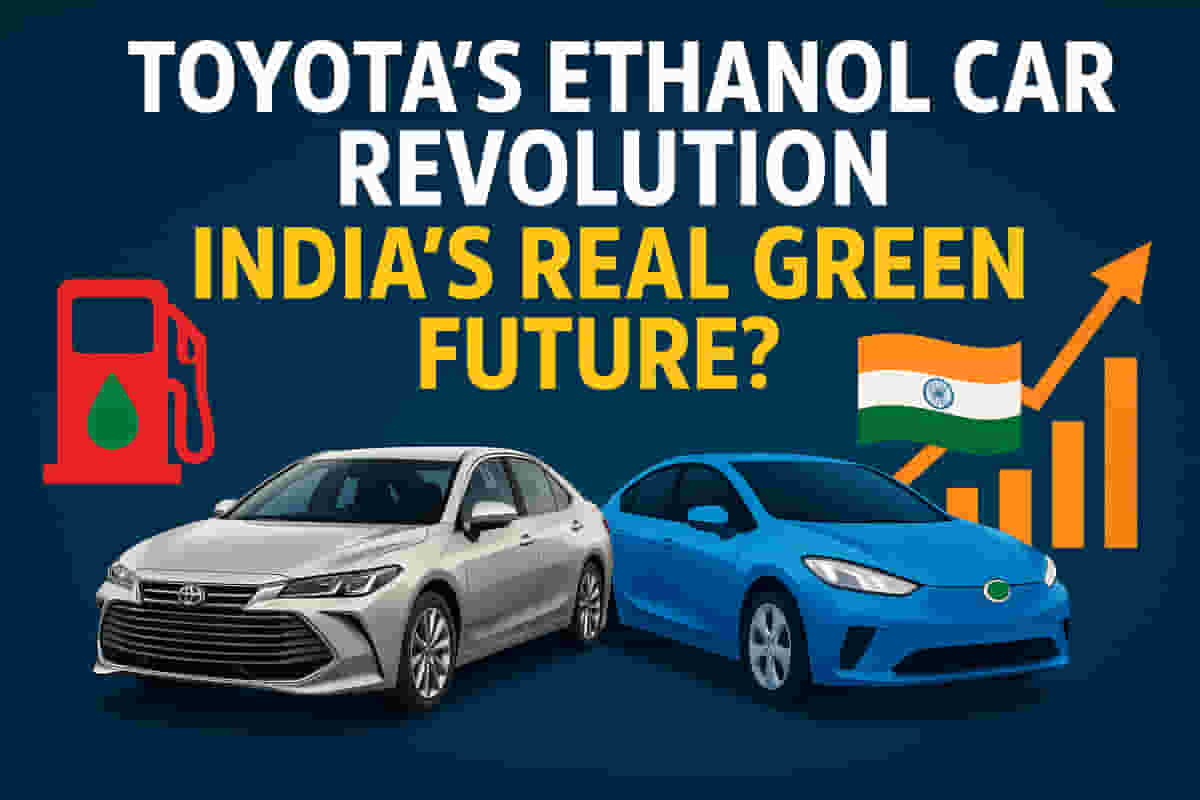
Toyota Kirloskar Motor (TKM) is advocating for flex-fuel vehicles (FFVs) running on higher ethanol blends as India's optimal green mobility solution, challenging the government's primary focus on electric vehicles (EVs). TKM believes FFVs offer a better path to fuel self-reliance and reduced import dependence for the nation.
TKM's Vision: Flex Fuel Vehicles as India's Green Future
- Vikram Gulati, Country Head of TKM, presented the case for FFVs, emphasizing they serve national interest by leveraging India's abundant ethanol production potential.
- He contrasted this with EVs, whose key components like batteries are highly import-dependent, posing supply chain risks and draining foreign exchange.
- FFVs, equipped with modified internal combustion engines, can run on higher ethanol blends, including up to 100% ethanol (E100).
The Economic and Strategic Advantage
- Advancing FFVs would significantly reduce India's dependence on imported crude oil.
- It would also mitigate the supply chain uncertainties associated with imported battery technology for EVs.
- This strategic shift could lead to substantial savings in foreign exchange reserves.
Policy and Taxation Challenges
- Gulati pointed out that India's current policy environment and tax structure do not adequately support the production or sale of FFVs.
- TKM is urging the government to recognize the merits of ethanol-based mobility and implement customer-friendly policies.
- Key demands include lower taxation for FFVs and ensuring that their running costs are on par with conventional petrol vehicles.
Ethanol Industry's Readiness and Support
- Deepak Ballani, Director General of the Indian Sugar and Bio Energy Manufacturers Association (ISMA), highlighted India's substantial excess capacity to produce over 450 crore liters of ethanol annually.
- ISMA suggests policy measures like tax incentives for higher ethanol blend compatible vehicles and differential fuel pricing to stimulate demand.
- They also propose establishing dedicated ethanol pumps for direct dispensing of E100 and implementing carbon credit mechanisms, similar to Brazil's RenovaBio policy.
Context: A Visit to Triveni Engineering & Industries
- The discussion took place during a visit organized by ISMA to Triveni Engineering & Industries' sugar and ethanol manufacturing complex in Uttar Pradesh.
- This visit aimed to showcase the integrated functioning of sugar bio-refineries and their role in India's bio-energy landscape.
Impact
- This advocacy could steer India's future automotive policy, potentially impacting investment in both EV and internal combustion engine technologies.
- Consumers may see a wider array of green mobility options, influencing purchasing decisions and long-term vehicle ownership costs.
- The energy sector could see increased demand for biofuels, affecting traditional oil imports and the renewable energy mix.
- This shift could significantly boost the domestic bio-energy industry, creating jobs and economic opportunities.
- Impact rating: 8
Difficult Terms Explained
- Flex Fuel Vehicles (FFVs): Vehicles equipped with internal combustion engines that can run on different mixtures of gasoline and ethanol, including high blends like E85 or E100.
- Electric Vehicles (EVs): Vehicles that use one or more electric motors for propulsion, powered by electricity stored in rechargeable batteries.
- Ethanol: A type of alcohol produced from plant materials (like sugarcane or corn) that can be used as a biofuel additive to gasoline.
- Internal Combustion Engine (ICE): A type of engine that generates power by burning fuel in chambers, commonly used in traditional vehicles.
- Bio-refinery: An industrial plant that converts biomass (organic matter) into a range of biofuels, chemicals, and energy products.
- Carbon Credits: Tradable permits representing the right to emit a specified amount of carbon dioxide or other greenhouse gases. They incentivize emission reduction.