

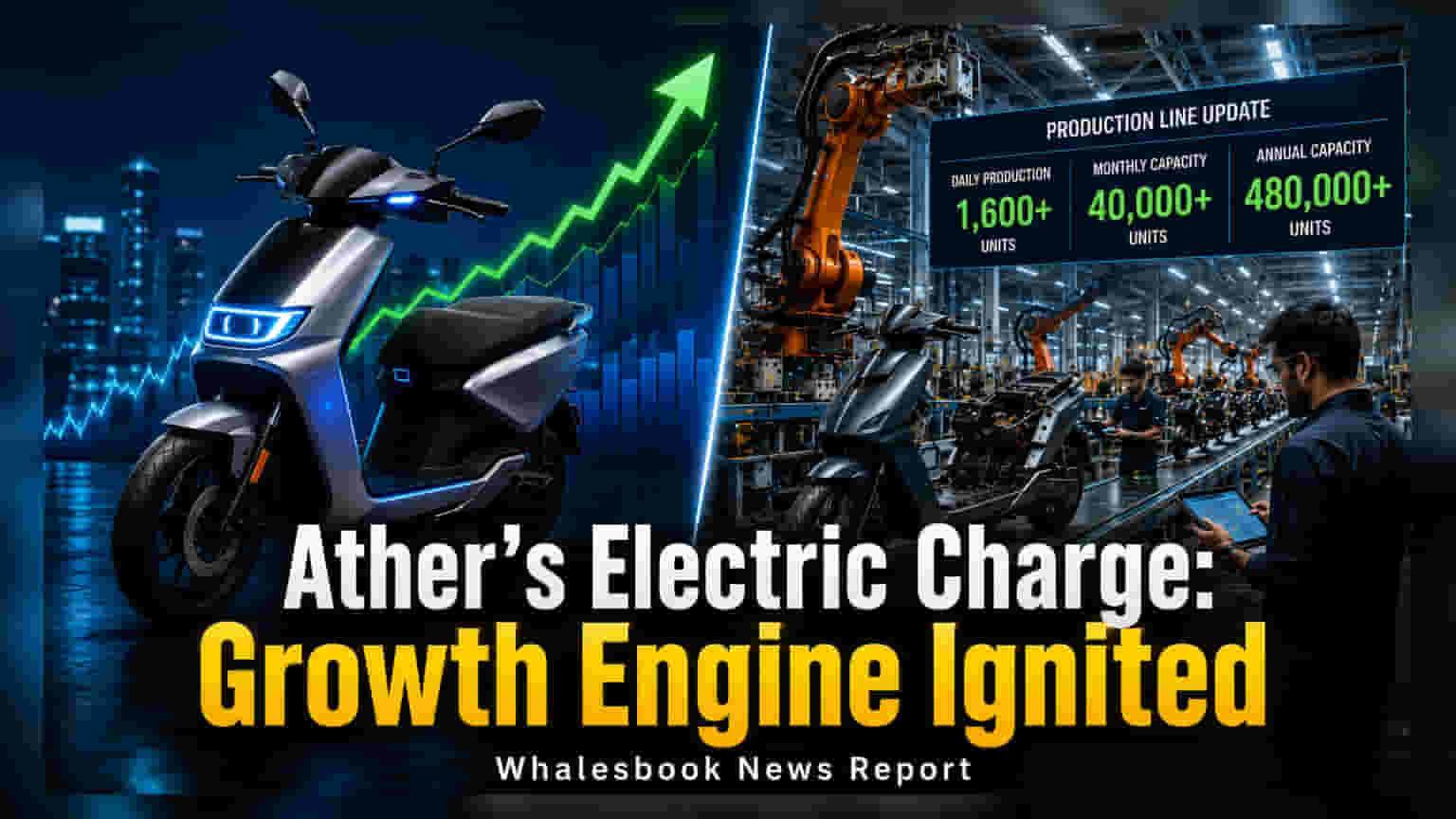
Ather Energy will launch a new electric scooter in Q3 FY27 using its modular EL platform to target the Rs 1-1.25 lakh price segment. The company is also scaling its manufacturing capacity to 14.2 lakh units annually, aiming to improve profitability through higher sales volume and better local component sourcing.
Ather Energy is preparing to enter the mass-market electric scooter segment in the third quarter of the 2027 fiscal year. The company is developing a new modular architecture, known as the EL platform, specifically designed to lower manufacturing costs and support high-volume production. This move is aimed at capturing a larger portion of the Indian electric two-wheeler market, particularly the segment priced between Rs 1 lakh and Rs 1.25 lakh, where consumer demand remains high.
Manufacturing Capacity and Network Growth
To support this growth, Ather is significantly increasing its production footprint. While the existing Hosur facility has already undergone expansion, the company is now establishing a new manufacturing plant in Maharashtra. This additional site is expected to add 10 lakh units to its annual capacity, bringing total production capability to 14.2 lakh units. Beyond manufacturing, the company has built a wide support network, currently operating nearly 700 experience centres and over 6,000 fast-charging stations across the country. These infrastructure investments are intended to simplify the ownership experience for customers and improve brand reach.
Financial Strategy and Market Position
Ather reported sales of approximately 2.63 lakh units in FY26, reflecting its growth from a 3% market share in FY17 to roughly 18% by the end of the last fiscal year. The company is now focusing on improving its profit margins through better unit economics. This involves increasing the localization of parts and growing its revenue from software services and after-sales maintenance. By producing more components locally, Ather aims to manage costs more effectively despite the competitive nature of the electric vehicle industry.
Challenges in the Electric Vehicle Sector
Investors should note that Ather faces specific operational hurdles. Unlike some larger competitors that benefit from the government's Auto PLI (Production Linked Incentive) scheme, Ather operates without this financial support, which can create a cost disadvantage in price-sensitive segments. Furthermore, the company’s business is heavily concentrated in the domestic Indian market with minimal export activity, making it sensitive to local regulatory and demand fluctuations. Future profitability will also depend on the company's ability to navigate potential spikes in commodity prices, which can quickly impact margins for electric vehicle manufacturers. The primary monitorables for investors will be the successful launch and market acceptance of the new EL platform products, the pace of capacity utilization at the new Maharashtra plant, and the company's ability to maintain or expand its market share amid rising competition from both traditional and electric-only manufacturers.