 Whalesbook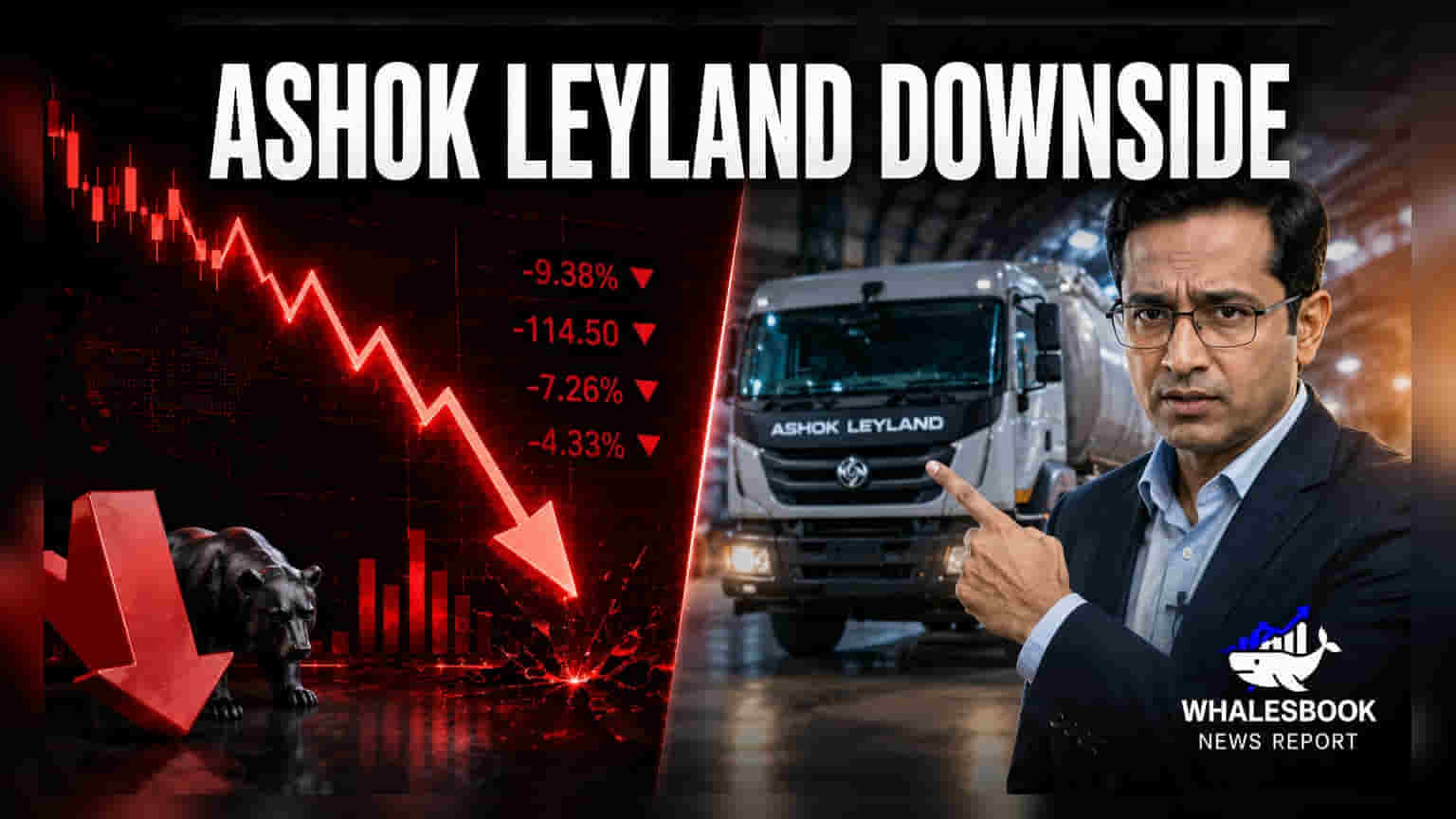


The Valuation Gap
Ashok Leyland is currently navigating a precarious transition phase where strong volume gains in its core medium and heavy commercial vehicle (M&HCV) segments are being countered by macro-economic headwinds. The recent brokerage downgrade reflects a cooling sentiment, as the stock, trading near Rs 150, faces difficulty sustaining the premium valuations seen earlier in the fiscal year. With the price target lowered to Rs 165, market participants are signaling that the company's historical earnings multiple of 20x FY28E may be overly optimistic given the narrowing window for margin expansion.
Analytical Deep Dive: Cyclicality vs. Transition
While the company remains a dominant player, holding a significant share of the Indian commercial vehicle market, the industry is entering a period of high sensitivity. Unlike its leaner competitors, Ashok Leyland’s aggressive capital expenditure on green energy—specifically the development of the Switch Mobility subsidiary—is tying up substantial liquidity. While these investments in electric bus and battery manufacturing are intended to future-proof the business, they are currently weighing on the return on capital employed (ROCE). Investors are also observing a divergence in sector performance, where broader industrial peers are prioritizing debt reduction over speculative tech-heavy spending. The reliance on price hikes of 100-150 basis points to offset commodity inflation is a double-edged sword; while it protects immediate margins, it risks alienating a price-sensitive fleet operator base already grappling with fuel cost hikes.
The Forensic Bear Case
From a risk-averse perspective, the primary concern is the company's structural reliance on debt to fuel its technological pivot. Despite maintaining cash reserves, the total debt burden remains a point of contention for institutional investors monitoring balance sheet resilience. Management's guidance for mid-teen EBITDA margins assumes a seamless navigation of commodity volatility, yet any cooling in infrastructure-led freight demand could quickly expose the company's operating leverage. Furthermore, the firm's expansion into international manufacturing hubs, while geographically diversifying, exposes it to heightened geopolitical risks in the Middle East, a factor that may dampen export growth projections through the remainder of the fiscal year.
The Future Outlook
Forward-looking sentiment remains split between the long-term potential of the government’s infrastructure push and near-term earnings volatility. While an aging truck fleet provides a tailwind for replacement demand, market participants are keeping a close watch on the July 2026 record date for dividend payouts and the ongoing performance of the EV subsidiary. Brokerage consensus suggests that until the company can demonstrate a sustainable, debt-light path to profitability in its green initiatives, the stock is likely to experience range-bound trading rather than a breakout.