 Whalesbook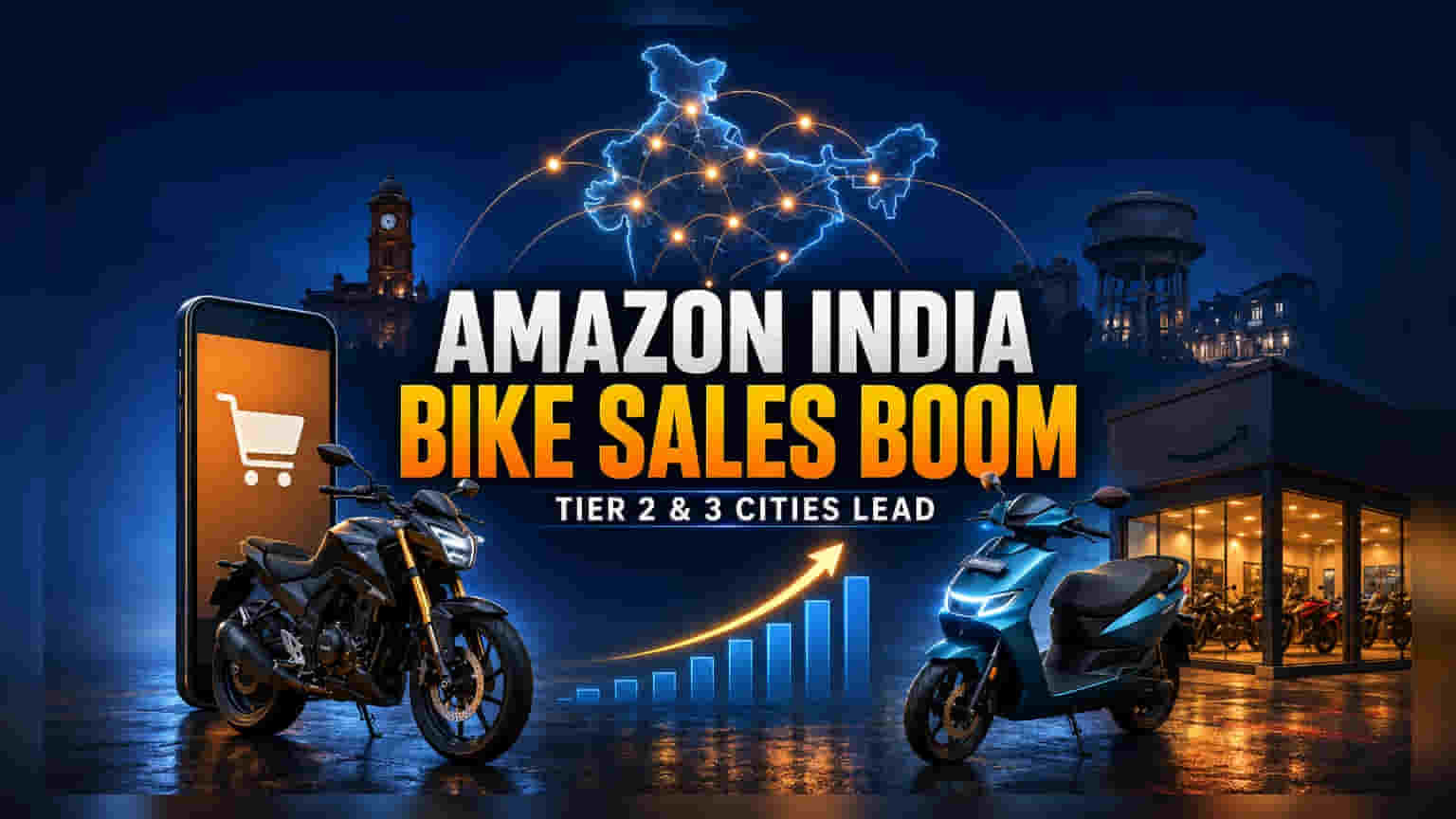


Amazon India’s two-wheeler sales have doubled, fueled by strong demand in tier 2 and 3 cities for premium and electric models. This growth highlights a structural shift in how consumers purchase vehicles, moving from offline-only to a hybrid online-to-offline model. For investors, this trend offers insight into rural consumption patterns and how automotive brands are lowering distribution costs to reach smaller markets without opening physical showrooms.
What Happened
Amazon India has reported a two-fold year-on-year increase in two-wheeler sales, signaling a shift in consumer behavior. The demand is not coming from large metros, but predominantly from tier 2 and 3 cities. Customers in these regions are increasingly using the platform to purchase premium bikes and electric vehicles (EVs) alongside traditional commuter motorcycles. The company now hosts over 20 brands, including major players like Bajaj Auto, Hero MotoCorp, Royal Enfield, Ather Energy, Triumph, and KTM. This sales model functions as an online-to-offline system, where the booking is done digitally, but the final fulfillment, registration, and servicing are handled by a network of over 3,000 authorized local dealers.
Why This Matters for Investors
This trend is significant because it shows how e-commerce is changing the automotive distribution landscape in India. Traditionally, motorcycle companies had to invest heavily in brick-and-mortar showrooms to enter smaller towns. By using a platform like Amazon, manufacturers can test demand and establish a presence in new geographies with significantly lower capital spending. For investors, this is a positive indicator of how brands are optimizing their distribution costs and potentially expanding their total addressable market in regions where they previously lacked a strong physical presence.
The Shift Toward Premium and Electric
The data highlights a clear move toward premiumization and electric mobility. With 7 out of 10 electric two-wheeler buyers on the platform coming from tier 2 and 3 cities, it suggests that adoption of new technology is moving faster in smaller urban centers than previously expected. This could be due to lower commute distances or different charging infrastructure needs in these areas, or simply a lack of premium retail options that the internet is now filling. For manufacturers, this implies that the demand for high-value products is not limited to major cities, which could impact future product launch strategies.
The Challenges of Digital Sales
While the growth is impressive, the model carries specific execution risks. Unlike consumer electronics, a two-wheeler requires mandatory RTO registration, insurance, and physical delivery. The entire experience relies on the efficiency of the local dealer network. If a dealer is slow with documentation or vehicle preparation, the customer experience can suffer, even if the online booking process is smooth. Additionally, these sales depend on the dealer's ability to provide timely after-sales service. Investors should note that a brand's success in this space is inextricably linked to the operational quality of its authorized local partners.
What Investors Should Track Next
Investors tracking the automotive and e-commerce sectors should look for data on how these digital sales impact overall market share for specific brands. Key monitorables include the consistency of growth in these non-metro markets and whether this channel contributes to better profit margins for manufacturers by reducing the need for costly physical outlet expansion. Additionally, watch for management commentary from the two-wheeler companies on the scalability of these online-to-offline partnerships and how they plan to manage the regulatory and delivery complexities in smaller towns over the long term.