 Whalesbook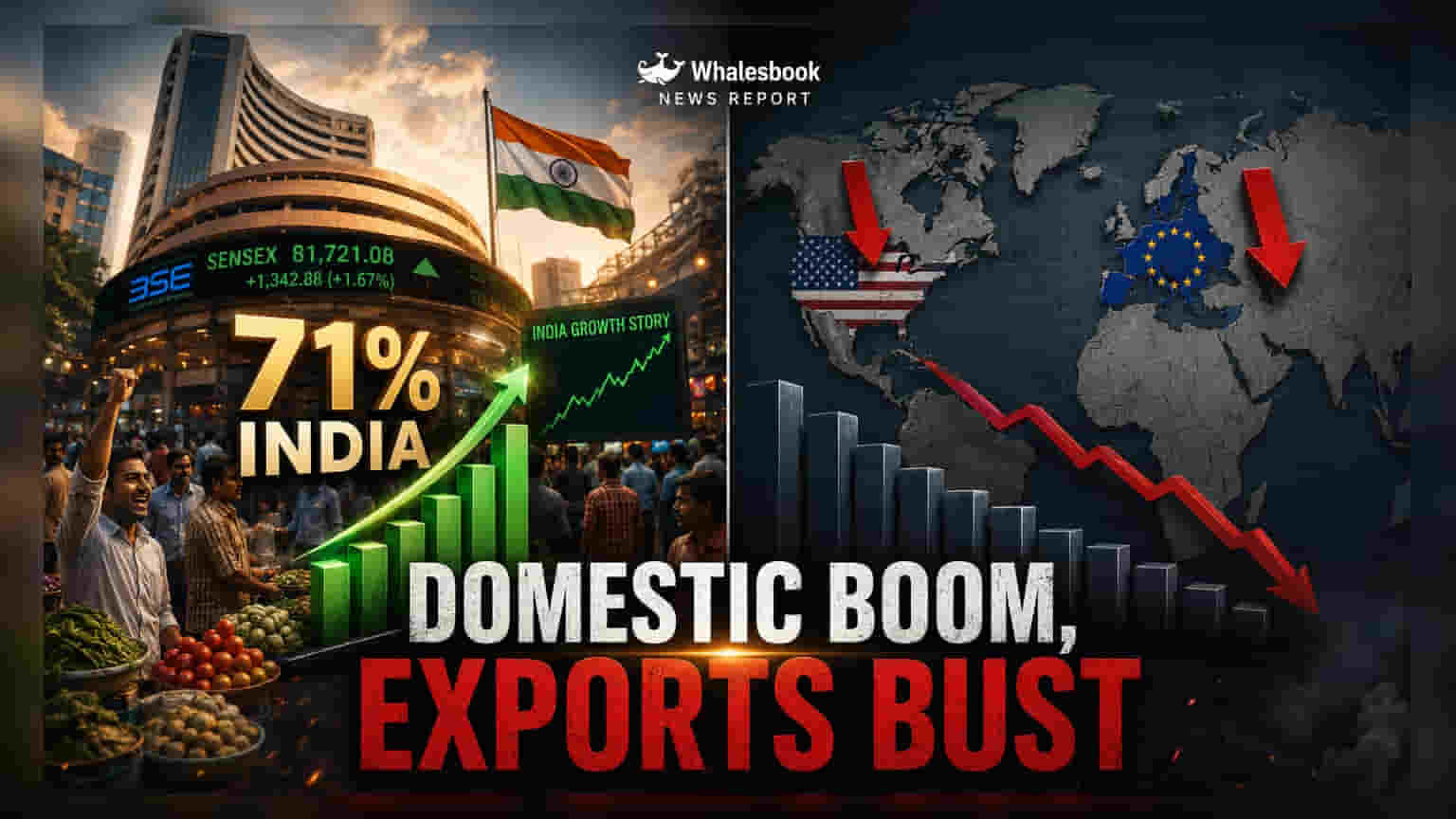


The Domestic Substitution Strategy
MM Forgings is increasingly insulated by its Indian operations, which now command 71% of total revenue. This pivot is a defensive reaction to systemic weakness in traditional export strongholds, particularly the United States and Europe, where shifting trade policies and cyclical automotive demand have eroded contribution. While management portrays this as a strategic success, the transition also reflects a necessity; export markets, which historically provided premium margins, have softened, forcing the firm to rely on domestic M&HCV volumes to sustain top-line stability.
The Valuation and Efficiency Gap
With a trailing P/E ratio hovering around 19x–25x, the stock trades at a discount to many of its peers, reflecting market skepticism regarding its ability to convert revenue into meaningful bottom-line growth. While the company is the third-largest forging player in India, its financial health score remains under pressure due to its substantial debt-to-equity ratio, which exceeds 140%. Unlike competitors that have utilized more conservative capital structures, this firm’s aggressive expansion—including a significant 16,500-ton press commissioned in early 2026—has loaded the balance sheet with liabilities. The central question remains whether this capacity will generate sufficient returns to justify the high financing costs or whether it will merely exacerbate existing margin compression.
The Forensic Bear Case
From a risk-averse perspective, the company’s recent trajectory raises structural concerns. Despite a 4% increase in full-year revenue, net profit dropped by 18%, signaling that the cost of doing business—operating expenses, high interest outflows, and depreciation—is rising faster than the company’s ability to extract value. Financial data indicates that operating cash flow is insufficient to cover total debt, creating a liquidity tightrope. Furthermore, the company has historically capitalized interest costs, a practice that can mask true operational cash requirements. Should the expected volume growth from new manufacturing initiatives fail to materialize as projected, the firm’s reliance on debt could necessitate equity dilution or further cost-cutting, particularly if the EV-focused subsidiary, Abhinava Rizel, takes longer than anticipated to achieve commercial scale.
Forward Guidance
Management maintains a stance of cautious optimism, focusing on process optimization and debt repayment targets of approximately ₹150–160 crore annually. Brokerage consensus continues to monitor the impact of the newly commissioned large-tonnage press, which is widely expected to contribute to earnings only from FY28 onward. For the interim, the stock remains a high-beta play, sensitive to both global geopolitical shifts and domestic infrastructure spending cycles.