 Whalesbook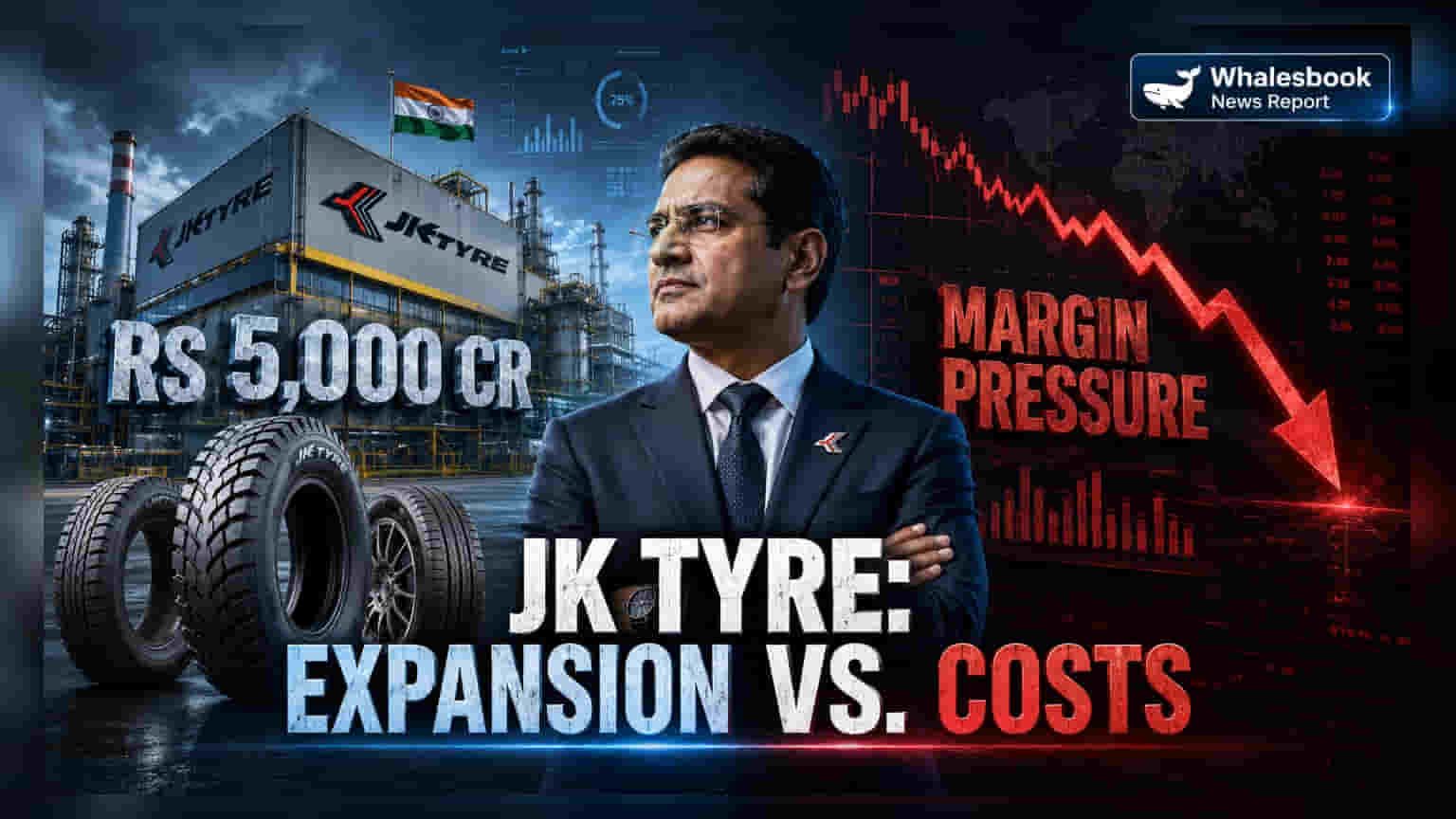


The Valuation Gap
JK Tyre & Industries recently secured board approval for a substantial Rs 4,980-crore capital expenditure program, targeting a 24% increase in production capacity for its radial tire segments by fiscal year 2030. While this move signals confidence in long-term demand, the market response has been cautious. The company’s stock price has struggled to maintain momentum in recent sessions, reflecting a tug-of-war between aggressive growth aspirations and the harsh reality of margin compression. Current valuations, trading at a trailing price-to-earnings ratio of approximately 15x to 18x, suggest that investors are balancing the potential for volume-driven revenue growth against the risk of eroding profitability.
Competitive Benchmarking and Sectoral Context
In the broader Indian tire industry—a sector currently ranked as the world's fourth largest—JK Tyre remains a significant player, though it continues to navigate an increasingly crowded field. Unlike premium-focused competitors such as Apollo Tyres, which leverage international technological partnerships to maintain higher margins, or MRF, which commands dominant brand equity, JK Tyre’s profitability metrics have frequently lagged behind pure-play niche producers like Balkrishna Industries (BKT). While BKT exploits the highly lucrative off-highway tire niche to command superior double-digit margins, JK Tyre is heavily exposed to the cyclical passenger and commercial vehicle replacement markets. The sector is currently facing intensified pressure from global trade shifts and the potential influx of lower-cost imports, which threatens the pricing power that domestic manufacturers have relied upon during the past fiscal year.
The Forensic Bear Case
Despite the management’s optimistic outlook for the 2027 fiscal year, structural risks remain embedded in the company's financial profile. A primary concern is the company's reliance on debt to fund this latest expansion cycle. While management emphasizes that the net debt-to-EBITDA ratio has improved from its 2022 peak, the sheer scale of the new outlay—nearly Rs 5,000 crore—could constrain free cash flow in the event of a cyclical downturn or a prolonged period of elevated natural rubber and crude-linked input costs. Furthermore, previous quarters have highlighted the company’s vulnerability to foreign exchange volatility, which impacted bottom-line results. Investors should remain wary of the 'execution risk' inherent in such large-scale multi-year projects, particularly when coupled with the potential for aggressive price competition from domestic peers who are also undergoing concurrent capacity ramp-ups.
Future Outlook and Analyst Sentiment
Brokerage consensus remains fragmented, reflecting the difficulty of pricing in both the expansion upside and near-term margin risks. While some analysts maintain a constructive view based on the company's strong footprint in the Truck and Bus Radial segment, others have opted to lower price targets, citing the sequential rise in commodity expenses. As the company moves toward its fiscal year 2030 capacity goals, the focus will likely shift to how effectively management can pass on rising costs to price-sensitive consumers without sacrificing market share in a highly competitive environment.