 Whalesbook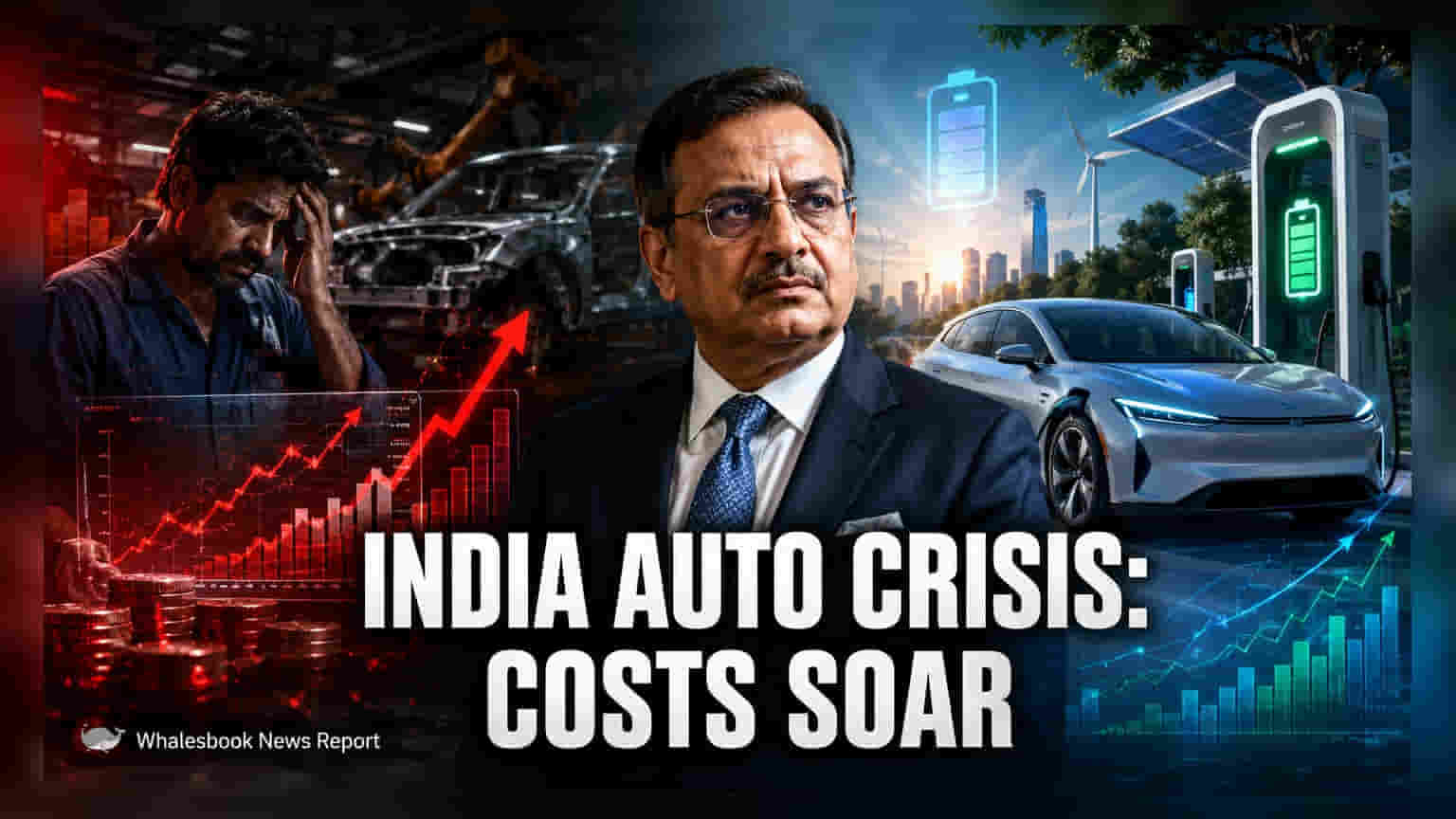


Input Costs Pressures Mount
The Indian automotive sector is currently navigating a challenging economic environment marked by escalating commodity prices and global trade uncertainties. Key inputs like plastics, aluminum, and tungsten have seen sharp price increases over the past year, reaching 12-month highs. These rising raw material costs, combined with higher freight charges due to geopolitical tensions in West Asia, are significantly squeezing profit margins for both vehicle makers and auto component suppliers.
Manufacturers are grappling with these increased production expenses, with some reporting that commodity inflation has already impacted their margins. Prices for critical materials such as hot-rolled steel and cold-rolled steel have also reached their peak in the last 12 months. Consequently, price adjustments by automobile and component makers are becoming increasingly inevitable, with industry experts anticipating potential hikes by July. Companies face a difficult choice: absorb these costs, which hurts profitability, or pass them on to consumers, which risks dampening recovering demand. The depreciation of the Indian rupee also adds to the cost burden for imported components. Small and medium-sized enterprises (MSMEs) in the auto component sector are particularly vulnerable.
EV Transition Drives Optimism Amidst Challenges
Despite the prevailing cost pressures, the long-term outlook for India's automotive industry remains positive, primarily driven by robust domestic demand and the accelerated shift towards electric mobility (EVs). Rising per capita incomes and relatively low vehicle ownership rates continue to support strong underlying demand for both passenger and two-wheeler segments.
The EV sector is emerging as a significant growth engine, with projections indicating substantial market expansion in the coming years. Government initiatives, including subsidies and infrastructure development under schemes like FAME-II, are crucial in promoting EV adoption. While the two-wheeler EV segment is gaining traction rapidly due to easier home charging and lower operating costs, the broader EV adoption faces challenges related to the inadequacy of charging infrastructure outside major urban centers.
To capitalize on EV growth, there is a strong emphasis on increasing domestic manufacturing and bolstering research and development (R&D) capabilities. This focus aims to reduce reliance on imported components and foster greater self-reliance within India's EV ecosystem. Industry bodies are actively advocating for enhanced government incentives for domestic R&D and local manufacturing to bolster India's competitiveness. The Indian auto component industry is also being urged to adopt advanced manufacturing systems and smart factory technologies to enhance productivity and resilience.
Margin Erosion and Infrastructure Gaps Remain Key Concerns
The immediate concern for the Indian auto sector is margin erosion due to sustained increases in commodity and logistics costs. Geopolitical tensions in West Asia have exacerbated these issues, leading to volatile energy and raw material prices, and disrupted supply chains. This cost inflation directly impacts profitability. Any necessary price hikes to protect margins could slow down the recovering demand, particularly among price-sensitive buyers.
Furthermore, the inadequacy of charging infrastructure remains a significant bottleneck for widespread EV adoption, especially outside metropolitan areas. While government policies are supportive, the pace of infrastructure development needs to accelerate to match the growth ambitions of the EV market. The reliance on imported components for advanced EV systems also presents a strategic risk that requires dedicated efforts towards localization and indigenous R&D.
Future Outlook
The Indian automotive industry is poised for continued growth, supported by strong domestic demand, government policy support, and the burgeoning EV market. However, managing input cost volatility and developing essential charging infrastructure will be critical for sustained profitability and broader market penetration of electric vehicles. Industry stakeholders are advocating for proactive government support, including incentives for R&D and local manufacturing, to navigate these challenges and strengthen India's position in the global automotive landscape.