

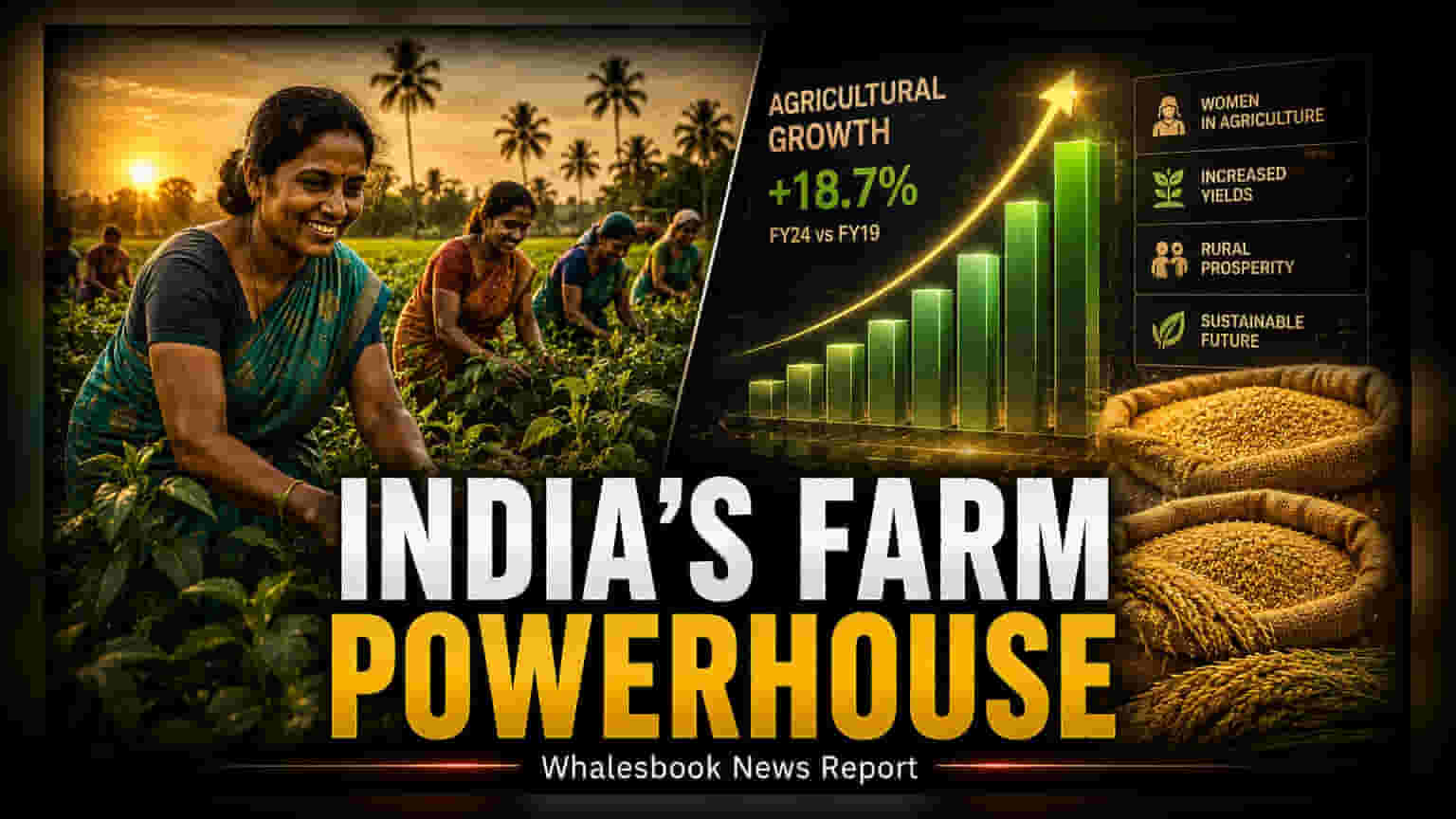
Official government data for 2025 reveals that women make up nearly 60% of India’s agricultural workforce. This shift highlights the growing financial inclusion of female farmers through schemes like PM-KISAN. Additionally, data indicates a rise in total cropped area and significant growth in tobacco export value over the last decade.
Detailed Coverage
New data presented in the Lok Sabha by the Union Ministry of Agriculture and Farmers’ Welfare reveals that women accounted for 59.8% of India's agricultural workforce in 2025. This statistic highlights the central role of women in the rural economy, with the Periodic Labour Force Survey noting that over 41% of these female workers are engaged in self-employment. This participation is increasingly supported by direct government welfare programs designed to provide financial stability to rural households.
Financial inclusion through direct benefit transfers has become a key metric for monitoring rural policy impact. For instance, the Pradhan Mantri Kisan Samman Nidhi (PM-KISAN) scheme, which provides annual financial support to farmers, recorded over 2.18 crore female beneficiaries during its 23rd installment. Similarly, the Pradhan Mantri Fasal Bima Yojana (PMFBY), the national crop insurance program, saw female participation reach 21% of total enrollees in the 2024-25 period, suggesting a growing awareness of risk management tools among women farmers.
Infrastructure and Land Productivity Trends
Beyond demographic shifts, official land use statistics for 2024-25 point to structural changes in Indian farming. The gross cropped area has expanded to 225.19 million hectares, up from 198.28 million hectares a decade ago. This expansion, coupled with an increase in cropping intensity—which tracks how often land is harvested per year—from 142.2% to 159.7% over the same period, reflects wider adoption of modern irrigation and farm management practices.
Research initiatives led by the Indian Agricultural Research Institute (IARI) are also influencing output by focusing on climate-resilient crop varieties. Projects targeting wheat, maize, and rice aim to integrate traditional indigenous traits with modern genomics. These efforts, backed by public research funding, have notably impacted the rice sector, where improved Basmati strains now account for a substantial portion of India's international shipments.
Growth in Export Values
In a separate update regarding commodity trade, the tobacco sector has reported strong growth in export value. Despite global shifts, India remains the world's second-largest tobacco producer. Data covering the last ten years shows that while export volume grew by 53%, the total value of these exports surged by over 166%, reaching ₹17,192 crore. This jump in value is linked to a rise in average farm-gate prices for Flue-Cured Virginia (FCV) tobacco, which climbed from ₹134.43 per kg to ₹251.14 per kg. Investors in the agricultural and export sectors will continue to track how these shifts in cropping intensity and international pricing trends influence future income levels for farmers and the profitability of agri-export companies.