

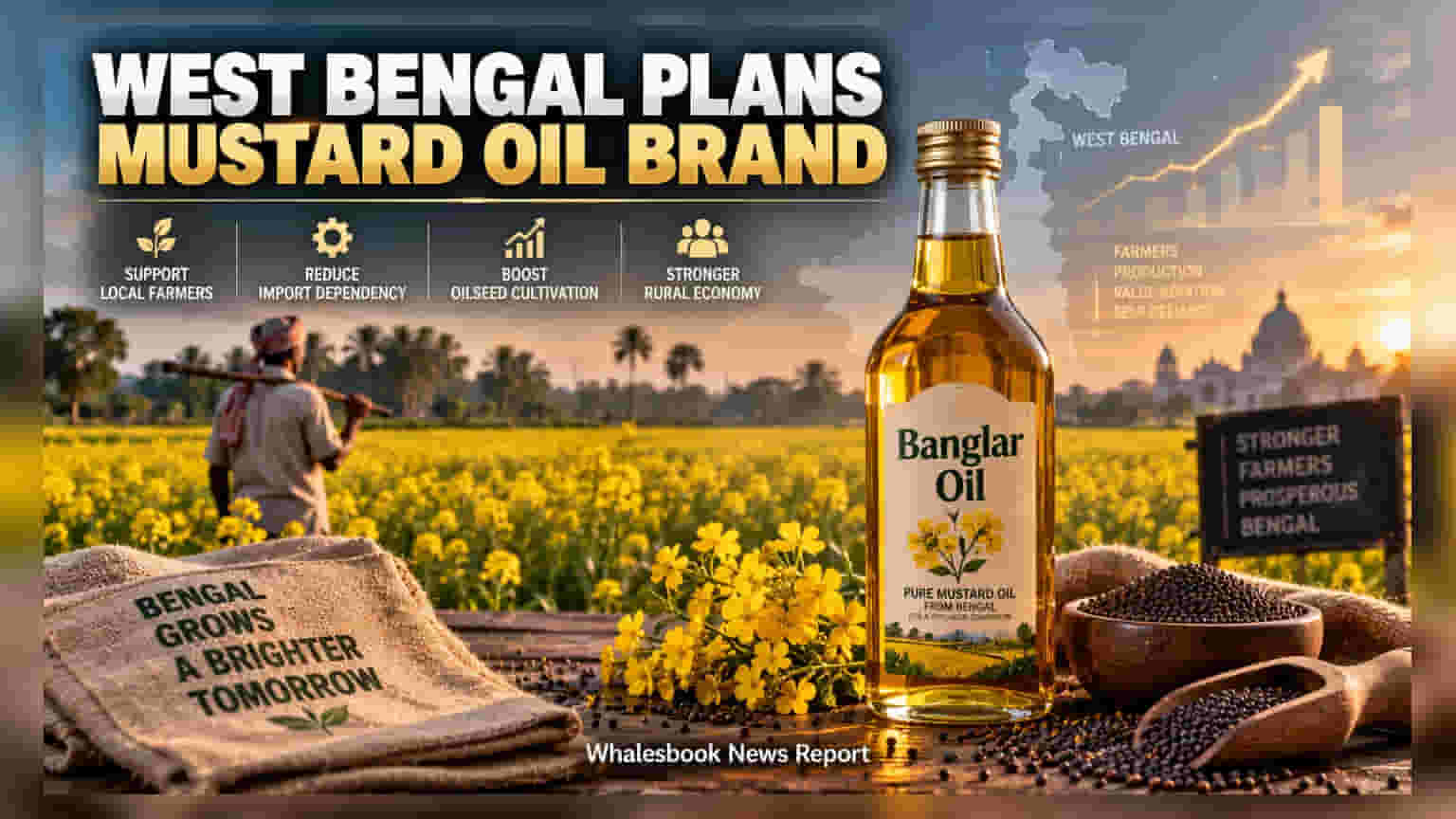
West Bengal is preparing to launch a state-backed mustard oil brand to reduce reliance on supplies from other states. Supported by the National Dairy Development Board, the plan encourages farmers to shift from surplus potato cultivation to oilseeds. While aimed at agricultural self-sufficiency, the state-run venture will enter a highly competitive market currently dominated by established national brands.
The government of West Bengal is preparing to launch a state-run mustard oil brand, aiming to reduce the state’s reliance on edible oil supplies from Rajasthan and Madhya Pradesh. Minister of Cooperation Ashok Kirtania confirmed that the project follows the operational model of 'Banglar Dairy', the state's existing dairy initiative. The government intends to build an integrated supply chain that encourages local farmers to move away from surplus potato cultivation and toward oilseed production.
Agricultural data suggests a significant shift in strategy. The state has reported an excess of 25 lakh tonnes of potato production this year, which often leads to price volatility for farmers. By promoting mustard, groundnut, and sunflower cultivation, the government hopes to balance agricultural output while filling the gap in local edible oil availability. The initiative is being supported by the National Dairy Development Board, which will provide technical and procurement expertise to ensure the quality and consistency of the oil supply.
To ensure the long-term success of the project, the state has partnered with the Indian Institute of Technology Kharagpur. This collaboration focuses on researching improved oil extraction methods, post-harvest management, and local value addition. A pilot program is currently underway across five districts, including East Burdwan and Murshidabad, covering roughly 525 acres. This phase is designed to integrate local milk cooperatives and farmer producer organizations into a broader procurement network.
From a market perspective, this initiative introduces a new player into a highly competitive consumer staples segment. The Indian edible oil market is dominated by large private entities such as Adani Wilmar, Marico, and Emami Agrotech, which possess massive distribution networks, established branding, and deep supply chain efficiencies. For a state-led brand, the primary challenges will be scaling distribution, maintaining consistent product quality, and managing operational costs to remain competitive against private incumbents. Unlike private firms that can aggressively adjust pricing and marketing, state-run entities often face constraints related to procurement efficiency and profit margins.
The success of this initiative will largely depend on the government's ability to effectively procure oilseeds at scale and compete with the entrenched supply chains of major private players. Investors and industry observers will be watching the progress of the pilot districts to see if the state can successfully execute the transition from farm production to a finished consumer product.