

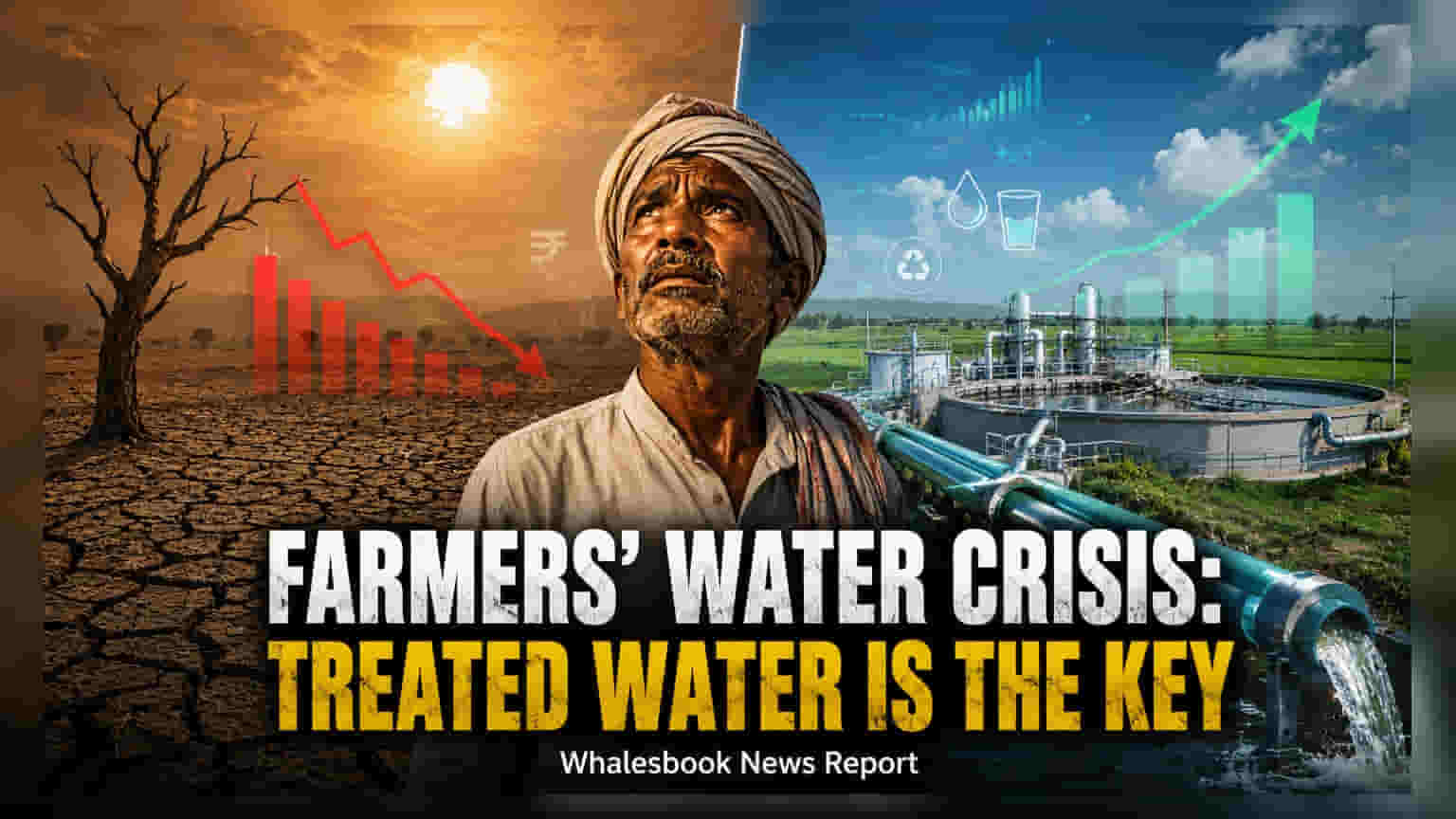
Severe water shortages in states like Uttar Pradesh and Maharashtra are hurting crop yields and soil quality. Experts suggest using treated wastewater for irrigation to reduce reliance on groundwater and unstable monsoons. This move could improve the effectiveness of modern fertilizers and help restore farmland health, provided infrastructure costs are managed.
Detailed Coverage
Farmers in major food-producing states like Uttar Pradesh and Maharashtra are facing a deepening water crisis. While rising costs for seeds and fertilizers have traditionally dominated agricultural discussions, the scarcity and quality of water have now become the most critical challenges. Plummeting groundwater levels and the contamination of essential rivers by industrial and municipal waste are threatening both the volume and quality of crop production across the country.
The Shift Toward Treated Water
Experts increasingly point to the use of treated wastewater as a necessary shift to stabilize irrigation. This involves processing water from municipal and industrial sources to make it safe for agricultural applications. Unlike reliance on seasonal monsoons or depleting borewells, treated water provides a consistent and predictable supply. While the technology for cleaning water to safe standards is already proven, the primary obstacle remains building the infrastructure to transport this water to farms efficiently and at a price that remains viable for farmers.
Soil Health and Crop Efficiency
Water quality is directly linked to the long-term health of agricultural land. The use of contaminated water, often containing harmful residues, has caused issues like soil salinity and reduced biological activity in many regions. Simply applying fertilizers or soil conditioners without addressing the water source is becoming ineffective. When irrigation water is clean, it prevents further soil degradation and allows for a faster recovery. Furthermore, advanced agricultural inputs such as biological fertilizers and nano-nutrients perform much better when delivered through clean water, ensuring that farmers see a better return on their spending for these inputs.
Future Challenges for Adoption
For treated water initiatives to succeed, they must be accessible and affordable for the average farmer. The industry is currently exploring decentralized treatment models that can serve farming communities directly. The financial and logistical challenge is to create a transparent pricing system that does not place an undue burden on agricultural incomes. Investors and stakeholders should monitor the progress of infrastructure projects that prioritize water treatment facilities near major agricultural hubs, as these will be key indicators of how quickly this solution can be scaled. The next important step will be seeing if government or private investments focus on building the localized treatment networks required to make this technology a practical reality for Indian farmers.