

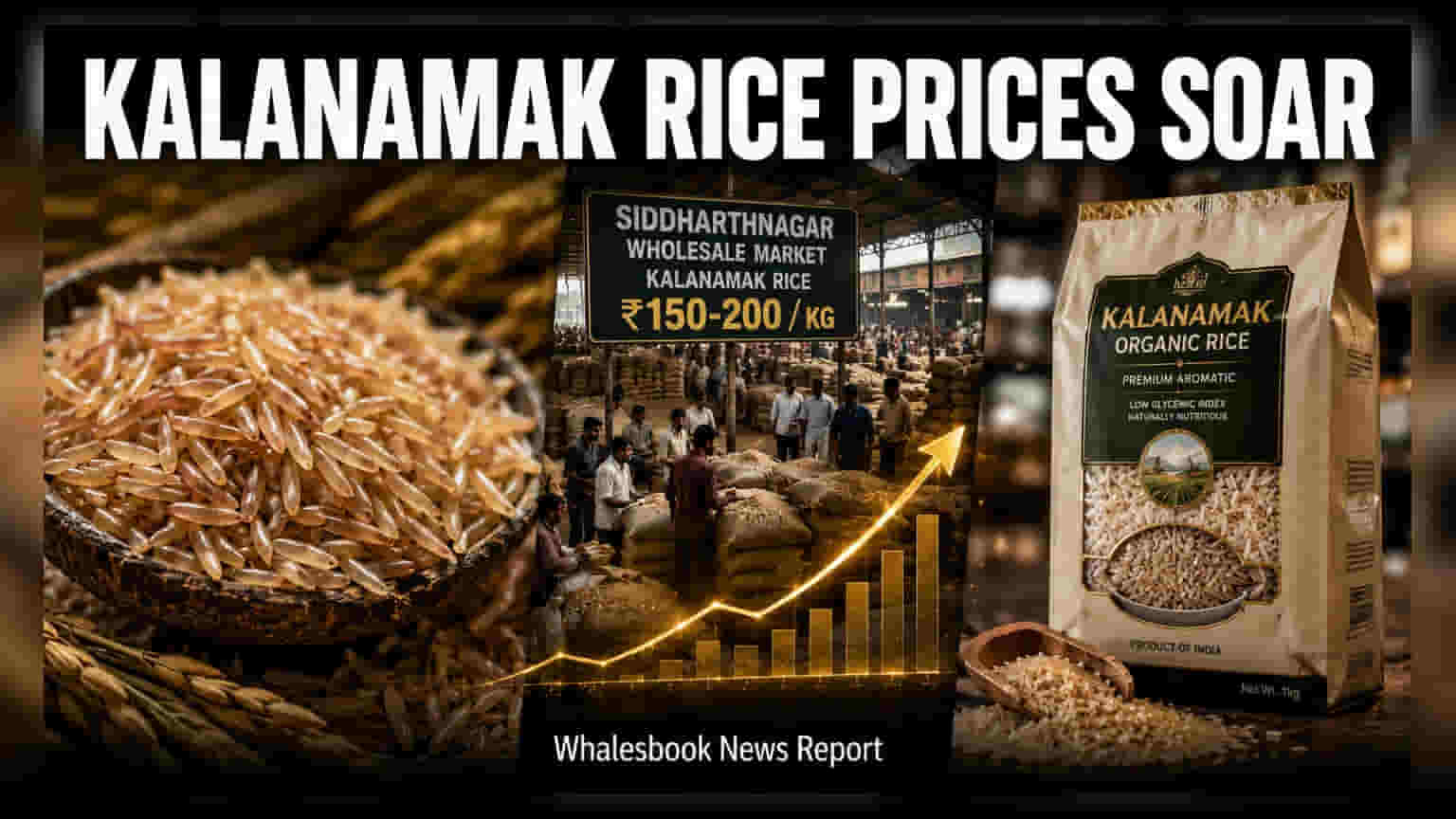
Siddharthnagar's traditional Kalanamak rice prices have risen to nearly Rs 200 per kg as the One District One Product (ODOP) initiative improves processing and market reach. This transition from a niche crop to a branded commodity has expanded cultivation to 20,000 hectares. While value-added products like nutritional cookies are boosting farmer margins, the industry continues to navigate risks related to supply chain reliance and the absence of a fixed minimum support price.
The agricultural economy in Uttar Pradesh’s Siddharthnagar district is undergoing a significant shift as the traditional Kalanamak rice variety transitions from a local specialty to a commercially viable commodity. Under the state government’s One District One Product (ODOP) initiative, the rice, known for its distinct aroma and low glycemic index, has seen its wholesale market rate climb from approximately Rs 40-50 per kg in 2018 to current levels of Rs 150-200 per kg. This change highlights how targeted industrial intervention can alter the fortunes of a specific agricultural produce.
The economic transformation is driven by a move toward value-added production. Rather than selling raw grain alone, producers are leveraging government-supported Common Facility Centres to process and package the rice for retail. Entrepreneurs are also creating secondary products, such as nutritional cookies, to capture higher margins from health-conscious consumers in urban markets like Delhi and Mumbai. By utilizing the PMFME (Pradhan Mantri Formalisation of Micro Food Processing Enterprises) scheme and ODOP grants for modern equipment, farmers and local processors are attempting to standardize quality and reduce post-harvest losses.
Despite the growth in cultivation area—which has surged to 20,000 hectares from 2,000 hectares in 2018—the sector faces distinct operational and market risks. Agriculture remains highly susceptible to natural factors, including crop lodging due to the tall stature of traditional rice varieties and pests like neck blast. While new, semi-dwarf variants are being introduced to mitigate these physical risks, they require consistent adoption by farmers.
From an economic standpoint, the reliance on government-led marketing and digital platforms creates a unique set of challenges. Because there is no dedicated Minimum Support Price (MSP) for this GI-tagged product, farmers remain exposed to market price fluctuations. The success of this initiative is currently tied to demand from organized retail and digital channels; therefore, producers face the risk of unsold inventory if these specific demand channels soften. The future stability of this trade will depend on the ability of the farmer network to maintain consistent supply chain efficiency and expand their customer base beyond current government-facilitated marketing support.