 Whalesbook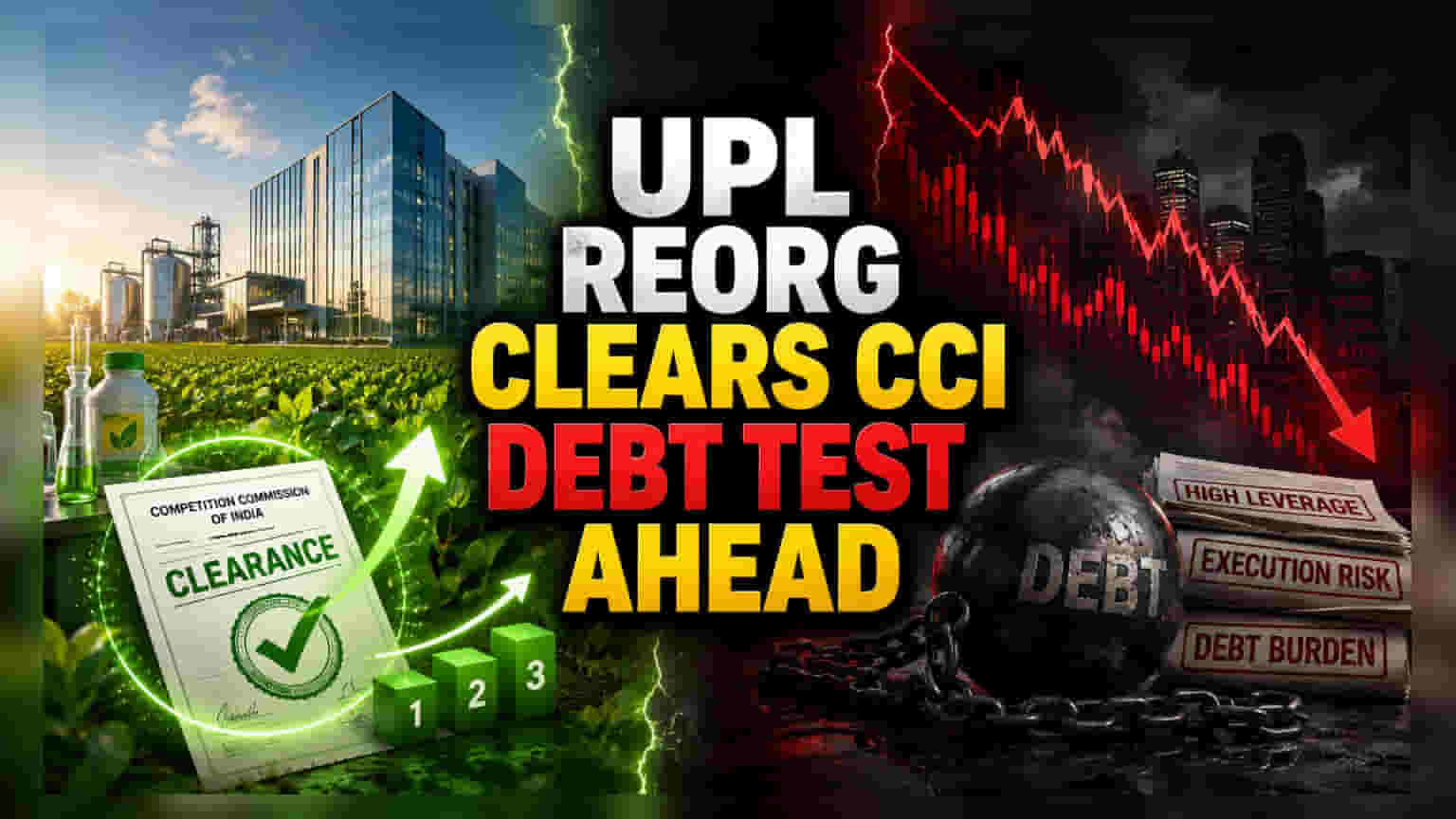


The Structural Pivot
The Competition Commission of India (CCI) has provided the regulatory clearance necessary for UPL to advance its complex, three-step corporate reorganization. By merging its India-based crop protection arm, UPL Sustainable Agri Solutions, and its international holding company into a single, unified entity, UPL Global Sustainable Agri Solutions, the firm aims to establish itself as one of the world’s largest listed pure-play crop protection platforms. This consolidation is not merely an organizational shift; it is a strategic maneuver designed to simplify the group's architecture and create two distinct growth engines: a focused, global crop protection firm and a parent entity that remains a diversified player in specialty chemicals and seed technology.
The Valuation and Debt Nexus
Despite the regulatory seal of approval, investors remain cautious. The market’s reception of the original announcement in February 2026 was lukewarm, with share prices sliding as analysts parsed the implications of the high leverage expected in the new entity. While UPL recently reported a resilient Q4 performance and a significant $500 million debt reduction, the crop protection vertical is expected to carry a substantial debt burden of approximately ₹190 billion. Market participants are watching to see if the promised operational synergies—such as improved manufacturing efficiency and streamlined R&D—can truly offset the existing debt overhang and satisfy long-term capital requirements.
The Forensic Bear Case: Execution Risks
Beyond the headline-grabbing approval, institutional investors are scrutinizing the execution timeline, which spans 12 to 15 months. The primary concern is that the restructuring creates complexity without providing an immediate deleveraging solution. Unlike competitors with cleaner balance sheets, UPL’s strategy requires maintaining high liquidity to navigate regional farm stress and volatile commodity pricing. Furthermore, the company faces pricing pressure in post-patent chemical segments, particularly in Brazil. Any delay in the listing process or failure to meet the ambitious EBITDA growth targets for FY27 could weigh heavily on the stock, especially as the market remains sensitive to geopolitical risks impacting raw material costs.
Future Outlook
Management has signaled that the path forward involves rigorous capital allocation and a shift toward high-margin bio-solutions to improve bottom-line performance. Analysts are now waiting for clarity on the share swap ratios and the eventual public listing of the crop protection unit, which remains the key catalyst for long-term value discovery. While the CCI’s approval removes a major regulatory hurdle, the company’s ability to sustain its recent double-digit profit growth while navigating macroeconomic headwinds will be the ultimate test for shareholders.