

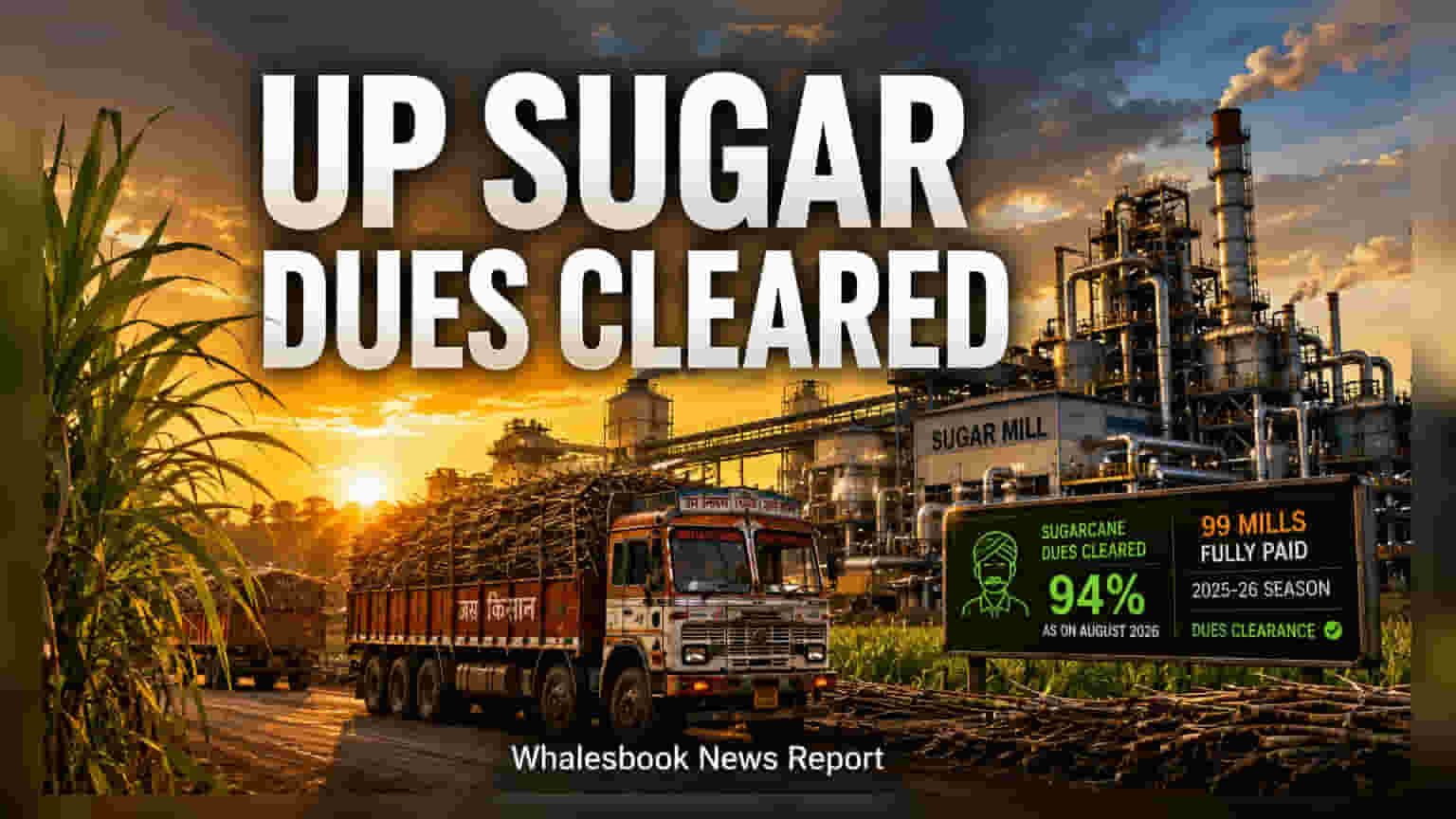
Sugar mills in Uttar Pradesh have settled 94% of sugarcane payments for the 2025-26 season, with 99 mills achieving full payment. While this reflects strong liquidity for growers, the sugar sector faces pressure from new government inventory limits meant to curb record-high sugar prices. Investors are watching how these regulatory interventions impact profit margins as production levels face headwinds.
Sugar mills across Uttar Pradesh have reached a significant operational milestone by clearing 94% of sugarcane procurement dues for the 2025-26 crushing season. As of late August 2026, 99 mills have fully settled their payments to farmers, a development that helps stabilize the supply chain by maintaining healthy relations with growers and ensuring consistent cane availability for the coming cycles. This payment progress comes against a backdrop of record-high domestic sugar prices, which have drawn increased attention from regulators concerned about food inflation.
While the timely payment of dues is a positive for operational stability, the sugar sector is currently operating under a dual reality. The rise in domestic sugar prices has prompted the government to tighten its grip on the industry. Starting September 1, 2026, stricter inventory limits will apply to bulk consumers to manage supply and control price volatility. For sugar companies like Balrampur Chini, Shree Renuka Sugars, and Bajaj Hindusthan, these regulatory measures are a key monitorable. While high sugar prices often support revenue, government intervention in the form of stock limits can cap the ability of mills to realize these gains on their bottom line.
Production Challenges and Operational Risks
The supply side of the industry is also facing pressure. Production in Uttar Pradesh was recorded at 8.97 million tonnes for the 2025-26 season, a decline compared to earlier years. This dip is largely attributed to adverse weather patterns and the impact of red rot disease, which have affected yields and feedstock availability.
This lower production is a primary driver behind the current price surge, but it creates a difficult balancing act for the industry. To ease price pressures, there is a risk that the government may push for an early start to the upcoming crushing season. While an early start would increase market supply, it often results in lower sugar recovery rates from the cane, as the crop is not yet fully mature. This reduction in efficiency could put pressure on profit margins, as mills would be processing lower-quality cane at higher operational costs.
What Investors Should Monitor
Beyond payment statistics, the sector's financial health remains sensitive to both climate and policy. Investors are tracking how these inventory limits affect the ability of mills to manage their stock and maintain margins. Additionally, the industry's ability to balance the ethanol blending program with domestic sugar supply will remain a critical factor. Any further government intervention to control prices—or any unexpected climate-related impact on the next planting cycle—will likely influence the outlook for these companies. The key focus for the market will be on how effectively these firms can navigate the balance between high realization prices and the constraints imposed by government regulatory oversight.