 Whalesbook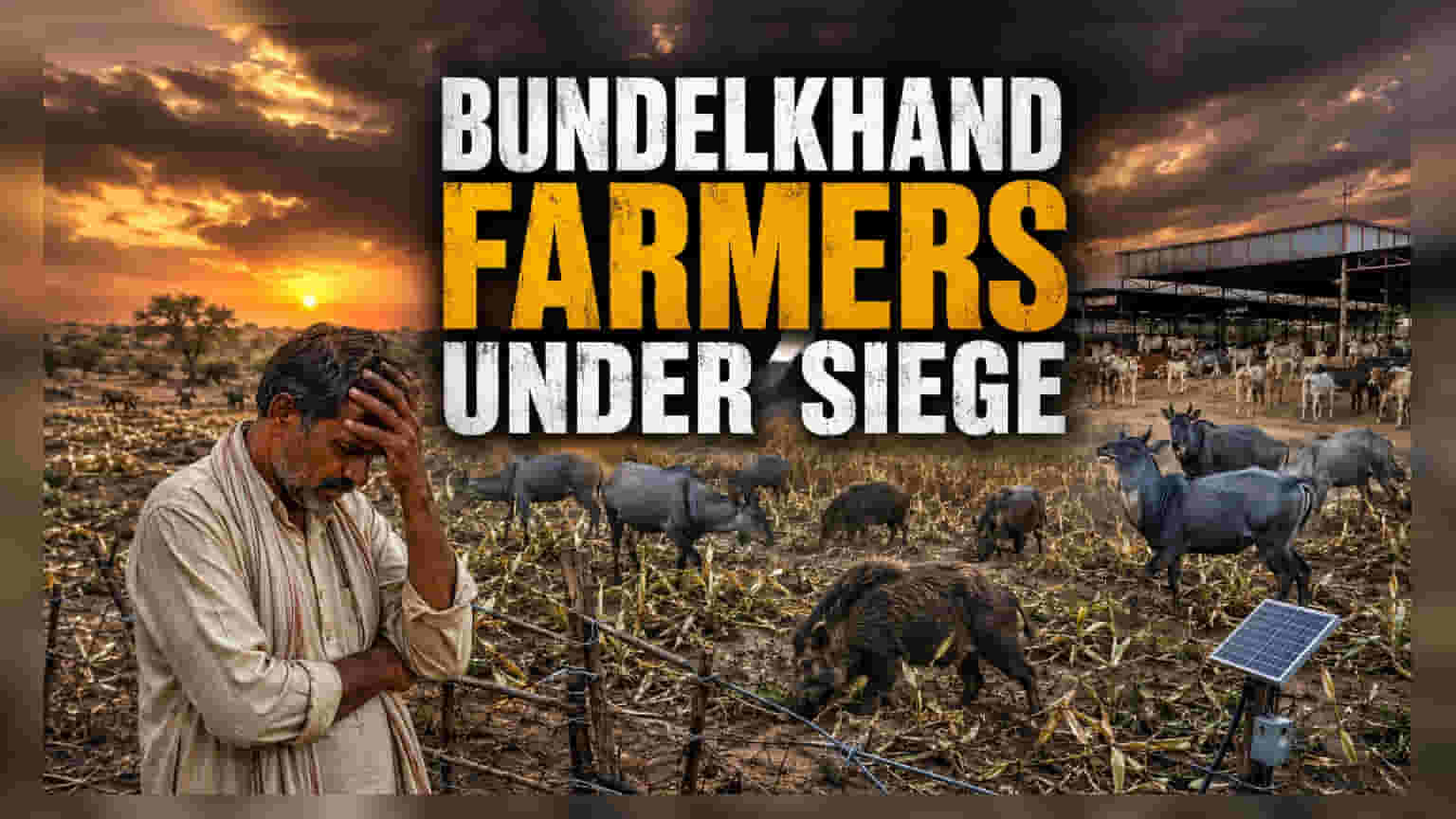


The Economic Erosion of Agrarian Output
The crisis facing the Bundelkhand region transcends simple wildlife management, manifesting instead as a severe structural failure in rural economics. As agricultural yields in districts like Banda and Mahoba crater—with some farmers reporting a 50 percent reduction in wheat output—the cost of production has surged. Producers are increasingly abandoning traditional crop rotations, such as pea and chickpea cultivation, because the risk of total loss from blue bull and wild boar incursions outweighs the potential market return. This shift signals a broader instability in the local food supply chain, where the economic viability of small-scale farming is being systematically erased by the absence of functional wildlife mitigation strategies.
Systemic Failure in Infrastructure Spending
While the state government allocates substantial capital—specifically Rs 1,500 per animal monthly—to support the gaushala system, the deployment of these funds remains opaque. Financial audits suggest a massive gap between budgeted expenditure and on-ground utility. Village-level shelters, which should serve as the primary containment vessels for stray cattle, are routinely overcapacity or entirely neglected. Reports of starvation within these facilities indicate that the fiscal stimulus intended to stabilize the agricultural ecosystem is being siphoned off, effectively creating a feedback loop where poorly managed shelters release animals that ultimately destroy the very crops the government aims to protect.
The Futility of Protective Capital Expenditure
The reliance on the Bundelkhand Integrated Agricultural Development (Solar Fencing) Scheme represents a reactionary, rather than proactive, approach to the conflict. Although the 80 percent subsidy for solar fencing offers a temporary buffer for large-scale operations, it imposes a prohibitive entry barrier for the average landless or smallholder farmer. Furthermore, technical limitations persist; the current solar designs fail to deter wild boars, which utilize burrows to circumvent electrified perimeters. Consequently, farmers are forced to allocate dwindling liquid capital toward increasingly expensive physical security, such as barbed wire and manual night watches, which further compresses net profit margins and diminishes the incentive to plant high-value produce.
Structural Risks and Operational Hurdles
The reliance on group-managed 10-hectare clusters under the latest state subsidy creates a bureaucratic bottleneck. Many small-scale operators in the region lack the social capital or organizational structure to form these mandated clusters, effectively disqualifying the most vulnerable farmers from receiving assistance. This exclusionary design, paired with the rapid escalation in material costs for protective fencing, suggests that the current agricultural environment will likely see continued land abandonment. Without a fundamental recalibration of both the administrative oversight of cattle shelters and the technical standards for wildlife exclusion, the economic pressure on these rural households will continue to tighten, threatening the long-term sustainability of the regional agricultural sector.