

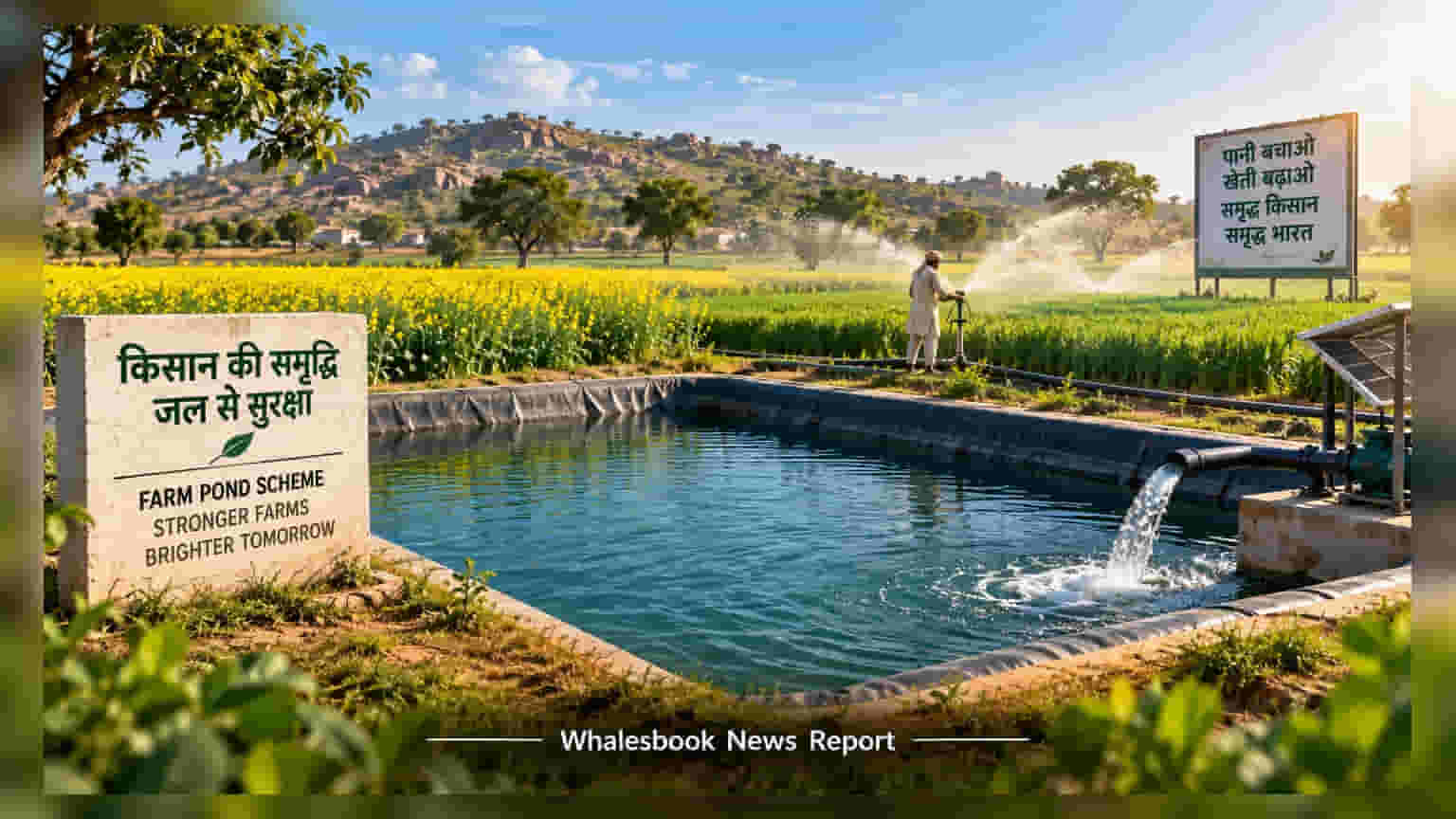
The Uttar Pradesh government is scaling up its farm pond subsidy program in the water-scarce Bundelkhand region, offering up to 50 percent coverage for construction. This initiative aims to increase irrigated acreage and rural income levels. For market observers, the scheme reinforces a trend of state-driven investment in micro-irrigation, potentially impacting demand for agricultural infrastructure, pipe manufacturers, and agri-input suppliers.
The Uttar Pradesh government’s move to expand its farm pond scheme in the Bundelkhand region is primarily aimed at mitigating water scarcity and stabilizing rural income. With a subsidy covering 50 percent of construction costs—capped at Rs 52,500—the state is pushing to bring more land under irrigation. This program is managed through the UP Agriculture Portal and specifically targets smallholder plots that have historically relied on unpredictable rainfall. By enabling the construction of on-field reservoirs, the government seeks to ensure that rainwater remains on the property rather than being lost to runoff, which is a major step toward consistent agricultural production in the area.
From an economic standpoint, the shift toward localized water harvesting acts as a catalyst for demand in the agricultural infrastructure sector. The ability for farmers to store water on their own land directly increases the utility of micro-irrigation systems. Companies that manufacture irrigation equipment, electric pumps, and PVC or HDPE piping often see a ripple effect from these state-sponsored initiatives. As farmers move away from rain-fed farming, they typically increase their spending on high-value inputs like seeds, fertilizers, and modern farm machinery to maximize the return on their new water assets.
Investors often view such state-level schemes as a proxy for the broader adoption of micro-irrigation technology across India. The central government’s Pradhan Mantri Krishi Sinchayee Yojana, combined with state-specific initiatives like this one, creates a recurring demand cycle for businesses specializing in drip and sprinkler irrigation. This is significant because the irrigation sector is highly sensitive to government capital spending and the timely disbursement of subsidies, which directly impacts the cash flow of equipment manufacturers.
However, there are risks that investors should consider. The pace of execution and fund disbursement under government schemes can be uneven. Delays in administrative verification or budget allocation at the district level often lead to slower-than-anticipated project completion. Furthermore, the operational effectiveness of these ponds depends heavily on local geological conditions and proper maintenance by the farmers. If the construction is not followed by adequate technical training or the installation of efficient pumping systems, the productivity gains may not reach their full potential.
For investors, the key monitorable remains the state government's budgetary allocation for agricultural infrastructure in the coming quarters. A sustained focus on micro-irrigation and water conservation in regions like Bundelkhand will likely support long-term demand for agri-input and equipment manufacturers. Future updates to track include the speed of beneficiary registrations, the total disbursement amount, and whether the model is extended to other water-stressed districts in the state.