

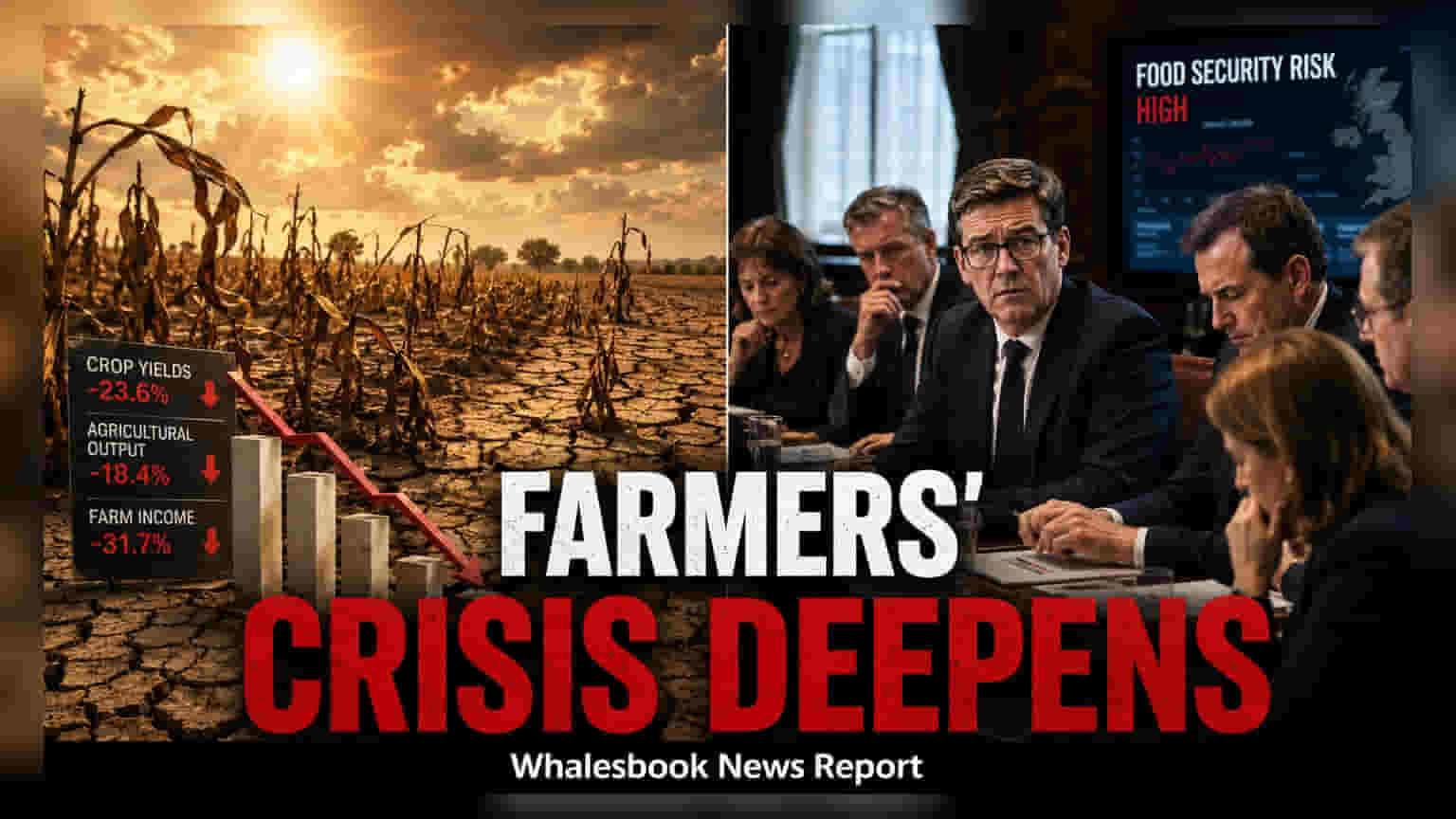
Prime Minister Andy Burnham has launched a £65 million funding package for English farmers to mitigate the financial impact of severe heatwaves and record drought. The support aims to protect food supplies and help farmers build water storage infrastructure. This relief comes as the agricultural sector faces rising operational costs and declining yields due to extreme weather.
Prime Minister Andy Burnham has announced a £65 million financial support package for farmers in England as the country deals with the consequences of severe heatwaves and record-breaking dry conditions. The move, confirmed on August 15, 2026, follows the driest July on record in England and Wales, which has caused significant pressure on agricultural yields and increased operational costs for food producers.
The government has divided the funding into two primary areas. A sum of £50 million has been directed to the Sustainable Farming Incentive 2026, which aims to provide immediate financial relief to farms currently managing the impact of low production and higher expenses. The remaining £15 million is specifically earmarked for the construction of on-farm reservoirs. This infrastructure investment is intended to improve water storage capabilities, helping farms manage periods of water scarcity more effectively in the future.
The agricultural sector in England has been struggling with the cumulative effects of three droughts over the past five years. Farmers are facing a difficult financial environment where record-high costs for fertilizers and energy, coupled with harvest losses from extreme weather, are threatening their long-term stability. The government's decision to intervene underscores the increasing recognition of food security as a critical national interest, particularly as climate volatility begins to impact basic supply chains.
While the funding provides a buffer, industry analysts and representatives note that the challenge of climate change requires more than short-term financial aid. The frequency of heatwaves, which has led to wildfires and damaged transport infrastructure, creates a structural risk for the agricultural economy. The success of these initiatives will depend on how effectively farms can adapt their conventional methods to a changing climate and whether the simplified planning rules for water storage can be implemented quickly enough to make a difference.
Investors and market participants tracking the food and agri-business sector will likely monitor the progress of these infrastructure projects. The key monitorable will be whether this investment succeeds in stabilizing farm incomes and protecting crop yields against future extreme weather events. The government's next steps regarding long-term climate adaptation and further infrastructure investment to ensure water accessibility will be important factors in determining the sector's resilience.