 Whalesbook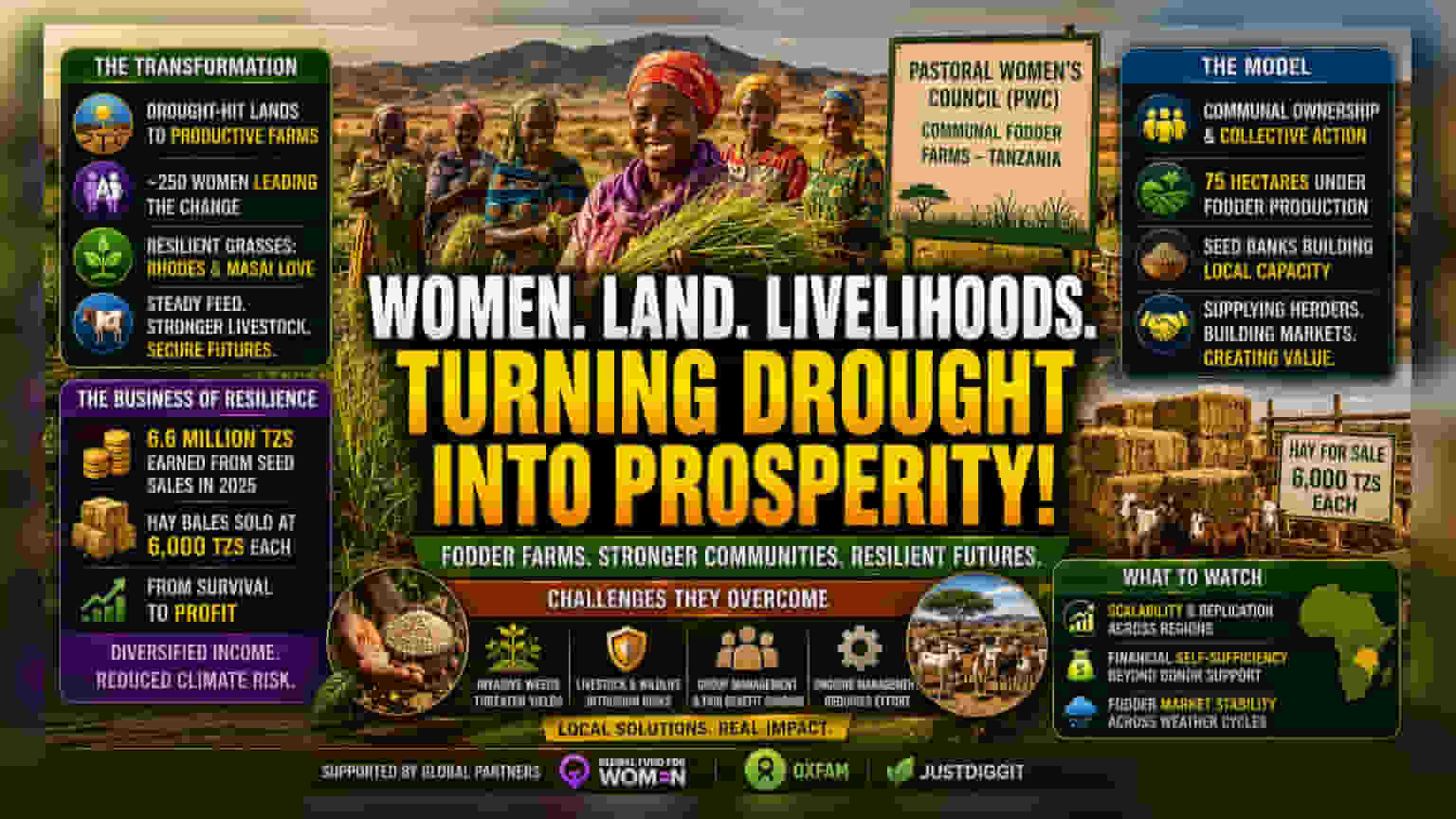


Maasai women in northern Tanzania are converting drought-prone land into commercial fodder farms. Supported by the Pastoral Women's Council, this move to climate-resilient farming creates new revenue streams, offering a replicable model for economic stability in climate-vulnerable agricultural regions.
What Happened
In northern Tanzania, a significant shift is taking place in how pastoral communities manage their land and economy. A project spearheaded by the Pastoral Women's Council (PWC) is transforming drought-affected areas into productive fodder farms. Women are now cultivating resilient grass species, such as Rhodes grass and Masai love grass, on communal plots. This initiative is designed to create a steady supply of animal feed, helping herders sustain their livestock even when rainfall is scarce. The project, which involves approximately 250 women managing these farms, has moved from a survival-based approach to a commercial model that generates income through seed sales and hay distribution.
Why This Matters For Investors
While this initiative is social in nature, it offers a look at how climate-adaptation models can stabilize rural economies. For those following agricultural trends, the commercialization of fodder production is notable. The PWC reported earning approximately 6.6 million Tanzanian shillings from seed sales in 2025, alongside income from hay bales priced at 6,000 shillings each. By monetizing fodder, these communities are reducing their total dependence on traditional herding alone, which was historically vulnerable to weather-related losses. This transition toward a more diversified income model is a critical indicator of economic resilience in regions facing extreme climate pressures.
The Business Of Climate Resilience
The model relies on communal ownership and the systematic cultivation of drought-resistant crops. By dedicating 75 hectares to production and managing seed banks, the PWC is effectively building an infrastructure that supports the local livestock sector. This setup addresses a major systemic risk in the region: the mass loss of animals during drought cycles. The strategy of selling fodder to other herders creates a secondary market that can operate independently of direct climate impact, provided the fodder crop remains viable. This demonstrates how localized agri-business can provide a buffer against macro-environmental risks.
Operational Risks And Challenges
Like any agricultural venture, this model faces specific operational hurdles. Invasive weeds are a constant threat to the yield of the fodder crops, requiring ongoing management. Additionally, the physical security of the farms is an issue; accidental intrusion by livestock or wild animals can damage the cultivated plots, directly impacting the potential harvest. Internally, the project also navigates the complexities of group management, as the distribution of responsibilities and income across different stakeholders requires clear governance. These factors determine the efficiency of the farms and the sustainability of the profit margins.
What Investors Should Track
For those observing such developments in emerging market agriculture, the key monitorable is the scalability of this model. The project currently receives support from international organizations, including the Global Fund for Women, Oxfam, and Justdiggit. Future updates will focus on whether this model can maintain financial self-sufficiency once reliance on external funding decreases. Additionally, observing how these fodder markets mature—specifically, whether pricing stabilizes and demand remains consistent across various weather cycles—will be essential to understanding the long-term viability of these pastoral enterprises.