

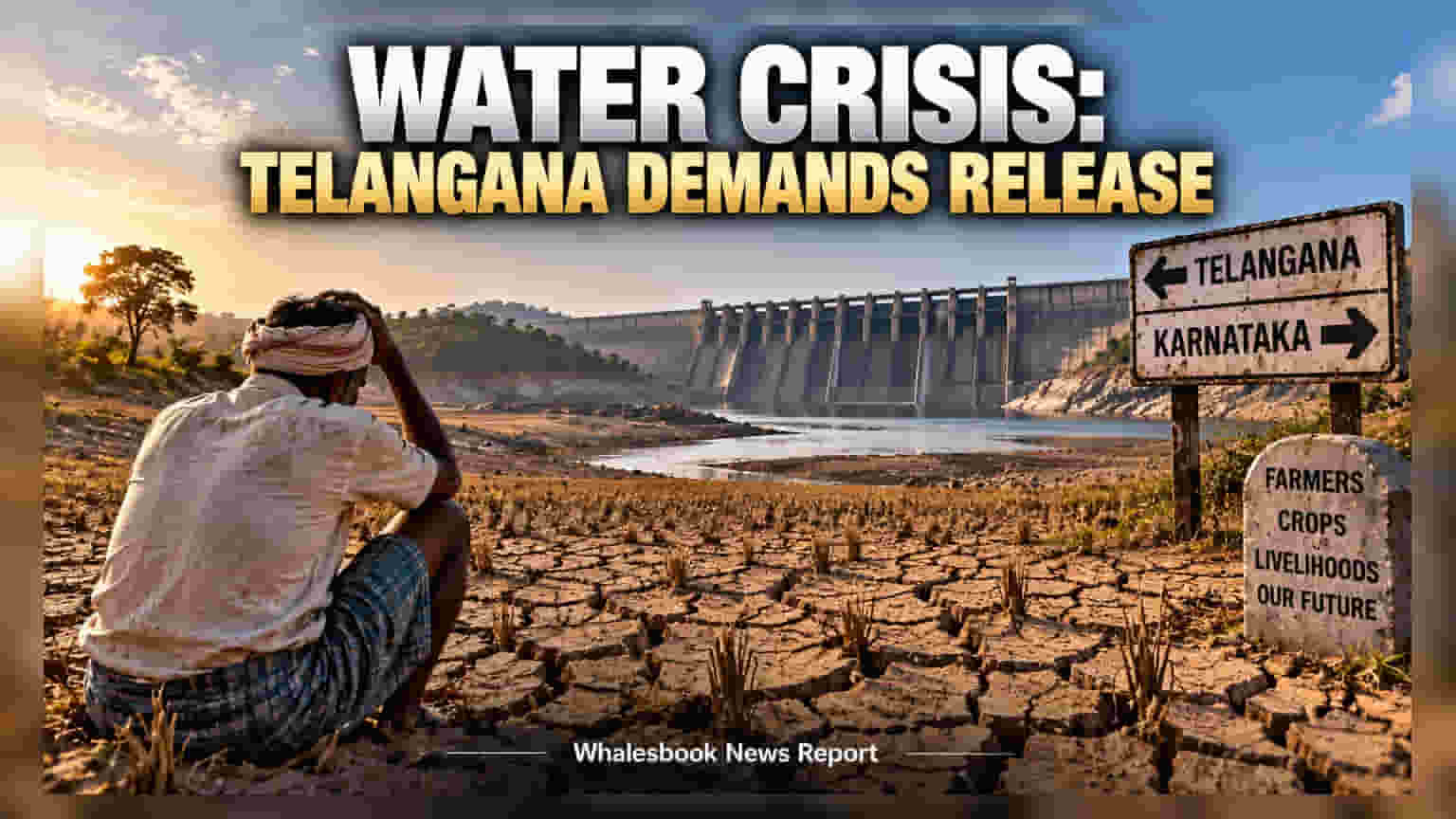
Telangana has requested Karnataka to release water for four major irrigation projects to protect crops across 5.5 lakh acres. The request highlights risks to rural agricultural income in the region, which may influence local consumer spending. The situation emphasizes structural challenges in reservoir maintenance and inter-state water resource management.
The Telangana government has formally approached the Karnataka administration to release water from upstream reservoirs to stabilize irrigation projects downstream. The request seeks a discharge of 5,000 cusecs over the next month to prevent yield loss for standing crops across 5.5 lakh acres. The state administration has identified four key projects—Jurala, Nettempadu, Bhima, and Koilsagar—as essential for the local agricultural economy, particularly in the Jogulamba Gadwal district.
Agricultural stability in this belt is critical for regional economic health. Farmers in the area have engaged in local protests due to water shortages, reflecting rising pressure on the agrarian sector. Without the requested water inflow, these standing crops, currently in their final growth phase, face a high risk of failure. Such an event would impact rural incomes, potentially affecting demand for agricultural inputs like seeds and fertilizers, as well as broader discretionary spending in the local economy.
Beyond the immediate request, the situation highlights structural water management challenges. The Jurala project, a major asset for the region, is dealing with significant silt accumulation, which reduces its effective storage capacity. Additionally, the administration has earmarked three TMC of the reservoir’s capacity exclusively for drinking water security through June 2027. This constraint leaves minimal operational flexibility to address irrigation needs during dry spells, showcasing the difficulty of balancing competing water demands for consumption and cultivation.
For investors monitoring the regional economic landscape, this development underscores the volatility inherent in relying on reservoir infrastructure that requires modernization. While the request has been presented to the Karnataka government, the physical delivery of water remains the primary concern for the agricultural community awaiting relief.
The next important monitorable will be the response from the Karnataka government. If the water release is denied or significantly delayed, stakeholders will focus on the extent of potential crop damage and the resulting impact on regional agricultural output and rural purchasing power.