

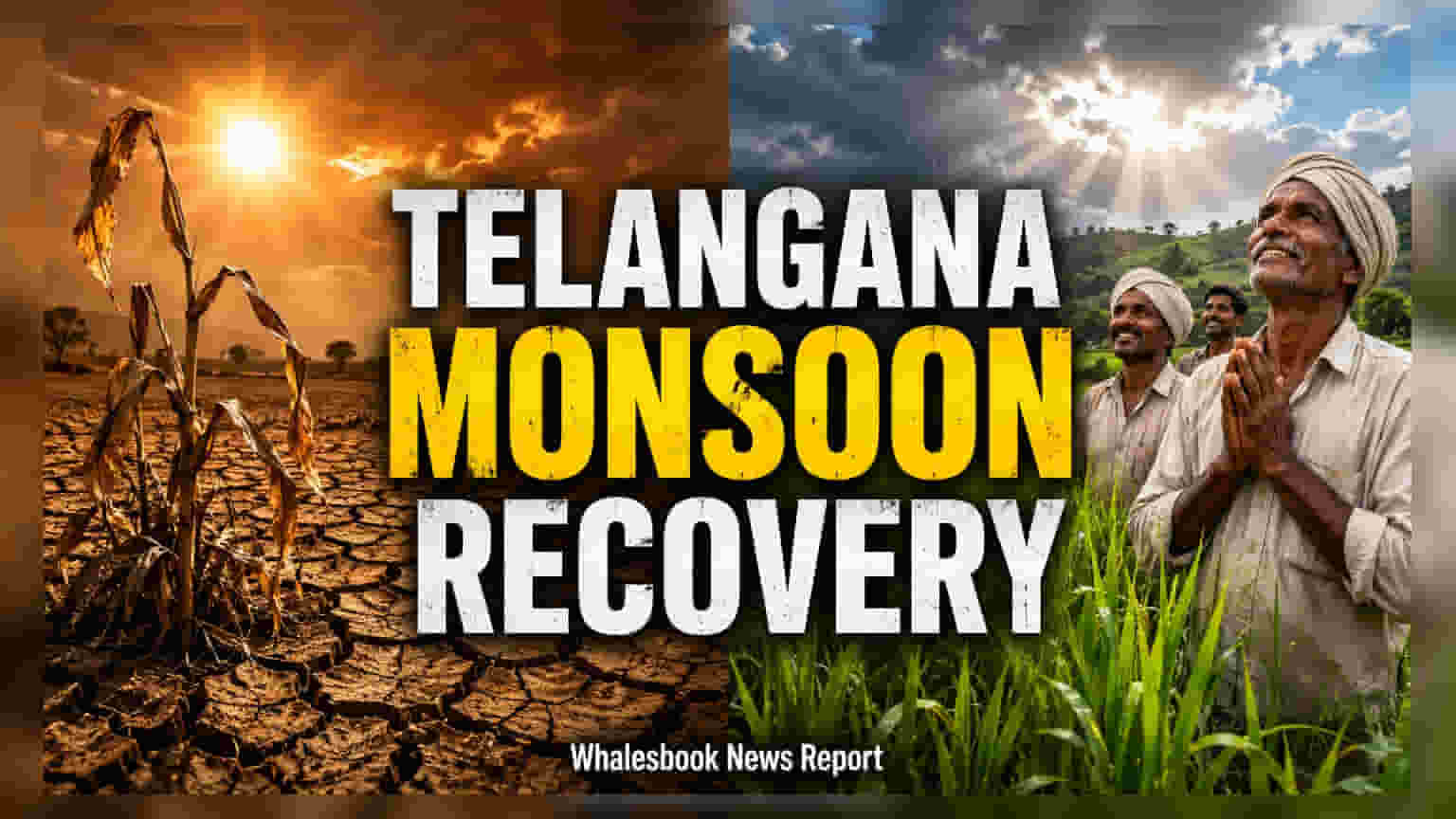
Recent heavy rains in Telangana have improved crop prospects, but officials still expect a 20-25% reduction in total paddy sowing area for this Kharif season. While cotton acreage has expanded, farmers are shifting away from water-intensive crops due to persistent water concerns and government advisories.
Telangana’s agricultural sector is witnessing a shift in cropping patterns this Kharif season, following a period of rainfall uncertainty. Although recent precipitation across the state has provided relief, official data shows that farmers are responding to government advisories and water availability concerns by adjusting their sowing choices. As of late July, the state recorded paddy sowing at approximately 8.28 lakh hectares, a decline from the 8.9 lakh hectares reported during the same period last year.
Cotton Acreage Rises Amid Paddy Shift
While paddy and maize sowings have seen a contraction, cotton has emerged as a preferred alternative for many growers. Cotton cultivation expanded to 18.62 lakh hectares compared to 17.40 lakh hectares in the previous year. This movement suggests that farmers are prioritizing crops that may offer better resilience or profit potential under the current environmental conditions. Maize sowings also experienced a decline, falling to 1.90 lakh hectares from 2.19 lakh hectares.
Government Guidance and Long-Term Risks
Despite the recent uptick in rainfall, the state government maintains a cautious stance. Officials have consistently advised farmers against extensive paddy cultivation, citing potential risks linked to erratic weather patterns and the need to manage water resources effectively. The government has been actively promoting the adoption of pulses and millets as alternative crops to reduce the dependence on water-intensive paddy.
For investors monitoring the agricultural supply chain, this shift in acreage is significant. A reduction in paddy sowing can affect demand for fertilizers and pesticides specific to that crop, while the expansion in cotton acreage may influence raw material availability for textile manufacturers. The state government’s push toward crop diversification is a long-term trend aimed at protecting farmers from weather-related shocks, which could eventually alter the revenue profiles of regional agro-chemical and seed companies.
The next crucial update for the sector will be the final sowing data at the end of the Kharif cycle. Investors and industry analysts will track how these changes in crop distribution affect yields, market pricing for commodities, and the overall financial health of companies involved in the agricultural input business, particularly those with heavy exposure to the Telangana market.