

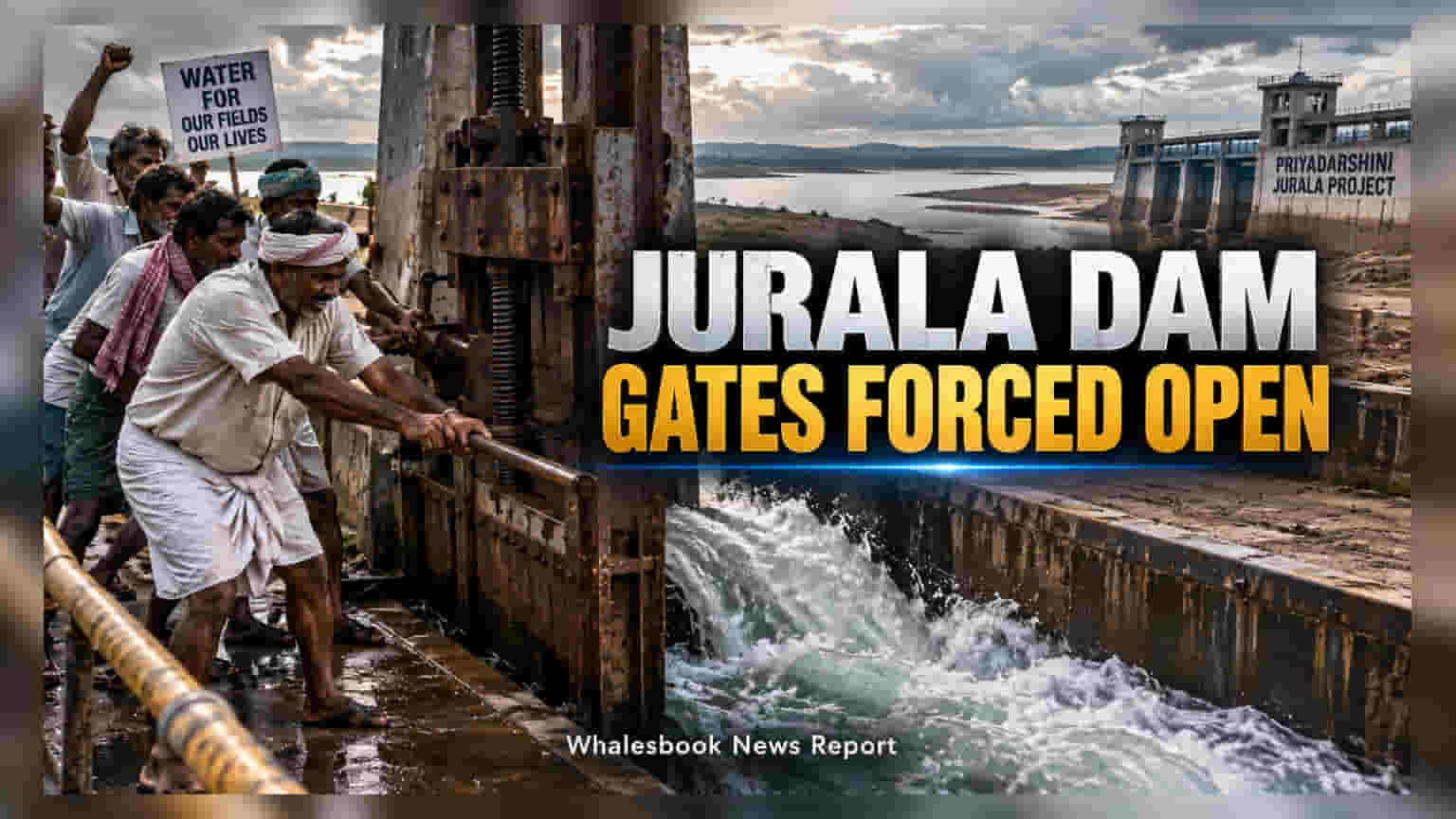
Farmers in Telangana's Wanaparthy district manually opened the Jurala Dam canal gates following a protest over irrigation water shortages. The incident highlights the growing conflict between water management policies and the immediate needs of the farming community. This event draws attention to the pressure on the state government to ensure water security for agricultural operations.
Farmers in Wanaparthy district, Telangana, took direct action at the Priyadarshini Jurala Project this week. Driven by fears of potential crop loss, a group of farmers gathered at the site to protest against the lack of irrigation water being provided to their fields. After negotiations with project engineers did not lead to a resolution, the group moved to manually open the left canal regulator gates, allowing water to flow into the canal network.
Project officials had previously stated that low reservoir levels were the primary reason for restricting the water supply. The protesting farmers, however, viewed the supply cut as a management issue rather than a result of physical water scarcity, leading to the confrontation at the facility. This breach of the project infrastructure marks an escalation in the ongoing tension surrounding water rationing and allocation in the area.
The incident draws attention to the vulnerability of the regional agricultural economy to irrigation policy. For those monitoring rural consumption and growth, effective water management is a key factor in ensuring consistent crop yields and stable demand for agricultural inputs like seeds and fertilizers. Situations like this highlight the high stakes involved in securing irrigation for the local farming community, where even temporary water denials can threaten a season's productivity.
While no administrative penalties against the protesters have been announced by the state government, the situation remains a sensitive issue for local authorities. The ability of the state to manage water distribution equitably while balancing reservoir levels will be an important factor for investors to observe. The next steps for the irrigation department, including any adjustments to water release schedules or communication with farmers, will be the primary updates to follow in the coming weeks.