

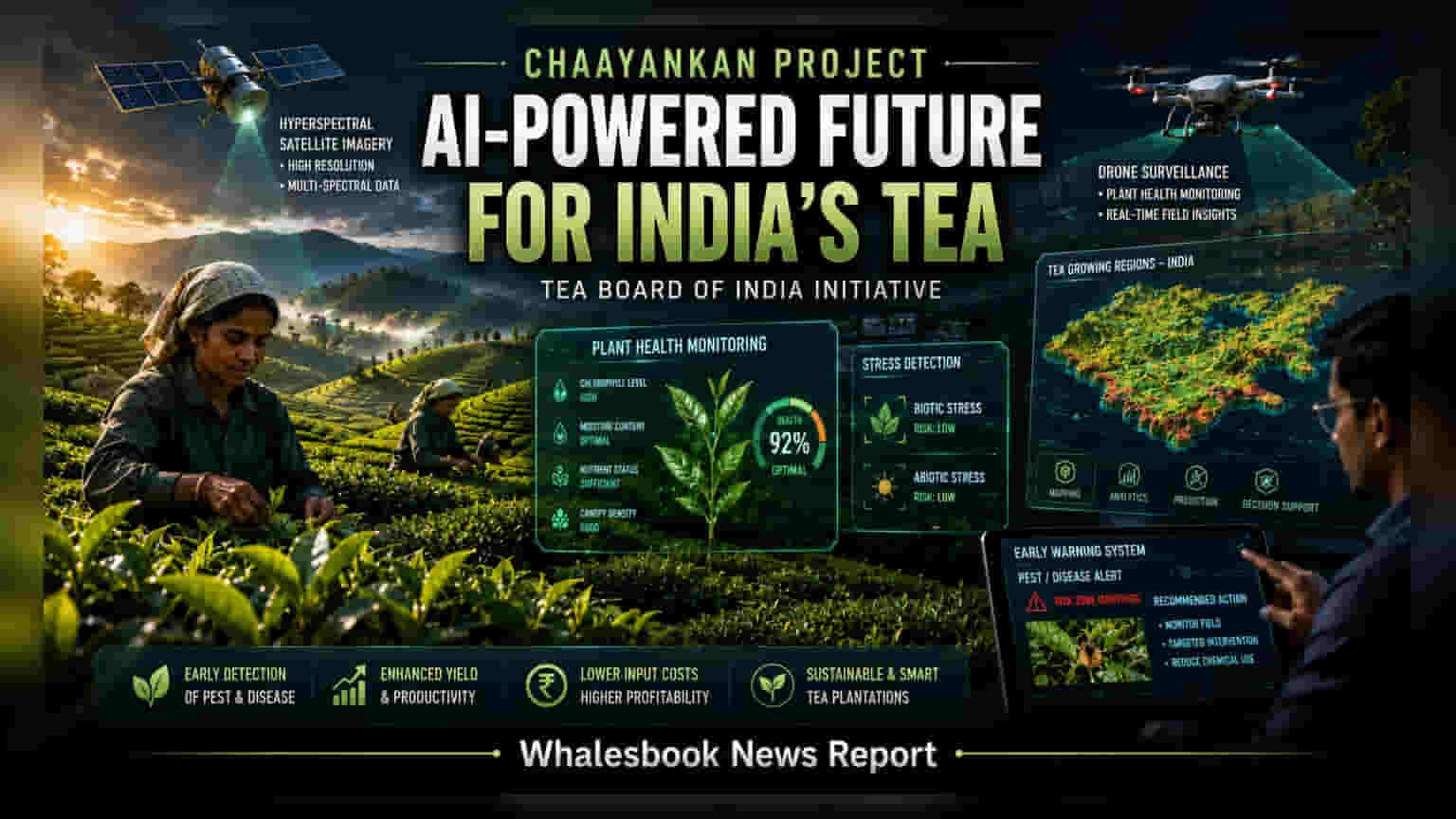
The Tea Board of India has launched a three-year initiative named CHAAYANKAN in partnership with ISRO and NIT Rourkela. Using satellite and AI technology, the project aims to improve tea crop health and yield predictions from 2026 to 2029. This modernization effort could help the Indian tea sector address long-standing productivity and disease management challenges.
The Tea Board of India has officially launched a technology-driven project, CHAAYANKAN, in collaboration with the National Remote Sensing Centre of the Indian Space Research Organisation (ISRO) and the National Institute of Technology (NIT) Rourkela. This three-year research and development initiative, running through March 2029, seeks to introduce advanced digital solutions into the traditional tea plantation landscape to improve overall agricultural outcomes.
The core objective of the project is to shift from traditional, manual oversight methods to precision agriculture. By utilizing hyperspectral imagery—a form of advanced satellite imaging—alongside drone technology, the project will map tea-growing regions and monitor plantation health in real-time. The system is designed to identify biotic and abiotic stress signals in tea bushes, allowing for the early detection and management of pest and disease outbreaks before they cause widespread damage to crops.
For the broader Indian tea industry, this development holds long-term significance. Productivity and profit margins in the tea sector are often volatile due to unpredictable weather patterns and recurring pest infestations. A technology platform that provides precise data for resource allocation could potentially help stabilize green-leaf yields. Furthermore, if the system successfully provides early warnings for diseases, it could allow estate managers to reduce their reliance on excessive chemical treatments, potentially lowering input costs and improving the quality of the final harvest.
While this move toward digital agriculture is a notable step, the practical implementation faces challenges. The Indian tea sector is highly fragmented, with a substantial portion of production managed by small tea growers. These growers may face initial hurdles in accessing the digital infrastructure or training required to utilize high-tech, data-driven diagnostic tools. Additionally, the project will need to overcome the technical complexity of integrating diverse, real-time ground observations with high-level satellite data across varied and remote terrains.
The success of the CHAAYANKAN project will be monitored through its development and testing phases over the next three years. For investors and stakeholders tracking the listed tea plantation sector, the important monitorables will include the results of initial pilots, the scalability of these AI tools across different growing regions, and any future government policy changes that may encourage or subsidize the adoption of such precision farming technologies by larger estates.