

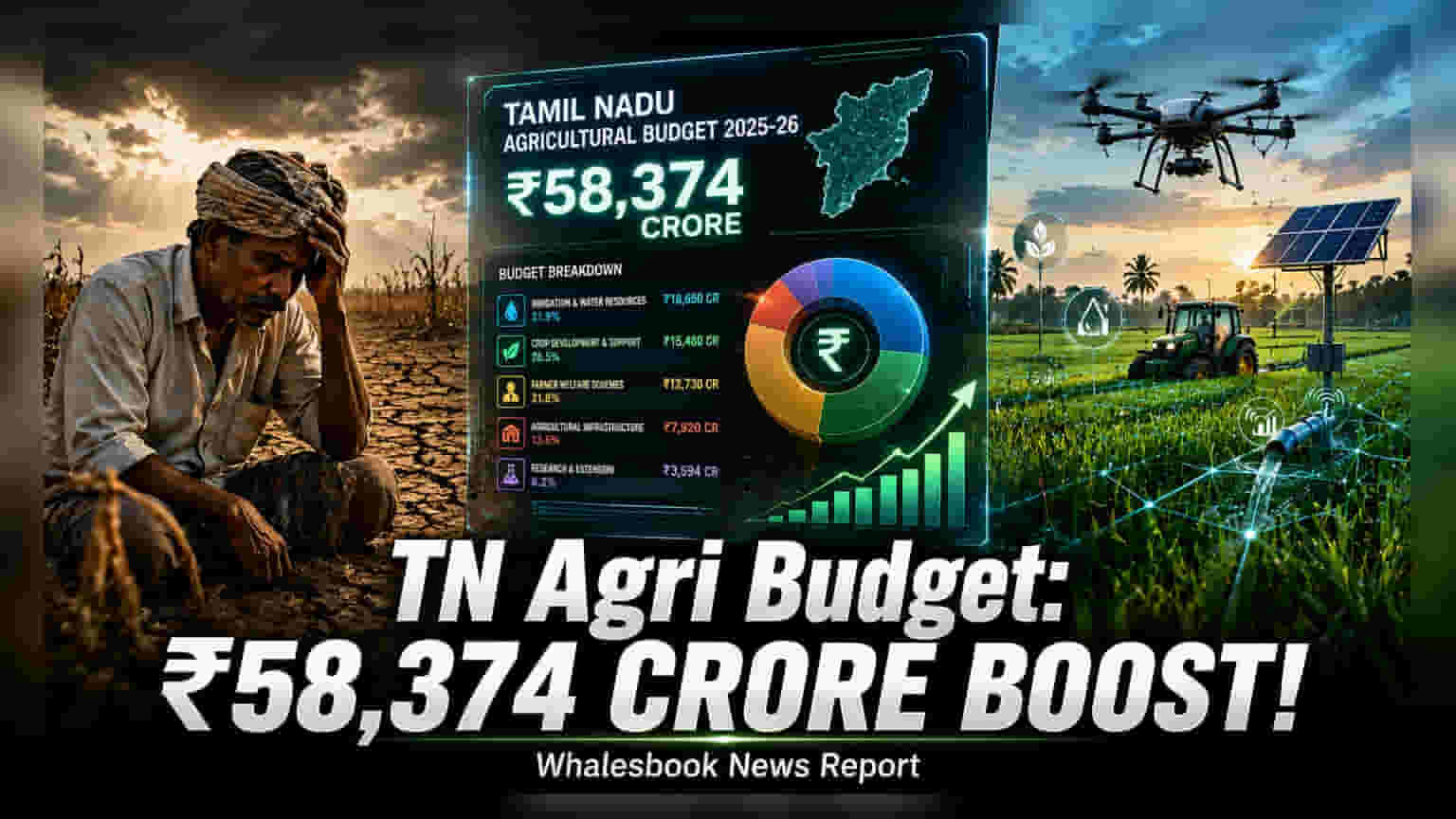
The Tamil Nadu government has announced a ₹58,374 crore budget for agriculture in 2026-27, marking a significant increase from previous years. The funds target soil health, technology adoption, and specific crop missions to boost farm output. This policy push aims to support rural growth, which may influence businesses in the irrigation, seed, and fertilizer sectors, though climate risks and fiscal constraints remain key monitorables.
The Tamil Nadu government has presented its 2026-27 Agriculture Budget, allocating ₹58,374 crore for farming and allied sectors. This represents a notable rise from the previous fiscal year's allocation of ₹45,661 crore, signaling a concerted effort to boost food security and modernize farming practices across the state. The budget focuses on several key areas, including soil conservation, crop-specific missions, and the integration of technology.
A central feature of this year’s plan is the new Tamil Nadu Soil Conservation Mission, which has been granted a total outlay of ₹600 crore. This move is aimed at improving land productivity, which is critical for long-term farm output. Additionally, the state has set an ambitious goal to achieve food grain production of 131 lakh tonnes over the next five years. To support these targets, the government has introduced various incentives for organic and natural farming, alongside a micro-irrigation fund of ₹785 crore. These initiatives create a potential demand tailwind for companies involved in drip irrigation systems, pumps, seeds, and agrochemicals.
From a business perspective, the government's push for technological integration, including the use of drones and AI for crop monitoring, suggests growing demand for agritech services and equipment. The state’s focus on increasing the area under cultivation for pulses and oilseeds may also drive requirements for specialized inputs and farm machinery. Furthermore, the commitment to the Cotton Renaissance Mission and the Minor Millet Mission provides specific opportunities for companies operating within those specialized supply chains.
However, the implementation of these plans faces several challenges. Analysts often highlight that state-level agriculture budgets are subject to fiscal pressure, particularly when combined with large-scale welfare commitments or loan waivers. A primary risk for the sector is climate variability. The anticipated impact of weather patterns, such as the potential Super El Niño, could hurt crop yields despite government support. Moreover, water resource management remains a complex issue in the region, with persistent disputes and the need for consistent water release from dams like Mettur affecting farmers' ability to plan planting cycles.
Investors tracking the rural economy may look for updates on how these funds are deployed. Key monitorables include the actual disbursement of subsidies for organic farming, the progress of the Soil Conservation Mission, and any changes in input costs for farmers. Additionally, the ability of the state to manage its fiscal deficit while funding these large-scale agricultural schemes will be a significant indicator of long-term economic stability for the region.