

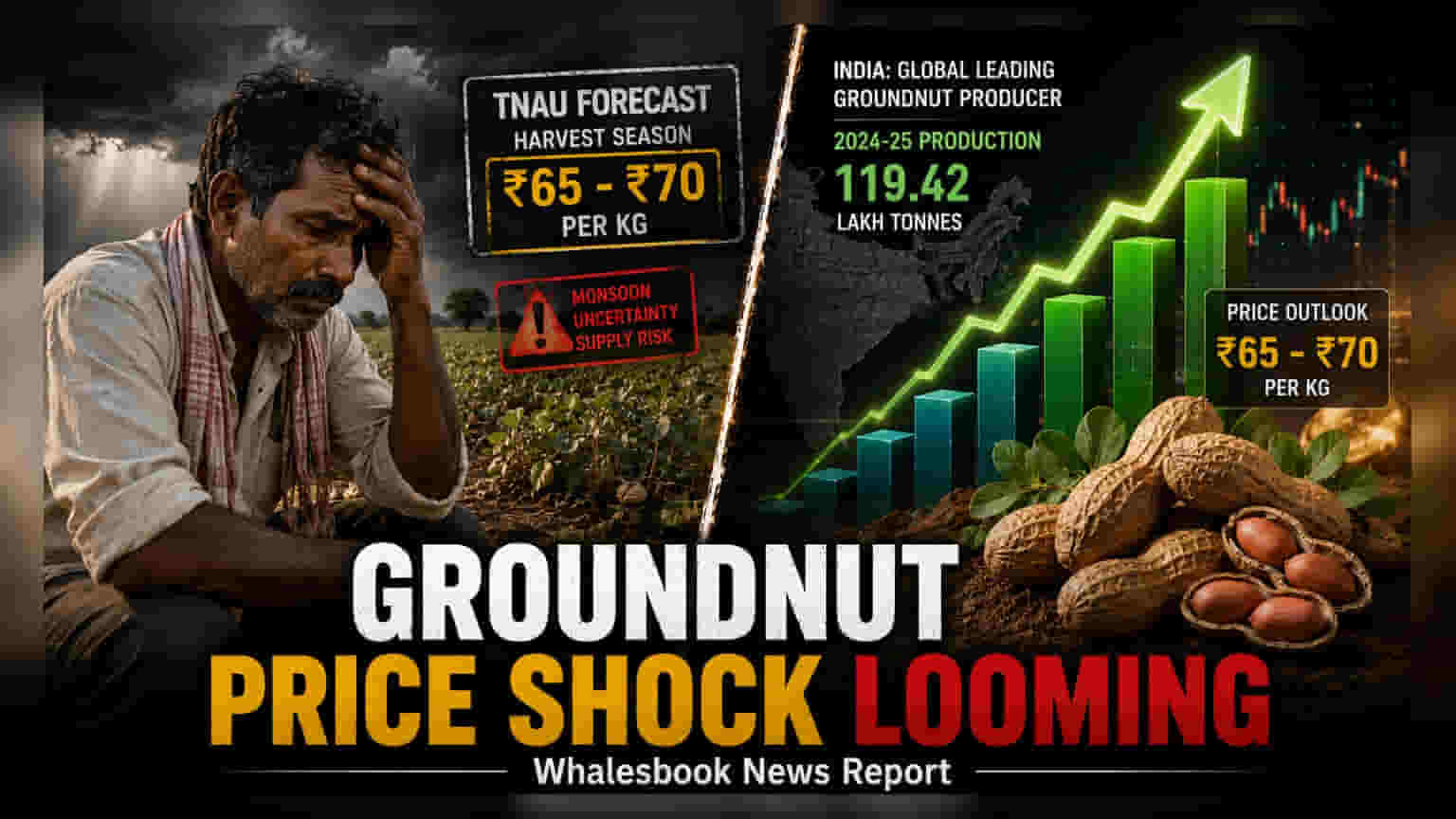
The Tamil Nadu Agricultural University (TNAU) forecasts groundnut prices to range between ₹65 and ₹70 per kilogram for the upcoming harvest. Based on 25 years of market data, this outlook highlights potential supply challenges linked to monsoon volatility. For market participants, such commodity price trends are relevant as they directly influence raw material costs in the edible oil and livestock feed industries.
The Tamil Nadu Agricultural University (TNAU) has issued a price forecast for groundnuts, projecting rates between ₹65 and ₹70 per kilogram during the upcoming harvest season. This guidance comes from the Domestic and Export Market Intelligence Cell (DEMIC), which based its findings on an analysis of market data from the last 25 years across key regulated markets like Tindivanam and Sevur.
While this advisory is primarily designed to help farmers with strategic planning, it serves as a meaningful indicator for the broader agricultural commodity market. India, as one of the world's leading groundnut producers, plays a key role in the edible oil and animal feed supply chains. In the 2024-25 season, the country reported a significant harvest of approximately 119.42 lakh tonnes from 57.62 lakh hectares.
Despite an increase in the overall cultivation area for the current season, trade expectations point toward a potential decline in market arrivals. This gap between the land under cultivation and the expected harvest is being attributed to recent fluctuations in monsoon patterns. Such volatility can disrupt standard supply cycles, affecting not only the availability of groundnuts but also the price dynamics for the processing industries that rely on this crop.
For investors and observers tracking the FMCG and agricultural sectors, groundnut price trends are particularly important. The crop is a major raw material source for the edible oil industry, and its byproduct, oilcake, is a staple in the high-protein livestock feed market. When raw material prices shift, companies operating in these segments often face pressure on their operating margins, as the ability to pass on cost increases to the end consumer depends on wider demand conditions.
Tamil Nadu remains a critical state for production, with major growing hubs in districts like Thiruvannamalai, Namakkal, Villupuram, Salem, Cuddalore, and Ariyalur. Given that processing for oil and direct consumption is a high-volume business, the stability of these supply chains is closely linked to weather outcomes. The key monitorable for market participants over the coming months will be the actual volume of market arrivals compared to these forecasts, as this will determine the extent of price pressure on downstream industries.