

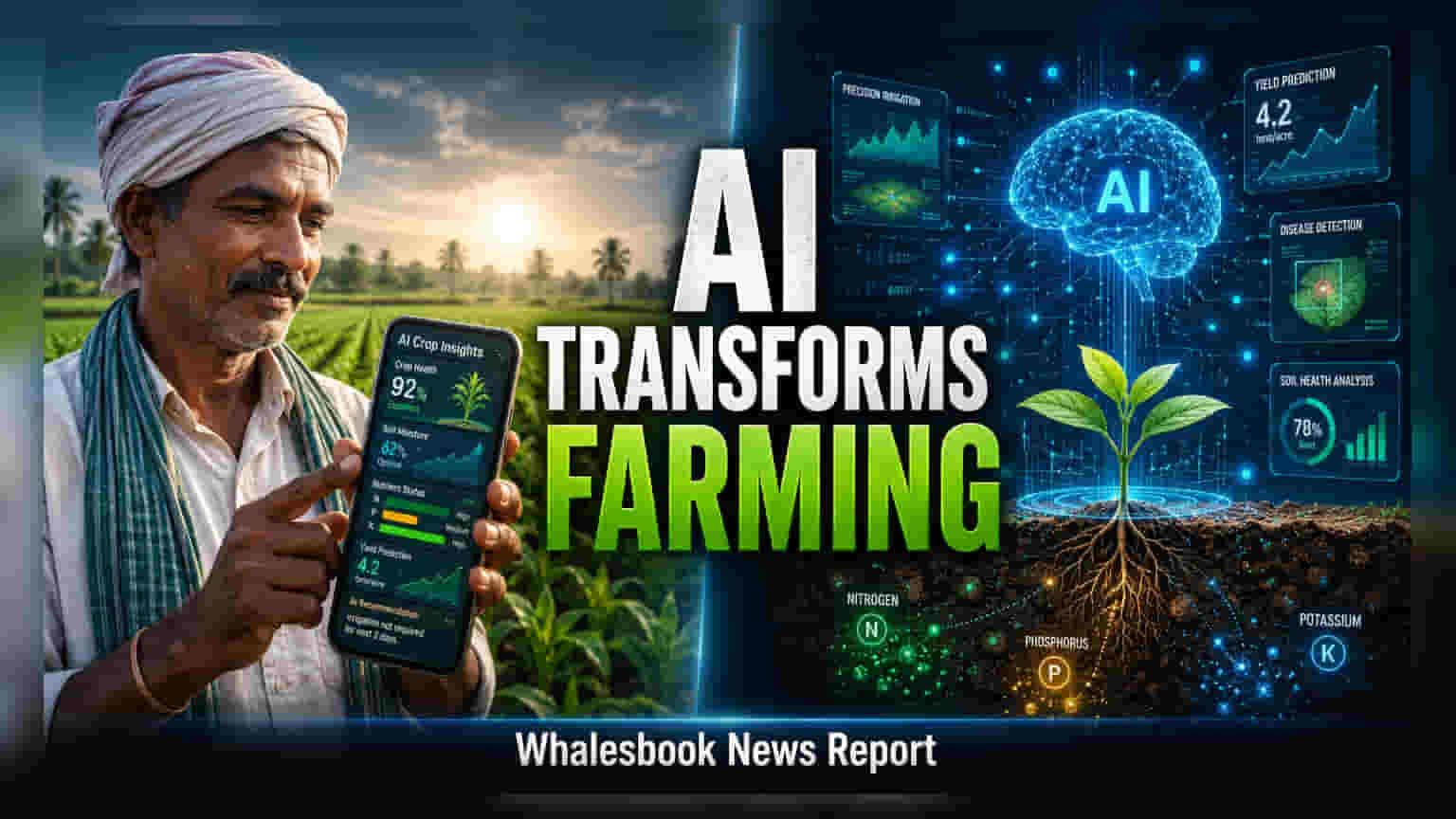
The Tamil Nadu government has launched the 'Uzhavar AI scheme' in its 2026-27 Agriculture Budget to provide real-time crop and weather alerts via mobile. This technology-focused initiative aims to modernize farming support, though its success depends on effective implementation and addressing the digital divide in rural areas.
The Tamil Nadu government has introduced the 'Uzhavar AI scheme' as part of its Agriculture Budget for 2026-27. With an initial allocation of ₹2 crore, the state aims to integrate artificial intelligence and machine learning into agricultural extension services to assist farmers with data-backed, real-time guidance.
The scheme leverages mobile technology to deliver personalized advisories. Farmers will receive updates on crop lifecycles, localized weather forecasts, and early warnings for pest outbreaks. A key focus is accessibility; the initiative includes a 'Voice-First' feature, allowing rural cultivators to access market intelligence and government welfare details through voice queries, bypassing the need for complex text-based navigation.
Infrastructure and Modernization Plans
This digital push is part of a larger plan to modernize the state’s agricultural infrastructure. The budget includes ₹27.82 crore for constructing eight new Integrated Agricultural Extension Centres in districts such as Tiruvannamalai and Coimbatore. These centers are designed to act as a one-stop hub for farmers seeking technical guidance. Additionally, a combined allocation of over ₹10 crore has been earmarked for the distribution of Soil Health Cards, targeting nearly four lakh farmers to help improve land productivity through data-driven soil analysis.
Implementation and Economic Context
While the integration of AI is aimed at enhancing productivity and crop yields, the initiative faces practical hurdles. The primary challenge remains the digital divide. The program's long-term effectiveness will depend on the ability of rural farmers to adopt and consistently use these digital tools. Furthermore, the state government must ensure the high quality and local relevance of data fed into these AI models, as inaccurate advisories could negatively impact crop management.
From a broader economic perspective, the sustainability of such specialized schemes is linked to the state's fiscal management. The agriculture sector remains a critical pillar of Tamil Nadu’s economy, and large-scale spending on welfare and modernization requires consistent project execution and monitoring. The next important update for the public will be the timeline for the phased rollout of these services and the adoption metrics among the farming community.