

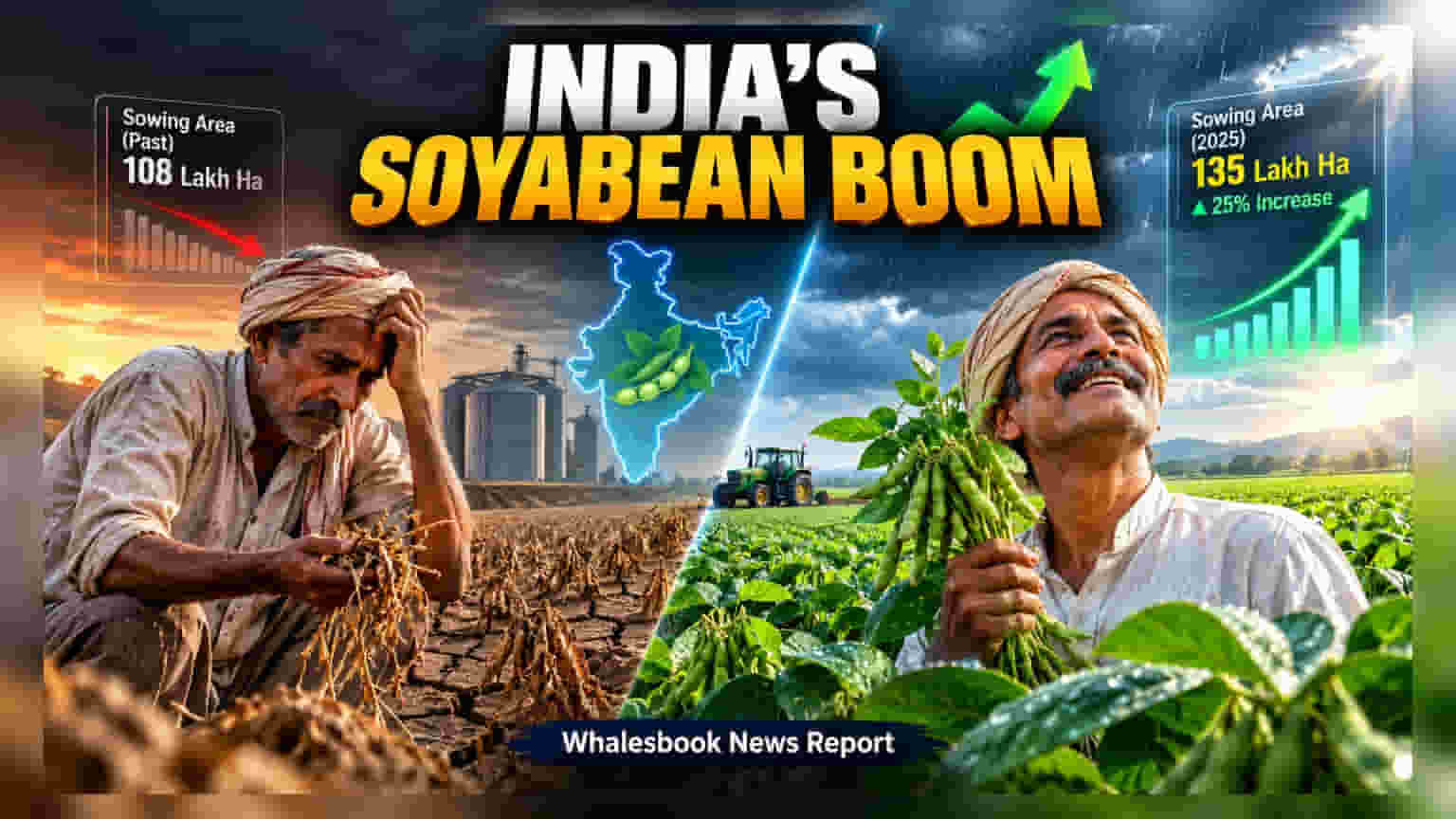
India's soybean planting for the 2026 Kharif season has nearly reached last year's levels at 117.68 lakh hectares. Improved July rainfall in Madhya Pradesh and Gujarat boosted sowing, though some regions like Maharashtra report a slight decline. Healthy crop conditions are currently reported across major growing areas.
India’s soybean planting for the 2026 Kharif season has shown a strong recovery, narrowing the gap with last year's total. Government data as of July 31 shows total acreage at 117.68 lakh hectares, reflecting only a marginal 0.70% decline compared to 118.52 lakh hectares during the same period in 2025. This recovery is largely attributed to favorable rainfall throughout July, which encouraged farmers to expand their planting across key states.
Regional Sowing Trends
Madhya Pradesh, the country's primary soybean-producing state, reported a 2% increase in acreage to 52.09 lakh hectares, up from 51.08 lakh hectares last year. Significant growth was also seen in Gujarat, where planting area rose by 10% to 2.79 lakh hectares. Other states including Telangana, Uttar Pradesh, and Andhra Pradesh also showed positive trends, with Uttar Pradesh and Andhra Pradesh effectively doubling their planted area compared to the previous year.
Despite the national recovery, some states continue to lag. Maharashtra, a critical contributor to national output, reported a 3.84% decline to 46.56 lakh hectares. Rajasthan and Karnataka also saw smaller dips of 5.48% and 3.17%, respectively. For investors tracking the edible oil and animal feed sectors, these regional variations are important as they influence total domestic supply and raw material availability for processors.
Crop Health and Sector Outlook
According to the Soyabean Processors Association of India (SOPA), the crops planted in June have entered the flowering stage. Current field assessments describe the crop condition as normal to good, with healthy vegetative growth observed in most regions. The use of agricultural chemicals for weed control has been reported as effective, and there have been no significant reports of pest or disease outbreaks that would threaten overall yields.
For the Indian edible oil industry, the primary monitorable in the coming months will be the total harvest volume and domestic price trends. While acreage has stabilized, the final production will depend heavily on the distribution of rainfall through August and September. Investors in companies involved in soybean processing, such as those manufacturing soy oil or animal feed, often track these progress reports to gauge future raw material costs and margin visibility. As the season progresses, market participants will watch for any impact of weather volatility on final crop yields during the critical pod-filling stage.