

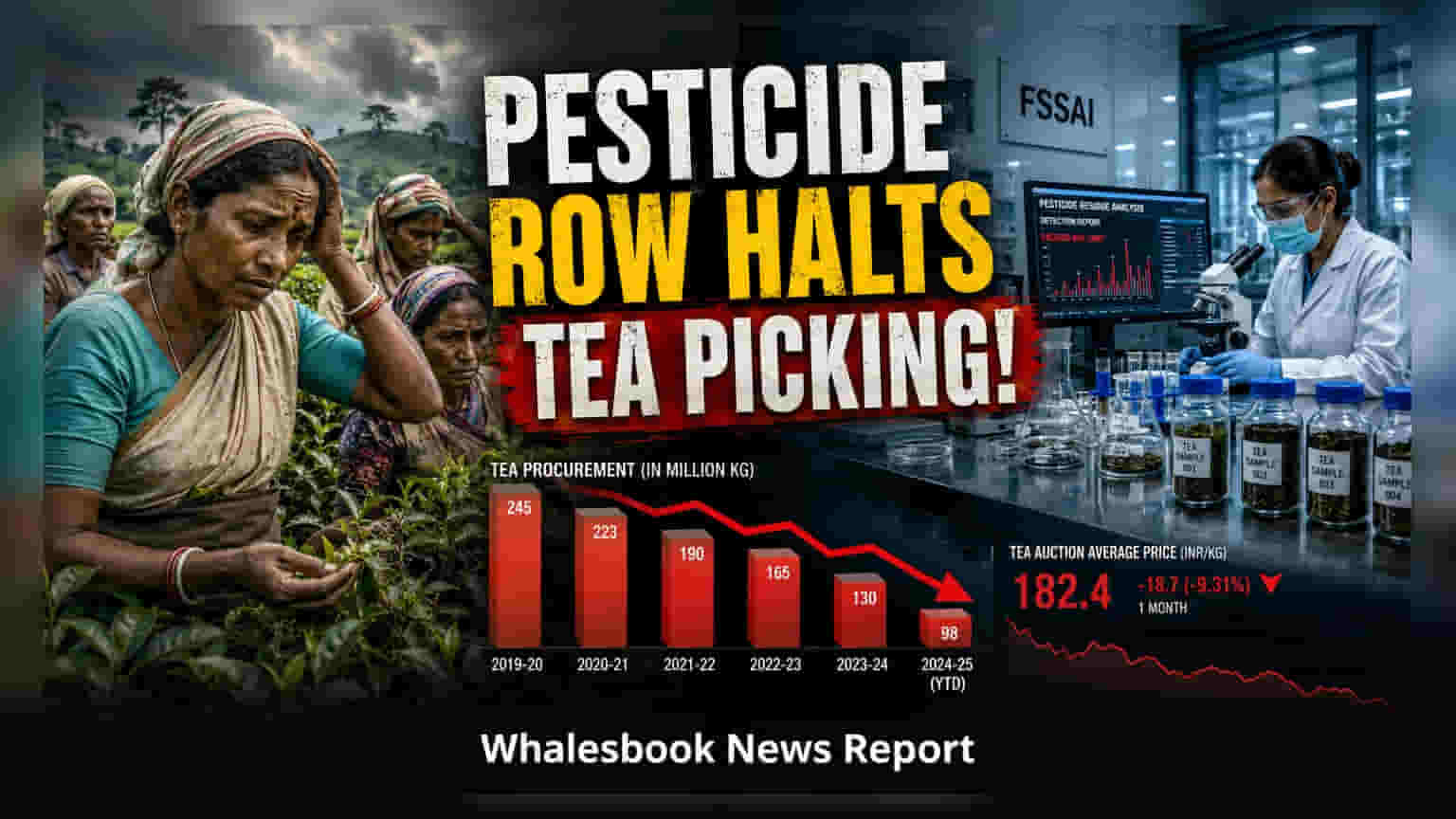
Small tea growers in Assam and West Bengal are requesting a pause on strict pesticide residue rules following procurement rejections by Tata Consumer Products and Hindustan Unilever. The industry is facing a crisis as major brands enforce FSSAI food safety standards, impacting peak season sales. Farmers argue that a lack of testing facilities and un-notified residue limits are causing widespread crop disqualification.
Small tea growers across Assam and West Bengal are facing a significant operational challenge as major tea marketers, including Tata Consumer Products Ltd (TCPL) and Hindustan Unilever Ltd (HUL), tighten their procurement standards. Following guidance from the Tea Board of India, these companies have begun rejecting green tea leaves that do not meet the Food Safety and Standards Authority of India (FSSAI) requirements regarding pesticide residues. This enforcement has caused disruptions during the peak production season, leaving many small growers unable to sell their harvest.
The core of the conflict lies in the implementation of the FSSAI’s March 2024 directive, which requires testing for six specific pesticides. Small growers, represented by organizations such as the Confederation of Small Tea Growers Associations (CISTA), argue that the enforcement is impractical. They highlight that the FSSAI has yet to formally notify specific minimum residue limits (MRLs) for these chemicals. Consequently, a default and stringent limit of 0.01 mg/kg is being applied, resulting in a high rate of non-compliance for many farmers who lack access to local testing facilities.
Growers are advocating for a transition from regulatory sampling, which can trigger immediate enforcement and rejection, to surveillance sampling, which is used for data collection and monitoring. In addition to seeking regulatory leniency, some grower associations have requested a ban on the use of monocrotophos, a toxic pesticide that has reportedly been detected in samples from North Bengal. A meeting with the West Bengal state secretariat is scheduled to address these concerns and discuss potential interim relief for the farming community.
For investors and market observers, the situation highlights the increasing focus on food safety and quality control within the Indian consumer goods sector. Companies like TCPL and HUL are prioritizing compliance to align with evolving health regulations and consumer expectations. While this ensures product safety, it also introduces supply chain volatility in the short term. The ability of the industry to balance stringent quality requirements with the practical realities of small-scale farming will be a key factor to watch. Future developments, including potential modifications to testing protocols or government-led initiatives to improve testing infrastructure for farmers, may determine the long-term stability of tea procurement in these regions.