

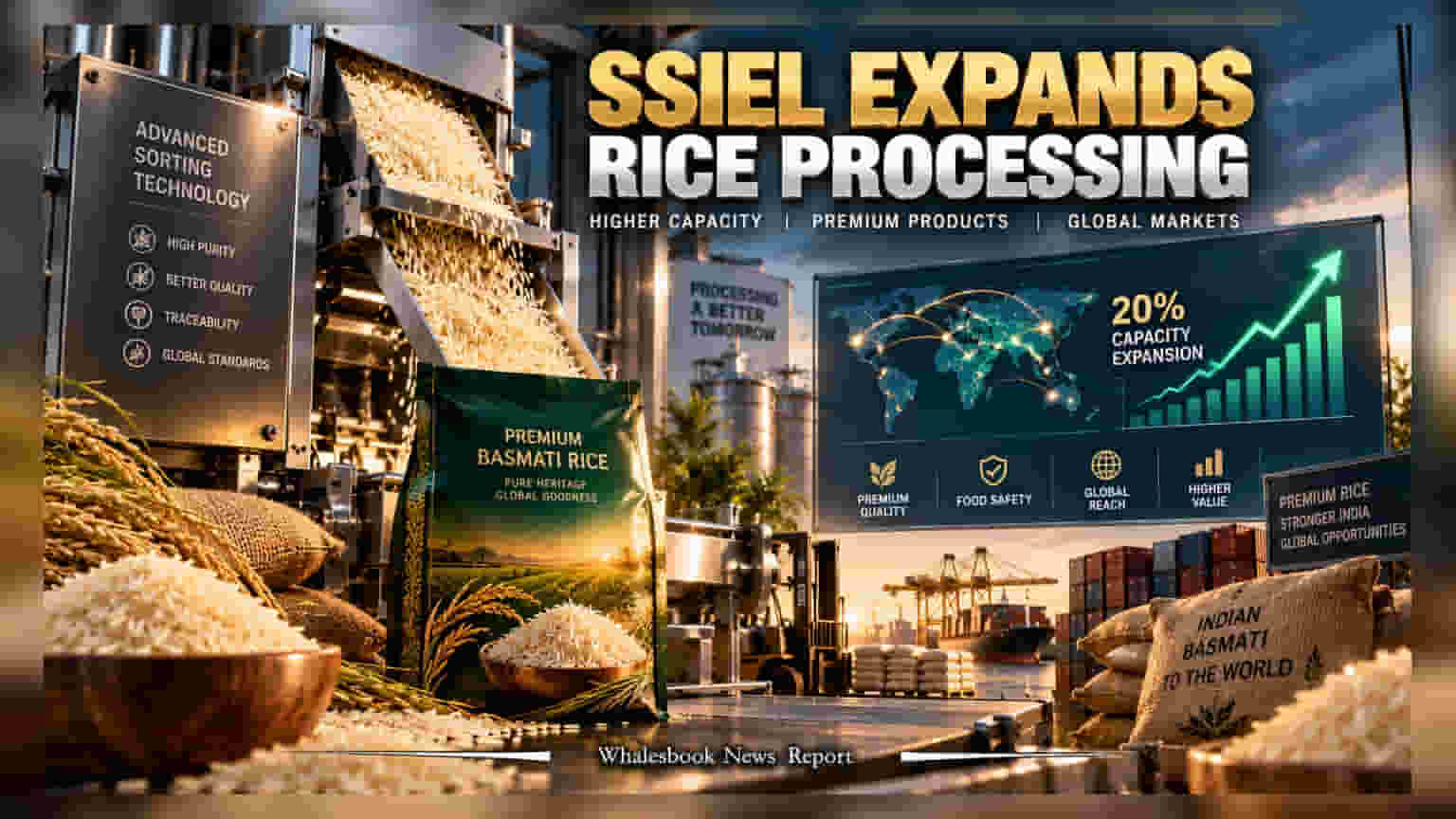
Shiv Shakti Inter Globe Exports (SSIEL) is increasing its basmati rice processing capacity by 20% to prioritize high-value, branded products over bulk exports. This strategic shift aims to improve margins by meeting strict international quality and traceability standards. However, the business faces inherent risks from volatile raw material prices and tightening global pesticide residue regulations.
Shiv Shakti Inter Globe Exports (SSIEL) is scaling its operations in Haryana by increasing its processing capacity by 20%. This expansion is part of a broader shift in the company’s business strategy, moving away from the highly competitive bulk commodity rice market toward higher-value, premium, and branded rice products. To support this, the company has integrated advanced sorting technology, which is essential for ensuring the consistent quality and traceability demanded by international buyers.
The global appetite for basmati rice is evolving, with consumers and importers increasingly prioritizing food safety and origin verification. For exporters, this change in demand creates an opportunity to move up the value chain. By focusing on branded and traceable products, companies aim to protect themselves from the intense price wars common in bulk exports and instead command better profit margins. The investment in new sorting and processing technology at its Nissing facilities is designed to help the company meet these rigorous international standards.
While the company is strengthening its position in the agribusiness sector, it also maintains interests outside of rice, including the luxury hospitality segment through its subsidiary, SSIEL Hotels and Infrastructure. This diversification serves as a way to spread the company's business risks across different industries.
However, the company’s pivot to premium products comes with significant challenges. As an exporter, SSIEL remains sensitive to regulatory changes, including international pesticide residue norms which can impact trade access. Furthermore, the agricultural business is inherently tied to the volatility of paddy prices. Since raw material costs can fluctuate based on crop cycles and weather conditions, maintaining stable profit margins is a constant struggle for companies in this sector.
Looking ahead, the primary focus for stakeholders will be the execution of this capacity expansion and the company's success in penetrating new geographic markets with its premium rice brands. The industry will also watch how the company navigates the delicate balance of maintaining export volumes while complying with stricter international food safety regulations.