

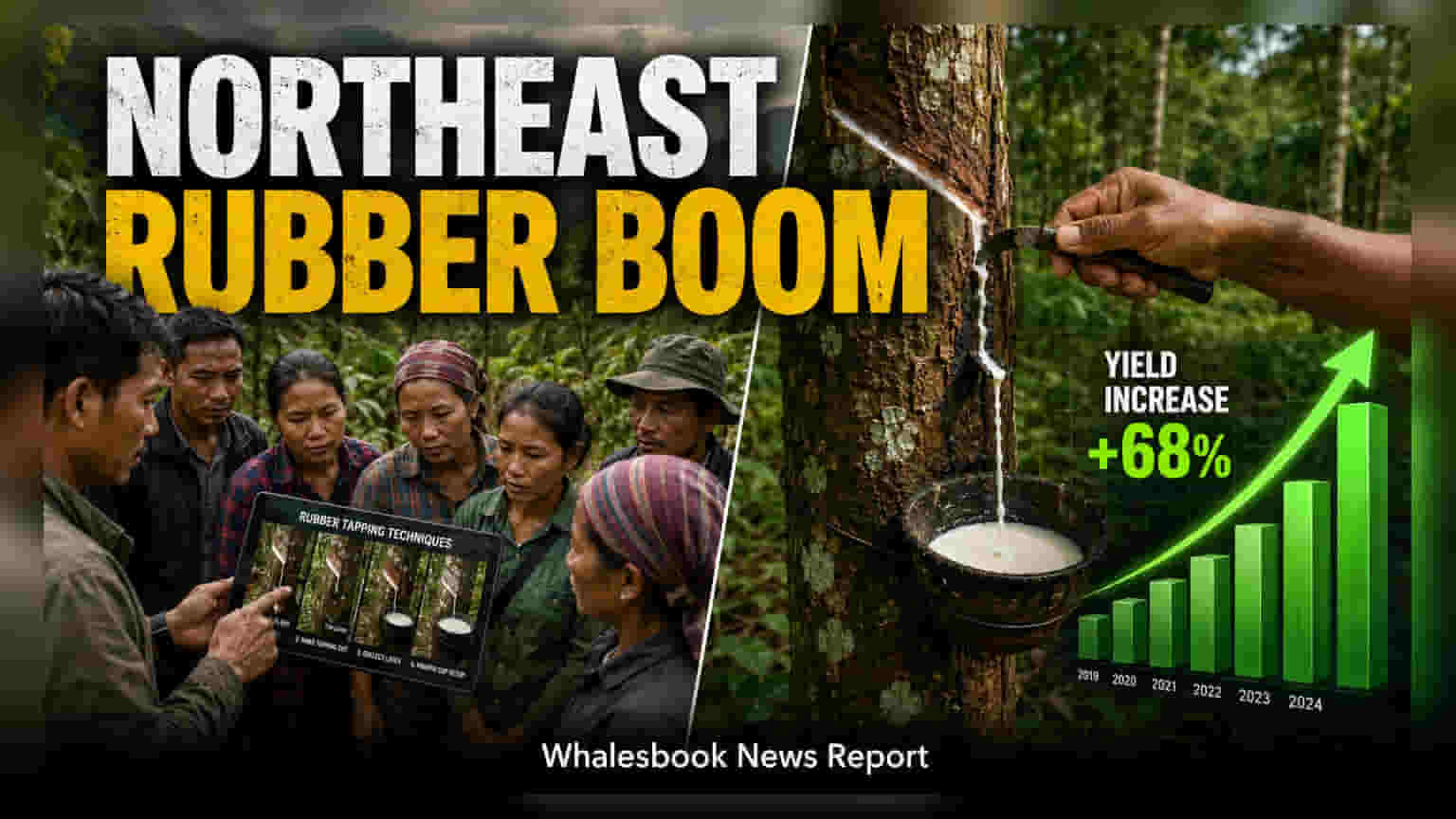
The Rubber Board has launched a multilingual educational video series under the ₹150-crore iSPEED program. This initiative aims to train rubber growers in Northeast India in modern processing techniques. The move is significant as India works to increase domestic natural rubber output and reduce its dependence on imports to support the local tyre manufacturing sector.
The Rubber Board, a government body under the Ministry of Commerce and Industry, has launched an educational video series to help natural rubber growers in Northeast India improve their farming and processing methods. This initiative is part of the ₹150-crore iSPEED (INROAD Skilling and Production Efficiency Enhancement Drive) program, which focuses on providing practical training to approximately three lakh rubber growers across the region.
Skills Training for Rubber Farmers
The video series provides guidance on five key technical areas, including rubber tapping, rain guarding, grading, rubber sheet making, and the use of scientific smokehouses. By using animation and field demonstrations in languages such as Assamese, Bengali, Hindi, and Malayalam, the Rubber Board aims to make these technical processes easier to understand for growers in remote areas. The program seeks to enhance the quality of the rubber produced, which is crucial for achieving better market value and ensuring the long-term sustainability of the farms.
Strategic Importance to the Tyre Industry
This training program is part of Project INROAD, a collaborative effort involving the Indian tyre industry. For investors and market analysts, the development of the rubber sector in the Northeast is strategically important. India currently produces less natural rubber than it consumes, which forces domestic manufacturers to rely on imports to meet their raw material needs. Increasing domestic production and improving the quality of rubber harvested in the Northeast can help reduce this reliance on imported raw materials. Over the last five years, this partnership has supported the development of nearly 1.8 lakh hectares of new rubber plantations across 113 districts in the Northeast.
Challenges and Market Risks
While this initiative aims to improve output, the sector faces several challenges. Small-scale farmers remain vulnerable to fluctuations in global rubber prices, which can impact their income and willingness to invest in new farming technology. Additionally, successfully implementing these modern techniques across a large and geographically diverse region requires consistent support and logistical effort. The long-term success of these plantations will also depend on weather conditions and the ability of the industry to maintain sustainable farming practices. Investors monitoring the agricultural and tyre sectors may track future reports on production yields and acreage expansion in the Northeast to see if these efforts are successfully narrowing the gap between domestic supply and demand.