

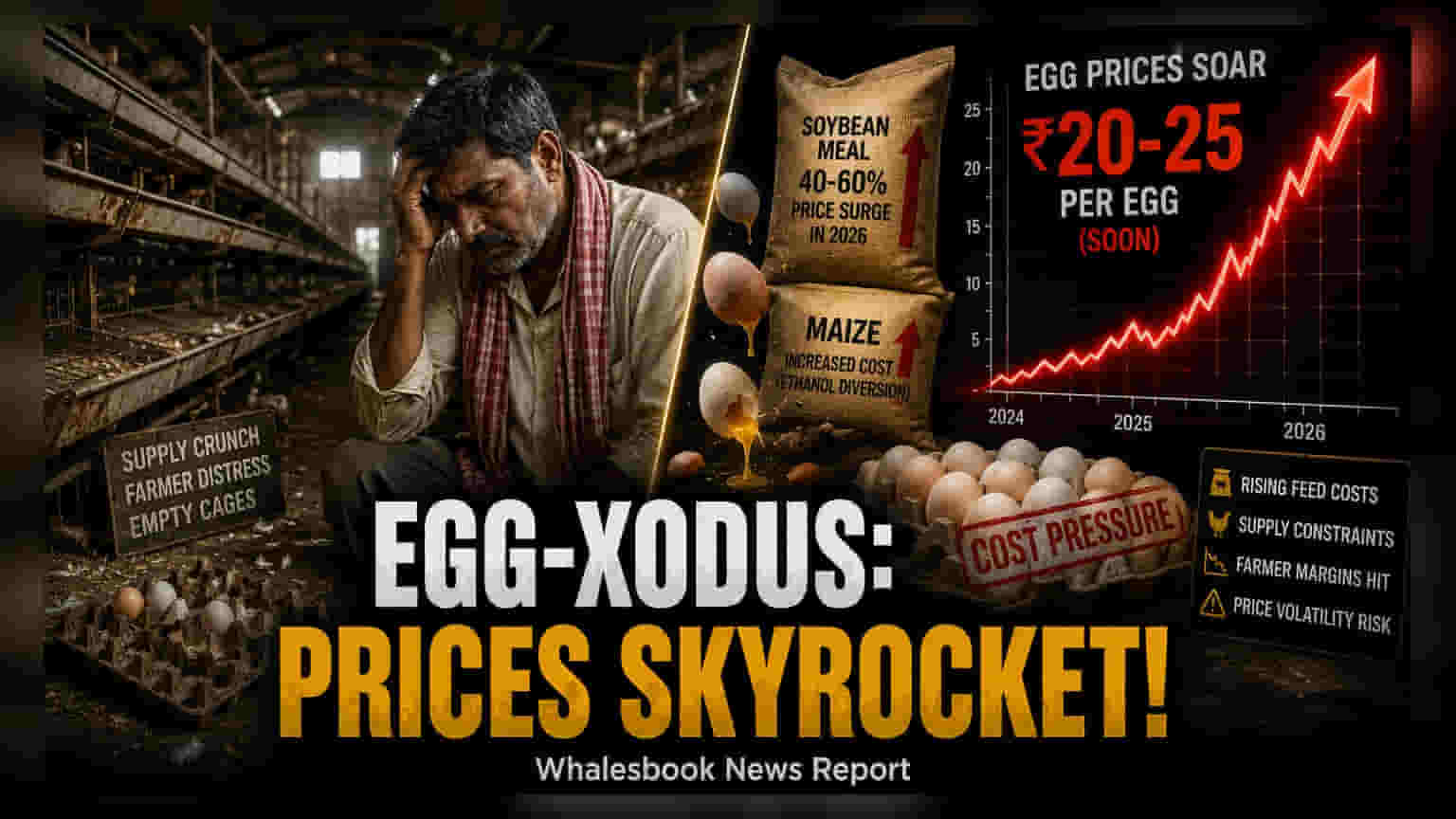
India’s poultry sector is facing significant cost pressure as maize and soybean meal prices soar, partly due to increased ethanol demand. This input inflation is forcing branded egg producers to hike prices, with some premium variants expected to hit ₹20–₹25 per unit. Investors are closely monitoring how this cost-push inflation impacts profit margins and consumer demand for premium poultry products.
The Indian poultry industry is currently navigating a period of sharp cost inflation, driven by a structural spike in the prices of essential feed ingredients like maize and soybean meal. This development is putting significant pressure on the production costs of eggs, forcing branded egg suppliers to reconsider their pricing strategies to protect profitability. Industry projections indicate that premium branded eggs could soon retail for as much as ₹20 to ₹25 per piece, marking a notable increase for the consumer.
The core of the problem lies in the rising cost of poultry feed, which makes up a large portion of a farmer's total expenses. Soybean meal prices have surged by 40% to 60% in 2026, while maize has become increasingly expensive due to the government’s ethanol-blending mandate. As maize is diverted to produce fuel, the poultry sector is competing with the energy industry for this critical raw material. This policy-driven demand is creating a persistent supply squeeze for feed manufacturers and poultry farmers.
With production costs rising, many poultry farmers are struggling to maintain sustainable margins. To manage these expenses, some are opting to cull older flocks earlier than usual and are reducing the number of new chicks placed. This operational tightening is intended to manage cash flow but also restricts the overall supply of eggs in the market. In deficit regions like Maharashtra, which relies heavily on supplies from southern states such as Telangana and Andhra Pradesh, this supply constraint often leads to higher retail price volatility.
Branded egg companies are facing a unique set of challenges in this environment. While they aim to offer premium products to health-conscious consumers, they must also grapple with the high cost of sourcing quality feed that meets specific certification standards. Passing these higher production costs to the customer is becoming increasingly difficult as price sensitivity rises. For companies like Eggoz, the main hurdle is maintaining market share while asking consumers to pay a premium that is now significantly higher than regular egg prices.
While the industry expects some relief with the arrival of the new kharif harvest of soybean and maize towards the end of the year, structural challenges remain. The long-term reliance on the southern states for supply creates logistics and price risks for other parts of the country. Additionally, the broader impact of extreme weather patterns and heatwaves remains a constant threat to poultry health and output.
The next important update for investors will be the availability of the kharif harvest and whether it provides the anticipated cost relief for poultry feed. Market participants will also watch the sustainability of consumer demand for premium eggs as retail prices rise. Any further government intervention regarding the ethanol mandate or changes in feed ingredient availability could significantly influence the sector's financial performance in the coming quarters.