

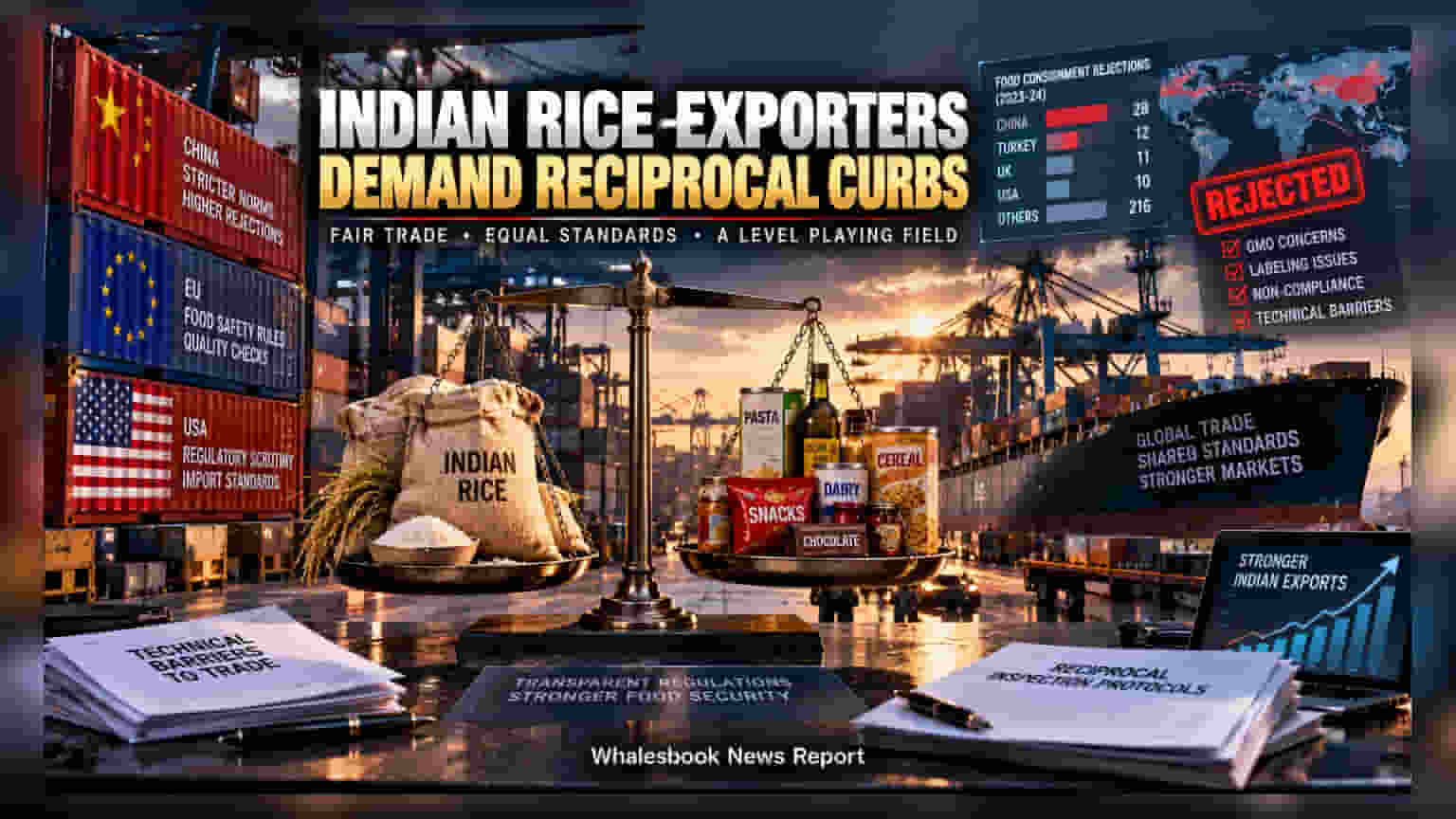
Indian rice exporters are lobbying for mirror-image import regulations on foreign food, citing strict international barriers that hurt Indian exports. With rising rejections abroad, investors are tracking how these policy shifts could impact the compliance costs and profitability of leading Indian agricultural companies.
Indian rice exporters are pushing the government to adopt a reciprocal stance on food import regulations, arguing that Indian products face unfair and complex technical hurdles in foreign markets. The move, championed by industry bodies like The Rice Exporters Association, seeks a shift toward mirror-image inspection and registration protocols for foreign food items entering India. This demand stems from increasing friction in international trade, where exporters are navigating stricter, mill-specific compliance standards rather than broad country-level certifications.
The push for these changes comes after a series of high-profile rejections of Indian rice shipments in key export destinations. Specifically, Chinese authorities have rejected multiple consignments, citing concerns over genetically modified organisms (GMOs). These rejections create significant financial strain for exporters, who must not only absorb the cost of the lost goods but also navigate the logistical nightmares and brand damage associated with such trade barriers. Unlike traditional tariffs, which affect the price of goods, these technical barriers affect the ability to sell products at all, leading to unpredictable revenue streams for agricultural businesses.
Data from the Food Safety and Standards Authority of India (FSSAI) highlights the current reality of strict regulatory enforcement. During the 2023-24 period, Indian regulators rejected 277 food consignments from 46 different countries. China led the list with 28 rejections, followed by other nations including Turkey, the United Kingdom, and the United States. While India is clearly enforcing its own high standards, exporters argue that the global system is not symmetrical, forcing Indian firms to jump through hoops that foreign firms exporting to India do not face to the same extent.
For investors in the agricultural sector, these trade tensions represent a shift in operational risk. Companies that have invested heavily in advanced testing technology, laboratory infrastructure, and supply chain traceability are generally better positioned to navigate these complex regulatory landscapes. Smaller exporters, or those relying on traditional farming and processing methods without modern compliance tech, face the highest risk of margin compression due to potential rejections or the need for expensive, last-minute certification upgrades.
Investors should monitor how the government responds to these requests for reciprocal curbs. A potential shift toward tighter, risk-based registration for foreign imports could impact the competitive environment for food brands importing into India. Furthermore, the long-term health of listed rice exporting companies will depend on their ability to minimize rejections by adopting internationally accepted testing protocols, which remains the most sustainable way to bypass these non-tariff trade barriers.