

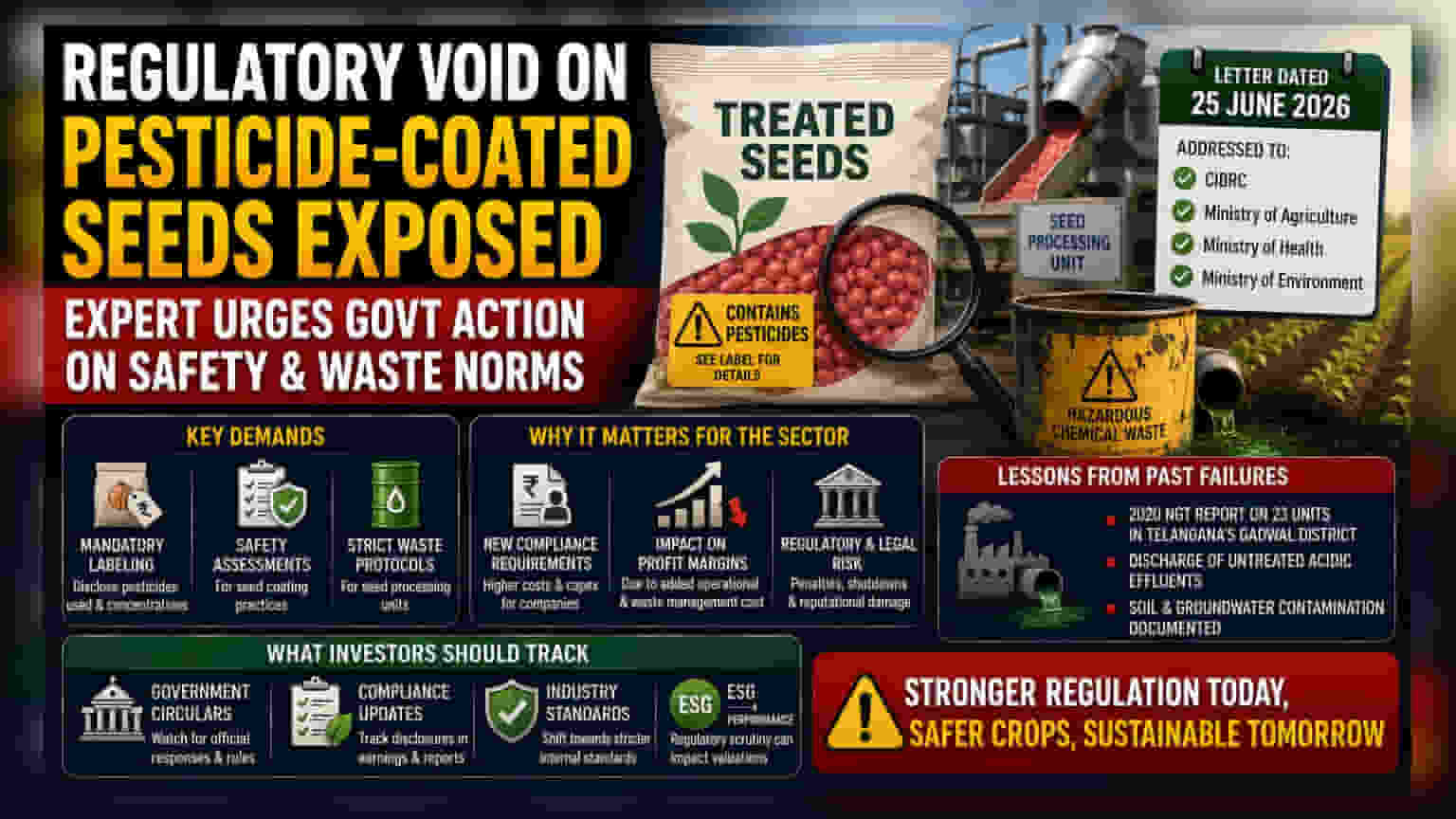
A policy expert has flagged significant regulatory gaps regarding pesticide-coated seeds and processing units in India. For investors, this development signals potential for stricter government oversight, which could lead to higher compliance costs and operational changes for agrochemical and seed processing companies.
What Happened
A public policy expert, Narasimha Reddy Donthi, submitted a formal letter on June 25, 2026, to key Indian regulatory bodies, including the Central Insecticides Board and Registration Committee (CIBRC) and the Ministries of Agriculture, Health, and Environment. The communication highlights a significant regulatory void regarding the use of pesticide-coated seeds and the chemicals used in seed processing units. The expert has called for immediate government action, specifically demanding mandatory labeling for treated seeds, formal safety assessments for seed coating practices, and stricter protocols for chemical waste disposal in processing facilities.
Why This Matters For The Agrochemical Sector
For investors, the potential introduction of new regulations is a factor to monitor. The agrochemical and seed processing sector in India often relies on chemical treatments to protect crops and ensure higher yields. If the government implements these recommendations, companies might face new compliance requirements, such as mandatory labeling that outlines the specific pesticides used and their concentrations.
Beyond labeling, tighter regulations on processing units could require businesses to invest in better waste treatment infrastructure. This often leads to increased capital expenditure and higher ongoing operational costs to manage acidic effluents and hazardous chemical runoff. While responsible companies may already follow safety norms, any industry-wide tightening of rules forces all players to adjust their processes, potentially impacting profit margins in the short term.
Lessons From Past Compliance Failures
The letter draws attention to the long-term risks of regulatory non-compliance. It references a joint monitoring report submitted to the National Green Tribunal (NGT) in January 2020, which inspected 23 seed processing units in Telangana's Jogulamba Gadwal district. The report documented issues such as the discharge of untreated acidic effluents and contamination of soil and groundwater.
This historical context serves as a reminder that environmental non-compliance is not a minor operational detail; it carries significant legal and financial risk. Companies found violating environmental norms often face operational halts, penalties, or costly remediation orders, which can disrupt production and damage corporate reputation.
What Investors Should Track
Investors may monitor the following to understand the business impact:
- Government Circulars: Watch for any official response from the Ministry of Agriculture or the CIBRC regarding these demands for mandatory labeling and safety assessments.
- Compliance Updates: In earnings calls or annual reports, track whether seed and agrochemical companies discuss their chemical treatment processes and waste management capabilities.
- Industry Standards: Any shift toward stricter internal standards by large, listed seed and agrochemical companies to preempt potential government regulation.
- ESG Performance: As institutional investors place greater importance on Environmental, Social, and Governance (ESG) scores, any company facing regulatory scrutiny for effluent management may experience pressure on its valuation.