 Whalesbook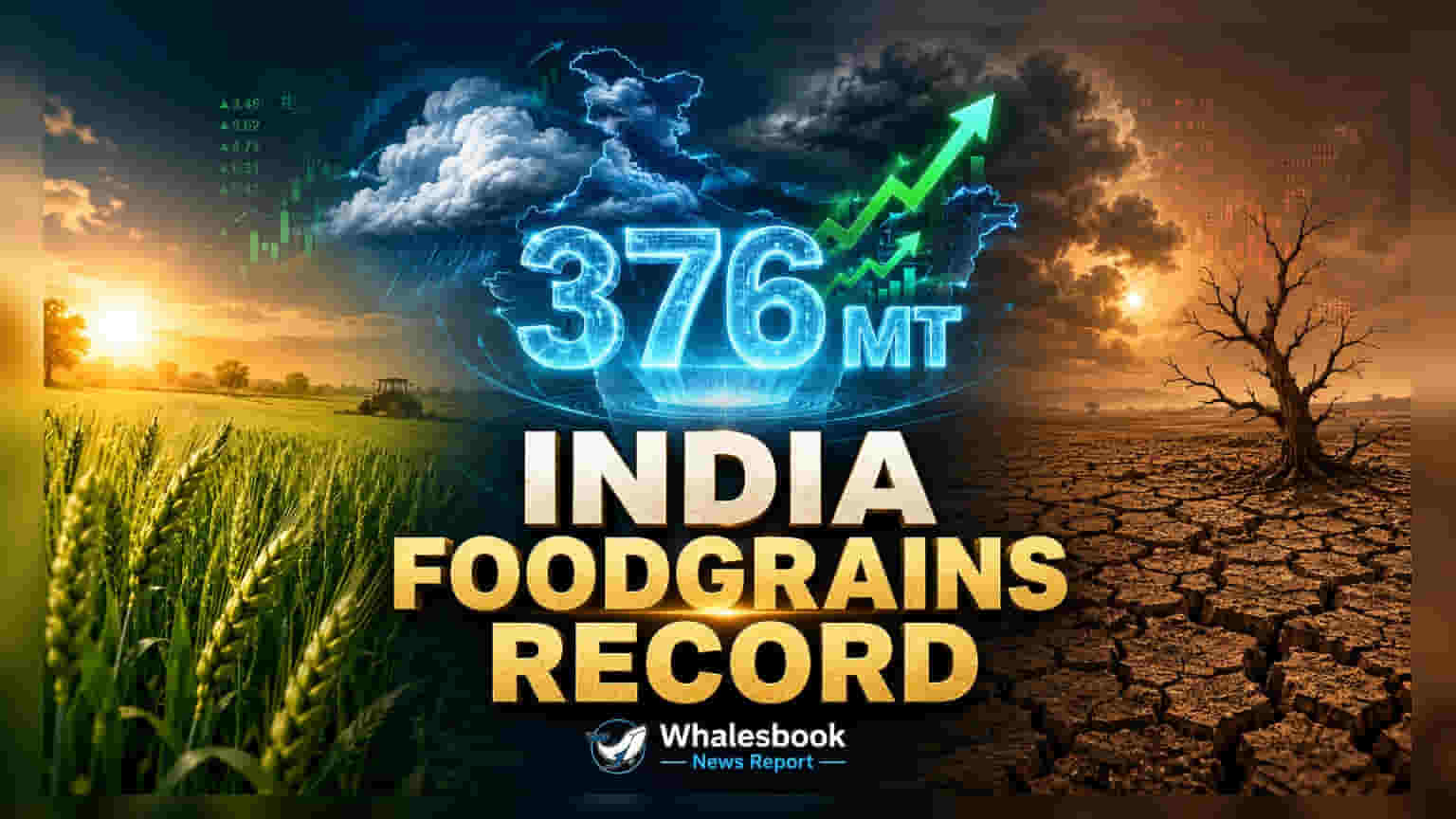


The Valuation Gap Between Estimates and Reality
While the Ministry of Agriculture and Farmers’ Welfare projects a historic 376.56 million tonnes (MT) for the 2025-26 crop year, market participants are increasingly looking past the headline numbers. This 5% gain over the previous year is built on the performance of rice, wheat, and maize. However, current market sentiment is dampened by the realization that these figures may not account for the intensifying climate volatility already impacting ground-level production. As the National Conference on Agriculture for the Kharif Campaign 2026 convenes in New Delhi, the policy discourse has shifted away from mere volume targets toward the urgent necessity of 'Khet Bachao' (save the farm) initiatives.
The El Niño Threat
Beyond the optimistic estimates, the structural risk posed by the Pacific Ocean’s warming is profound. Climate agencies place the probability of El Niño emerging between May and July at 82%, with a 96% chance of persistence through year-end. Historically, such events correlate strongly with deficient monsoons, which deliver 70% of India’s annual rainfall. During the 2015-16 super El Niño event, national rainfall dropped to 86% of the long-period average, triggering widespread drought. Today, that risk is exacerbated by shifting land-use patterns, as increasing proportions of maize and rice are diverted to fuel-based ethanol production, potentially tightening the supply available for human consumption if the monsoon falters.
The Forensic Bear Case
The narrative of 'bumper harvests' faces a critical test in the coming months. Unlike previous seasons, the 2026 outlook is pressured by the dual impact of record-breaking heatwaves and the impending arrival of a strong El Niño. While government stocks remain roughly three times the required level, providing a buffer against immediate shortages, the fiscal cost of maintaining these supplies in a high-inflation environment is rising. Furthermore, producers of agrochemicals and hybrid seeds—such as UPL, PI Industries, and Kaveri Seed—are navigating a landscape where farmer purchasing power is increasingly reliant on government subsidies and minimum support price (MSP) adjustments rather than organic demand growth. If the Kharif season produces the widespread output shortfalls suggested by some climate modeling, the gap between the Ministry’s current optimistic estimates and actual procurement will widen, creating volatility in commodity markets and pressuring margins across the agri-input supply chain.
The Future Outlook
The strategic pivot toward climate-resilient farming, natural farming, and digital agricultural integration suggests that the government is bracing for a sustained period of weather-induced stress. Investors should monitor the progress of the Kharif sowing cycle closely, as the effectiveness of government procurement and the implementation of soil health cards will be the primary determinants of agricultural sector health through the second half of 2026. Brokerage sentiment remains cautious, favoring high-quality compounders and companies with diversified portfolios that can insulate themselves from domestic monsoon-dependent revenue cycles.