

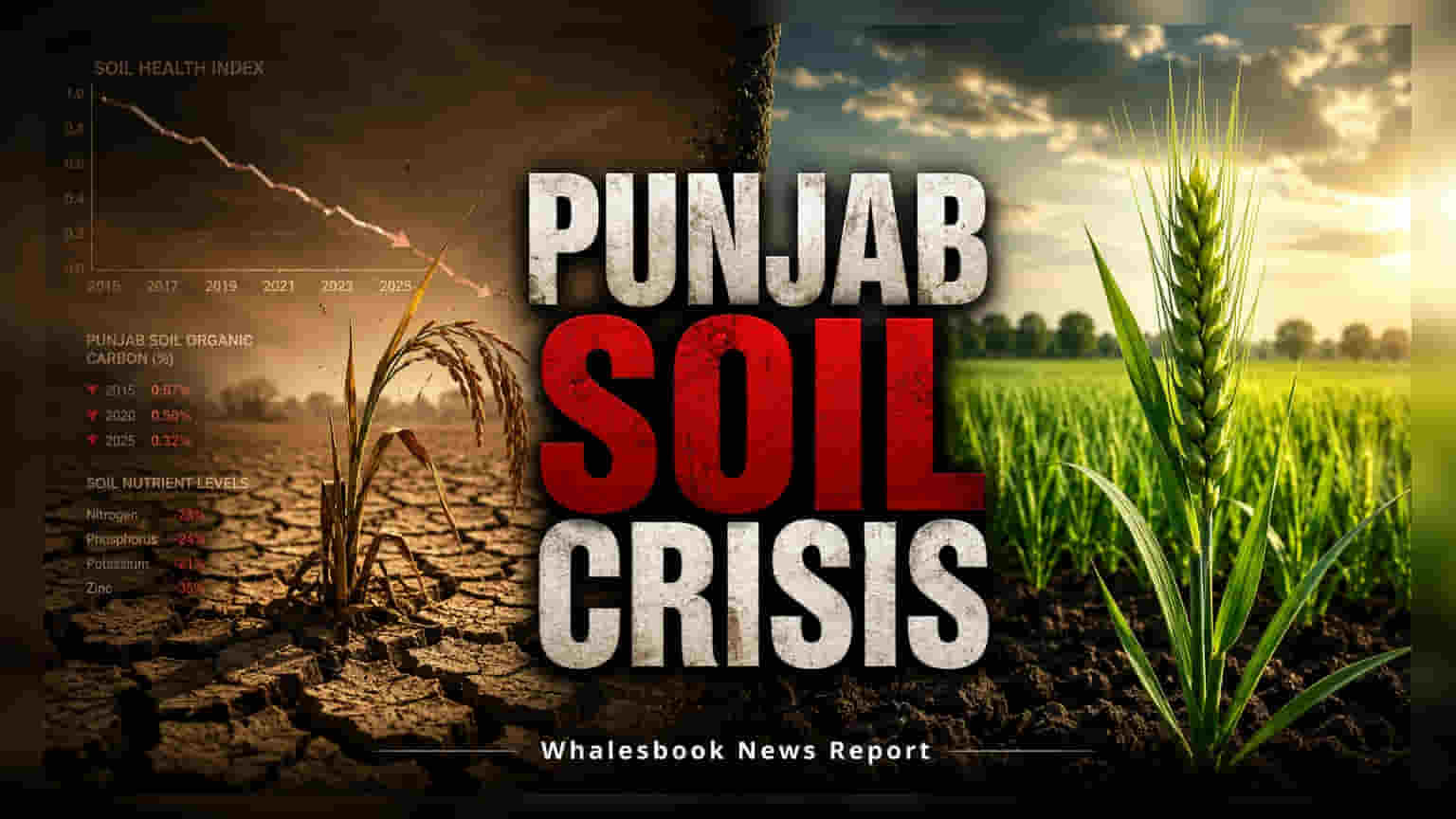
A Punjab Agricultural University study links continuous rice-wheat farming to soil degradation and water stress. As rice acreage in Punjab is projected to reach 32.68 lakh hectares by 2026, the shift away from diverse crops raises long-term productivity concerns. Government officials emphasize that shifting to crop rotation and organic practices is essential to reverse these impacts.
Continuous rice-wheat cultivation in Punjab is leading to significant soil health challenges, according to a recent study conducted by Punjab Agricultural University. The report, which was presented to the Lok Sabha, notes that decades of intensive farming practices have disrupted soil structure. Specific issues include reduced soil porosity, poor aggregation, and sub-surface compaction, which can eventually lower crop yields.
Union Minister of State for Agriculture and Farmers' Welfare, Bhagirath Choudhary, identified intensive tillage, repetitive puddling—a process used to prepare fields for paddy—and a lack of leguminous crops as the primary contributors to this decline. While the situation is serious, agricultural experts suggest that the damage is reversible. Recommended interventions include integrating organic manure, practicing balanced fertilizer application, and incorporating legumes into the crop cycle to restore soil nutrients and structure.
Impact on Cultivation Trends
The reliance on the rice-wheat system appears to be intensifying rather than diversifying. Data shows that the land area dedicated to rice cultivation in Punjab has been on an upward trend, growing from 29.69 lakh hectares in the 2021-22 period to a projected 32.68 lakh hectares by 2025-26. While wheat acreage has stayed mostly steady, this expansion in rice farming has come at the expense of other field crops such as maize, pulses, and oilseeds, which are critical for maintaining soil health and diversifying farm income.
Water Stress and Policy Implications
Beyond soil health, the concentration of water-intensive crops in regions with limited rainfall remains a major concern for the agricultural sector. Rice, along with sugarcane, jute, and cotton, are classified as water-intensive crops. National assessments indicate that a significant portion of rice cultivation currently occurs in districts that receive less than 650 mm of annual rainfall.
For investors and stakeholders in the agribusiness sector, these findings highlight a growing policy focus on crop diversification. As water scarcity becomes a recurring theme in agricultural policy, the ability of companies involved in seed technology, fertilizers, and farm equipment to adapt to changing crop patterns will be a key monitorable. The government's push for diversification away from water-guzzling crops may influence future input demand, potentially shifting requirements for specific fertilizers or farm services as farmers transition toward maize, oilseeds, or horticulture.