

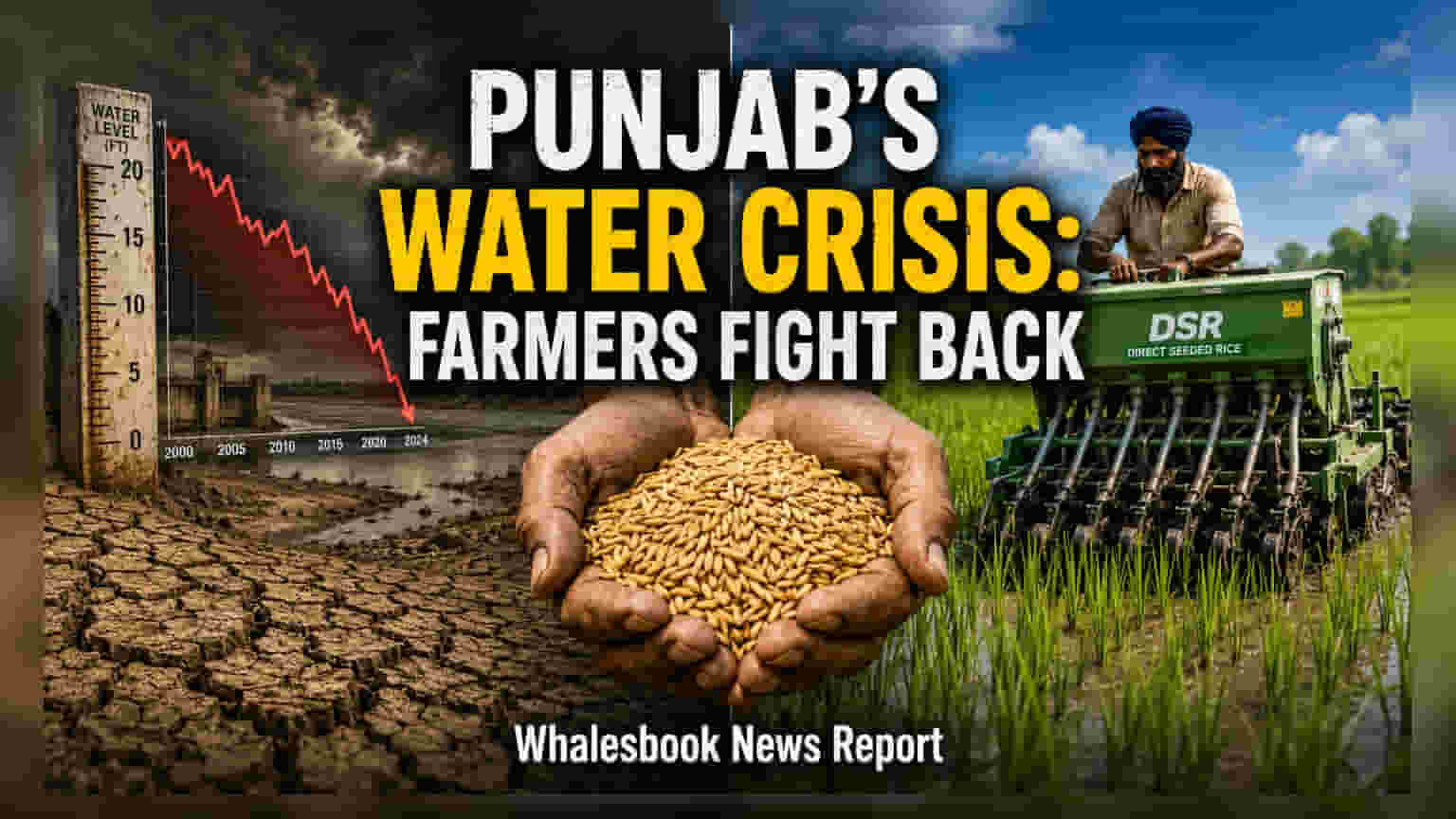
Punjab farmers are moving toward sustainable rice farming to tackle rapid groundwater depletion. New methods like Direct Seeding of Rice have covered 4 lakh acres this Kharif season, offering significant water savings. This shift aims to balance the state’s massive contribution to national food security with the urgent need for environmental conservation.
Detailed Coverage
Punjab, a cornerstone of India’s food security, is seeing a shift in how rice is cultivated. The state contributes about 31% of the rice supply for the national food security scheme, but this reliance on water-intensive paddy farming has come at a high cost. Groundwater levels in the region have fallen sharply, dropping from 40 feet in the year 2000 to approximately 400 feet today. Experts and government reports indicate that if these water usage patterns continue without change, the state’s underground water reserves could face severe scarcity by 2039.
New Methods for Water Conservation
To address this, farmers are adopting techniques such as Direct Seeding of Rice (DSR), Alternate Wetting and Drying (AWD), and Seeding of Rice on Beds (SRB). Unlike traditional puddled rice farming, which requires fields to be kept flooded, these methods are designed to minimize water use. Specifically, the AWD technique has been shown to reduce water needs by roughly 30%, while SRB techniques can achieve savings of up to 60%. These practices are particularly important because rice is not traditionally suited to the arid climate of the Punjab region.
Adoption and Future Impact
The government's recent data shows a 36% year-on-year increase in the land area under direct seeding methods, reaching 4 lakh acres during the current Kharif season. This figure represents a measurable step toward more efficient water management. Beyond water savings, these techniques also help in reducing methane emissions, which are often associated with flooded, traditional rice fields.
For investors and stakeholders, this shift is significant because it highlights a change in the agricultural production model of a key food-producing state. While traditional methods have been the backbone of Punjab's economy, the transition to resource-efficient farming is now a necessity for long-term sustainability. The key monitorable for the coming seasons will be whether these sustainable methods can maintain or improve current crop yields while successfully lowering the cost of water extraction. If these practices become the standard, they may help stabilize the long-term outlook for the agricultural sector in the region, reducing the risks posed by environmental and water-related stress.