

Egg and chicken prices have moderated from mid-July highs due to seasonal demand drops during Shravan. Despite lower retail prices, poultry farmers are under financial stress, facing a 40-60% rise in feed costs. To manage these thin margins, industry players have resorted to supply-side measures, including production cuts, as they navigate volatile commodity markets.
Poultry prices in India have seen a noticeable decline from their mid-July highs, providing temporary relief to consumers. This seasonal softening in rates is primarily linked to reduced demand during the Shravan period, a time when many consumers traditionally avoid non-vegetarian food. However, this downward trend in market prices masks a deeper, ongoing struggle for poultry farmers, who are facing severe profit margin pressure due to rising input costs.
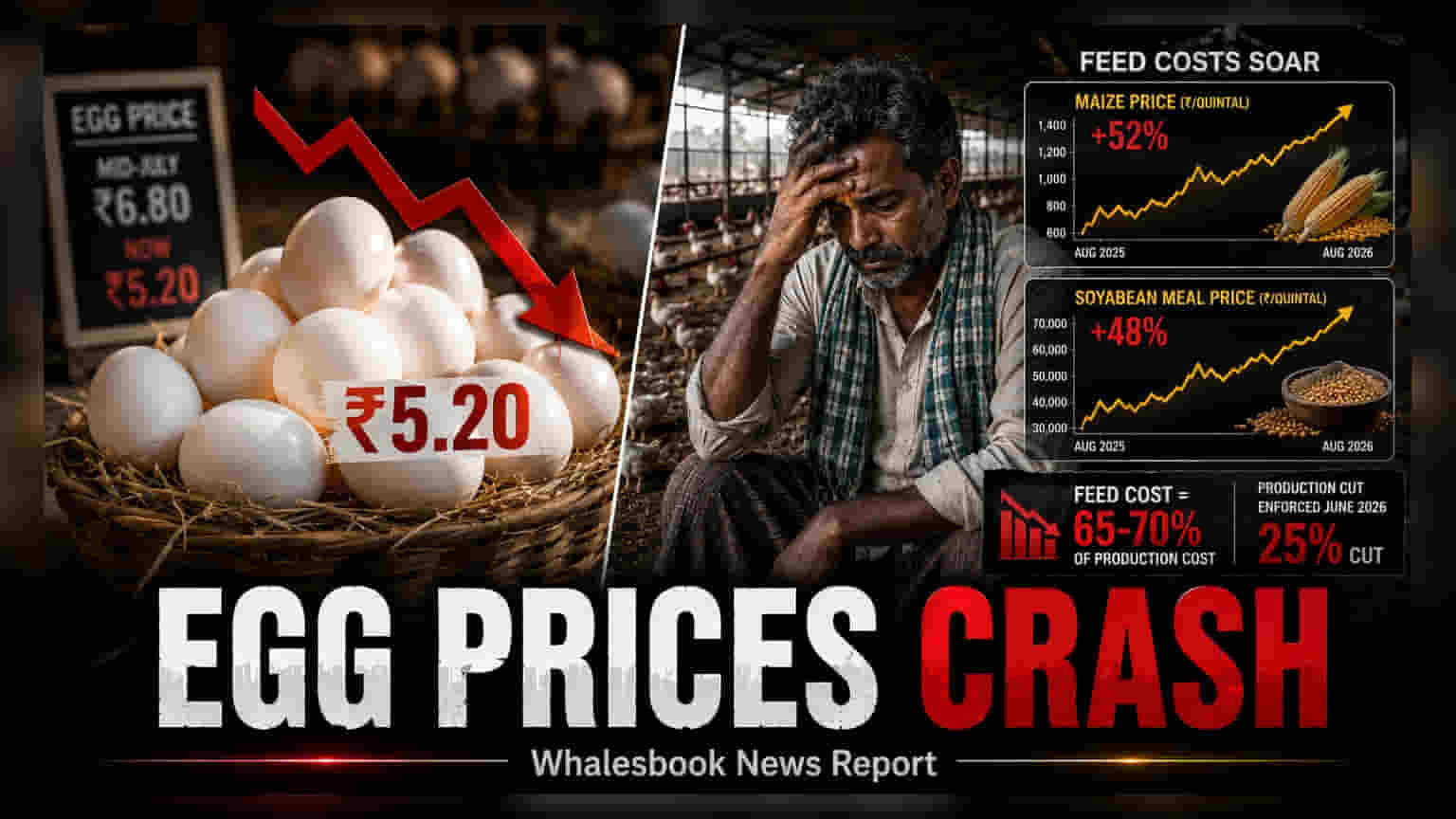
In major poultry hubs like Namakkal, egg prices have retreated from the ₹6.80 level seen in mid-July to approximately ₹4.85-₹5.80 in recent weeks. While lower prices are good for the retail market, they do not align with the current cost of production. Industry stakeholders note that farmers are often selling products below the cost price, leading to financial losses for small and medium-scale operators.
The primary driver of this stress is the sharp increase in poultry feed expenses. Feed, which consists mainly of maize and soybean meal, accounts for nearly 65-70% of the total cost to produce an egg or raise a broiler chicken. Over the past year, prices for these feed ingredients have jumped by 40-60%. This steep inflation in raw material costs has made it difficult for farmers to maintain profitability, even when market prices for eggs and chicken were historically higher earlier in the year.
To counter these losses and manage supply, major industry players and cooperatives took corrective action in June 2026, enforcing a 25% production cut. This move was intended to reduce oversupply and prevent further price erosion in a market already reeling from high operational expenses. Despite these production adjustments, the sector remains highly sensitive to demand fluctuations. The upcoming weeks, including the austere month of Purattasi in the Tamil calendar, are expected to keep demand patterns relatively subdued in specific regions.
Looking ahead, the stability of the poultry sector will largely depend on the availability and pricing of essential feed ingredients like maize and soybean meal. Without a correction in feed prices or a significant recovery in consumer demand post-festival season, farmers are likely to continue facing thin margins. For investors and industry watchers, the key monitorable remains how effectively the sector can balance production levels against volatile raw material costs and seasonal consumption shifts.