

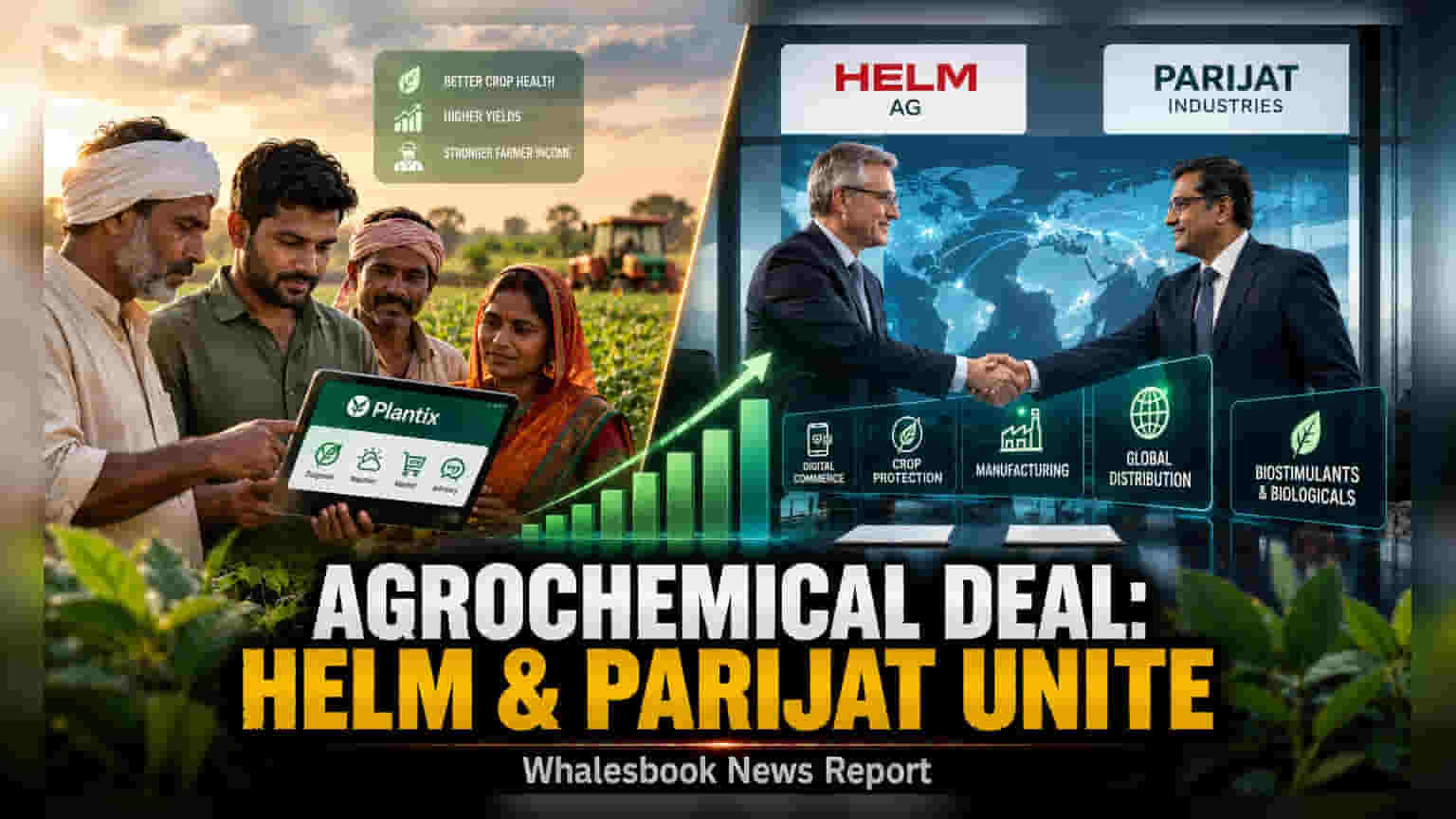
German chemical major HELM AG and India’s Parijat Industries have launched a strategic collaboration covering digital agri-commerce, manufacturing, and distribution. This move integrates HELM’s technology platforms with Parijat’s manufacturing network, supporting the Indian firm’s growth trajectory ahead of its planned public market entry.
German chemical firm HELM AG and Indian agrochemical player Parijat Industries (India) Ltd. have announced a strategic partnership aimed at strengthening their presence across the agrochemical value chain. The collaboration focuses on integrating digital commerce tools, branded crop protection, manufacturing, and international distribution networks.
The partnership relies on combining HELM's technology assets, specifically the Plantix digital agriculture platform, with Parijat’s existing manufacturing and distribution infrastructure. As part of this alliance, Parijat Industries is set to acquire a digital commerce platform focused on retailers, which includes an associated database to improve procurement and market access. Furthermore, the collaboration will see the integration of demand-generation tools and features to facilitate direct engagement with farmers.
Parijat Industries, through its subsidiary Leeds Lifesciences, has secured the rights to use the HELM brand name for a new product line within the Indian market. The firm also plans to introduce HELM’s range of biostimulants and biological products in India. Internationally, the agreement establishes Parijat as a key manufacturing partner for HELM’s active ingredients and formulations, leveraging Parijat’s experience in formulation development.
This partnership arrives at a time when Parijat Industries is preparing for its public market entry, having already received SEBI approval for an Initial Public Offering (IPO). For observers of the company, this alliance acts as a strategic development to expand its capabilities and product portfolio before a potential market listing. The integration of digital tools with traditional manufacturing is a strategy many firms are adopting to improve reach and customer interaction, though successful execution remains the primary factor for long-term growth.
The agrochemical sector, while essential, carries specific industry risks that investors should consider. The business is often seasonal, heavily dependent on monsoon patterns and climatic conditions, which can lead to volatility in demand and earnings. Additionally, the industry faces margin pressure due to fluctuations in raw material prices and global competition from low-cost imports. Regulatory environments in both domestic and international markets are strict, and compliance with these standards is essential for sustained operations. The ability of the company to effectively integrate these new digital platforms and scale its manufacturing partnerships will be the key monitorable for the business in the coming quarters.