

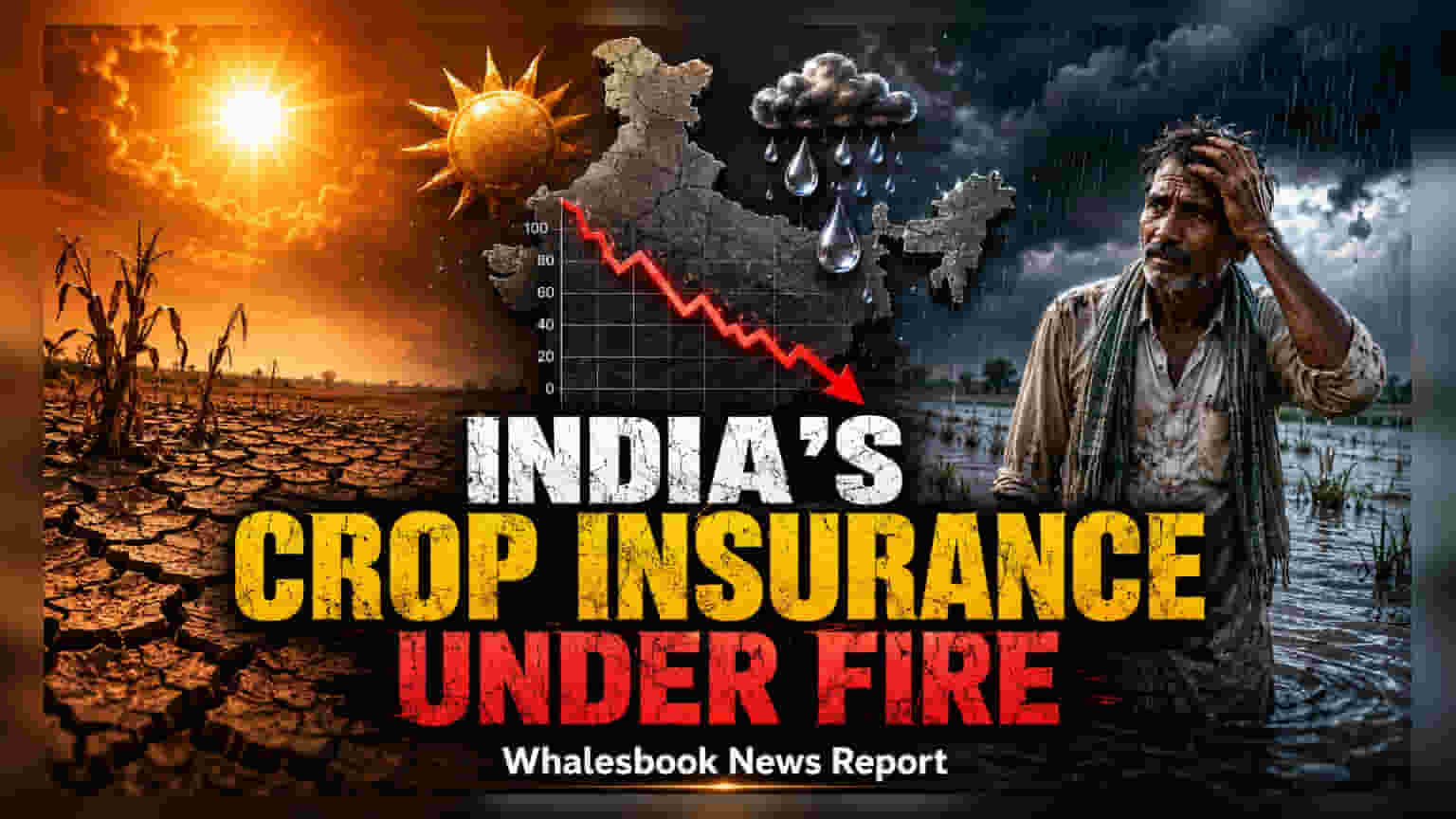
India’s flagship crop insurance scheme, PMFBY, faces uncertainty due to erratic monsoon rainfall and El Niño concerns. With planned structural reforms delayed until the next fiscal year, farmer enrollment and state participation remain key areas for investors to monitor in the agricultural insurance sector.
India’s agriculture-linked insurance sector is entering a period of significant uncertainty as the Pradhan Mantri Fasal Bima Yojana (PMFBY) deals with the dual pressure of adverse weather conditions and delayed policy improvements. The scheme, which serves as the government's primary safety net for farmers against crop loss due to drought, floods, and erratic weather, is currently navigating a volatile monsoon season.
Weather Volatility and Production Risk
The current monsoon season has been marked by notable deviations, raising concerns for agricultural production. Data from the India Meteorological Department indicates that June was among the driest months in over a century, with rainfall significantly below the long-period average. Forecasts for July also suggest subdued rainfall levels, which directly impacts rain-fed farming regions. For insurers like the Agriculture Insurance Company of India (AIC) and other private players participating in the sector, these climate risks increase the probability of claims. Industry watchers note that when weather patterns are highly erratic, it becomes difficult to accurately price risks, potentially putting pressure on underwriting margins for participating insurance firms.
Structural Challenges in Enrollment
A core challenge for the PMFBY remains its voluntary participation model for state governments. Because states have the flexibility to opt out of the scheme, enrollment is often concentrated in higher-risk agricultural zones. This leads to what insurance experts describe as adverse selection, where the pool of insured farmers carries a disproportionately high risk profile. As noted by the leadership at AIC, this concentration makes it difficult to optimize premium rates, which in turn impacts the financial sustainability of the program. When states choose to opt out, farmers in those regions lose access to subsidized coverage, further complicating the goal of broad-based agricultural risk protection.
Impact of Delayed Reforms
The government's plan to roll out major structural reforms for the PMFBY has been deferred to the next fiscal year. Originally, the framework was expected to move toward a more standardized three-year tender cycle this year. Instead, many states have opted to extend existing contracts or stick to one-year tenders. These reforms were intended to address issues like indemnity levels, where currently states can choose between 70%, 80%, or 90% coverage. By delaying these changes, the government has postponed potential improvements that could have boosted farmer confidence and streamlined participation.
Technology as a Long-Term Monitorable
While policy reforms are stalled, the industry is increasingly focusing on technology integration to improve operational efficiency. The use of digital land records and standardized crop-cutting experiment databases is intended to reduce administrative bottlenecks and fraud. For investors, the pace of this digital adoption is a key monitorable. Effective use of technology could lower the cost of claims processing and improve the transparency of insured acreage, which would be a positive factor for the long-term viability of agricultural insurance in India. The next important update will be the progress of state tenders and any further government commentary on the revised reform timeline for the next fiscal year.