

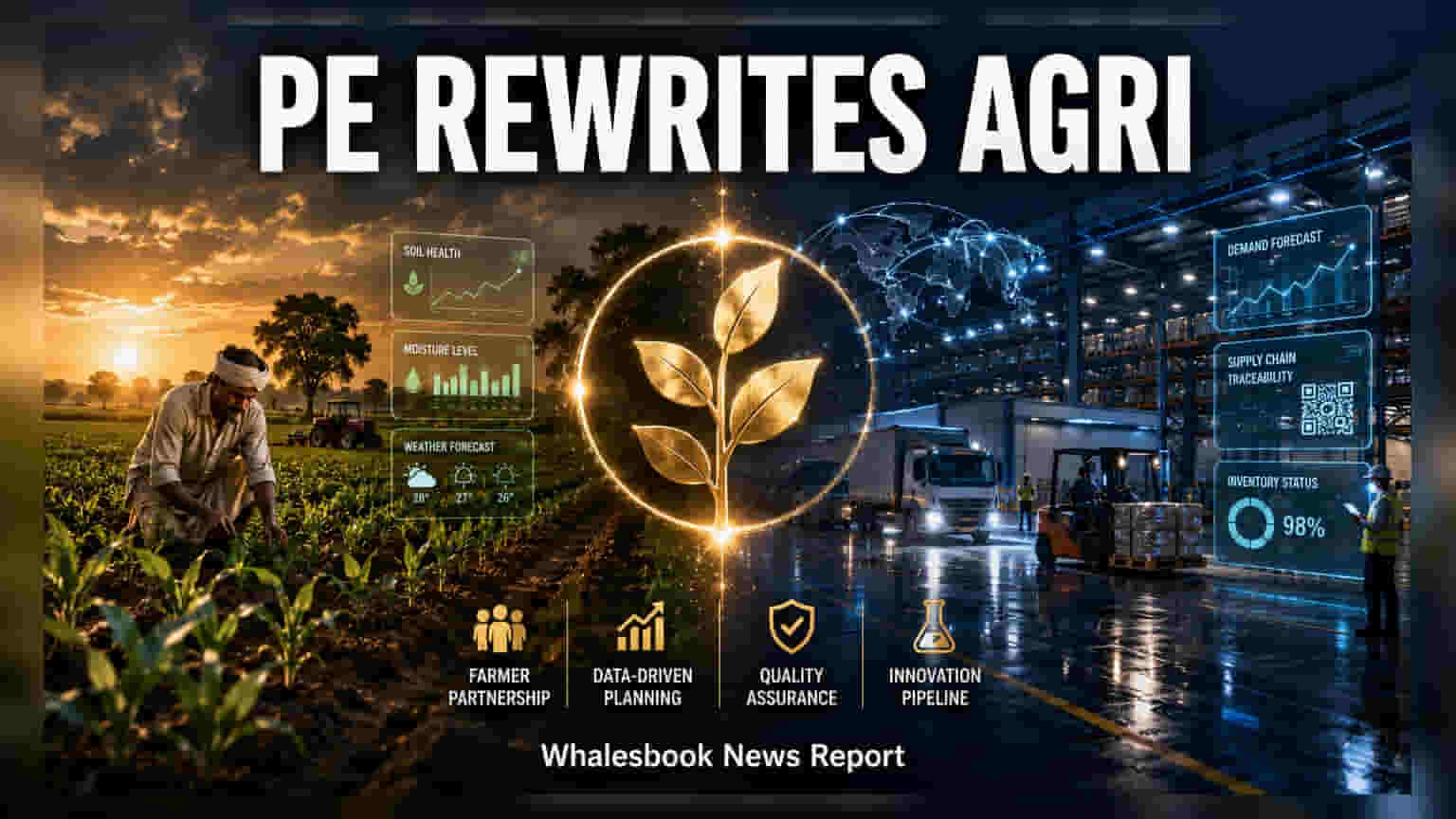
Private equity is transforming Indian agricultural firms from informal, family-run entities into data-driven, scalable businesses. While this shift enhances operational consistency and margin transparency, investors should monitor the potential trade-off between short-term commercial scaling and long-term investment in foundational research.
The landscape of Indian agriculture is undergoing a quiet but significant structural change. Institutional capital, specifically private equity, is increasingly entering the space, bringing a focus on operational discipline that contrasts sharply with the traditional, founder-led model. For investors looking at this sector, understanding this transition is essential, as it changes how these companies generate value and manage risk.
Historically, many Indian agricultural enterprises have relied on the deep product knowledge and personal relationships of their founders. While effective for initial growth, this model often hits a ceiling when companies attempt to scale across diverse geographies. Private equity firms are addressing this by replacing informal, intuition-based decisions with standardized operating systems. This transition is not merely administrative; it is fundamental to how these businesses function.
From an investor’s perspective, the primary change is in supply chain management and quality control. Professionalized firms are moving toward rigorous demand forecasting, where quarterly reviews of variance replace the reliance on seasonal luck. By implementing batch-level traceability, these companies can identify product quality issues early, protecting their reputation and the yields of the farmers who rely on their inputs. For those analyzing these businesses, seeing a shift from 'relationship management' to 'data-driven planning' in annual reports or investor presentations can be a signal of a more mature, scalable operating model.
However, this focus on efficiency carries a specific risk. Private equity underwriting models often struggle to value early-stage discovery science—the long-term, high-uncertainty research required for foundational agricultural breakthroughs. Because PE funds typically prioritize predictable, commercial returns, there is a risk that companies might cut back on deep innovation to improve short-term metrics. An investor needs to watch whether a company is maintaining its R&D spending to ensure future competitiveness or if it is merely optimizing existing products for quick commercial gains.
Ultimately, the sustainability of this model depends on how well these companies manage the handoff from discovery to scale. Investors should look for signs of a balanced approach. A company that combines rigorous commercial discipline with a clear, stage-gated pipeline for innovation—rather than just selling existing products—is more likely to provide long-term value. Key monitorables for shareholders include the consistency of profit margins, the transparency of supply chain data, and management's ability to maintain a pipeline of new products despite the pressure to deliver immediate commercial results.