

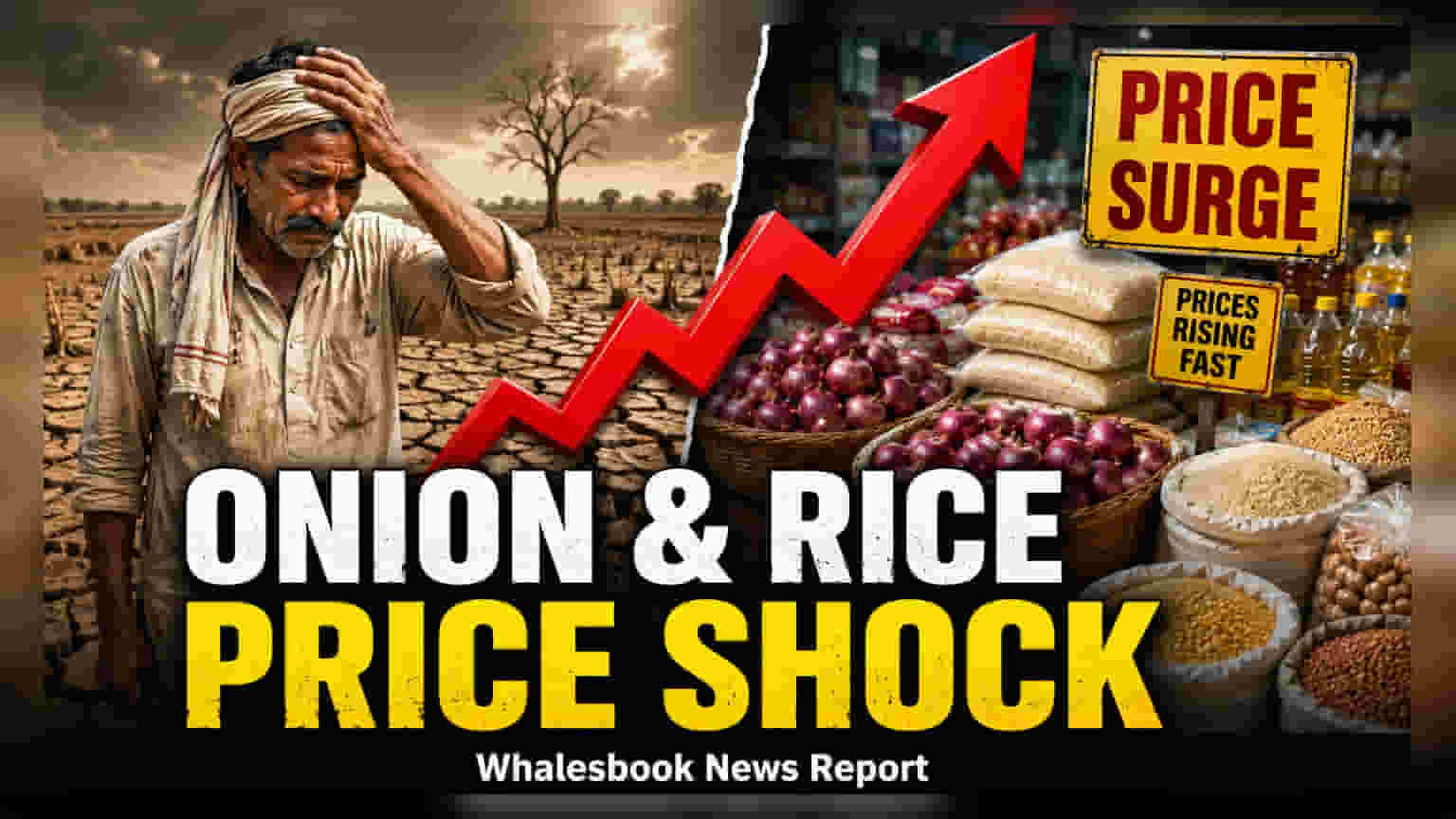
Indian food inflation faces pressure as unseasonal rains in Maharashtra threaten onion supplies, while drought-hit paddy fields drive up rice retail prices. Households may see higher kitchen costs as storage gaps and water shortages impact the availability of these essential staples.
Detailed Coverage
Indian households are facing a potential increase in monthly food budgets as extreme weather patterns disrupt the supply chains of two essential staples, onions and rice. In Maharashtra, which is responsible for about half of India’s onion production, the combination of unseasonal rains in May and insufficient storage capacity is expected to limit supply over the coming two months. This shortage often leads to higher retail prices when market availability drops.
Storage Gaps and Onion Output Volatility
According to Pasha Patel, Chairman of the State Agricultural Costs and Prices Commission, Maharashtra’s onion sector is struggling with a decline in production compared to previous estimates. While there were earlier hopes for higher production in the 2024-25 season, the actual yields are now under pressure due to weather damage. A long-standing challenge for the state is the lack of modern processing and storage infrastructure. Without adequate facilities to preserve crops, many farmers are forced to sell their produce quickly after harvest, often at lower prices, which subsequently leads to inventory shortages and price spikes later in the cycle.
Rice Market Faces Supply Pressure
Parallel to the onion shortage, the rice market is grappling with the impact of insufficient rainfall and water scarcity in key agricultural regions. In Tamil Nadu, the delay in opening the Mettur dam has significantly hampered the Kuruvai paddy cultivation season. This water shortage has led to a rise in retail prices for several rice varieties. For instance, popular types such as Mysore Ponni and Country Ponni have seen significant increases in the retail market, with prices for some varieties now reaching up to ₹68 per kg. Even essential staples like Idli rice have seen price hikes as the market adjusts to tighter supply conditions.
Investor and Market Impact
For investors, these trends highlight the persistent risk of food inflation impacting the broader consumer sector. Rising costs for kitchen staples often reduce the discretionary spending power of households, which can affect the margins of packaged food companies and fast-moving consumer goods (FMCG) businesses. Companies that rely on agricultural raw materials may face pressure to pass on these higher costs to consumers. The primary factors to monitor in the coming months will be the progress of the monsoon, the recovery of reservoir levels, and any government policy interventions, such as export restrictions or storage support schemes, which are frequently used to manage domestic food price volatility.