 Whalesbook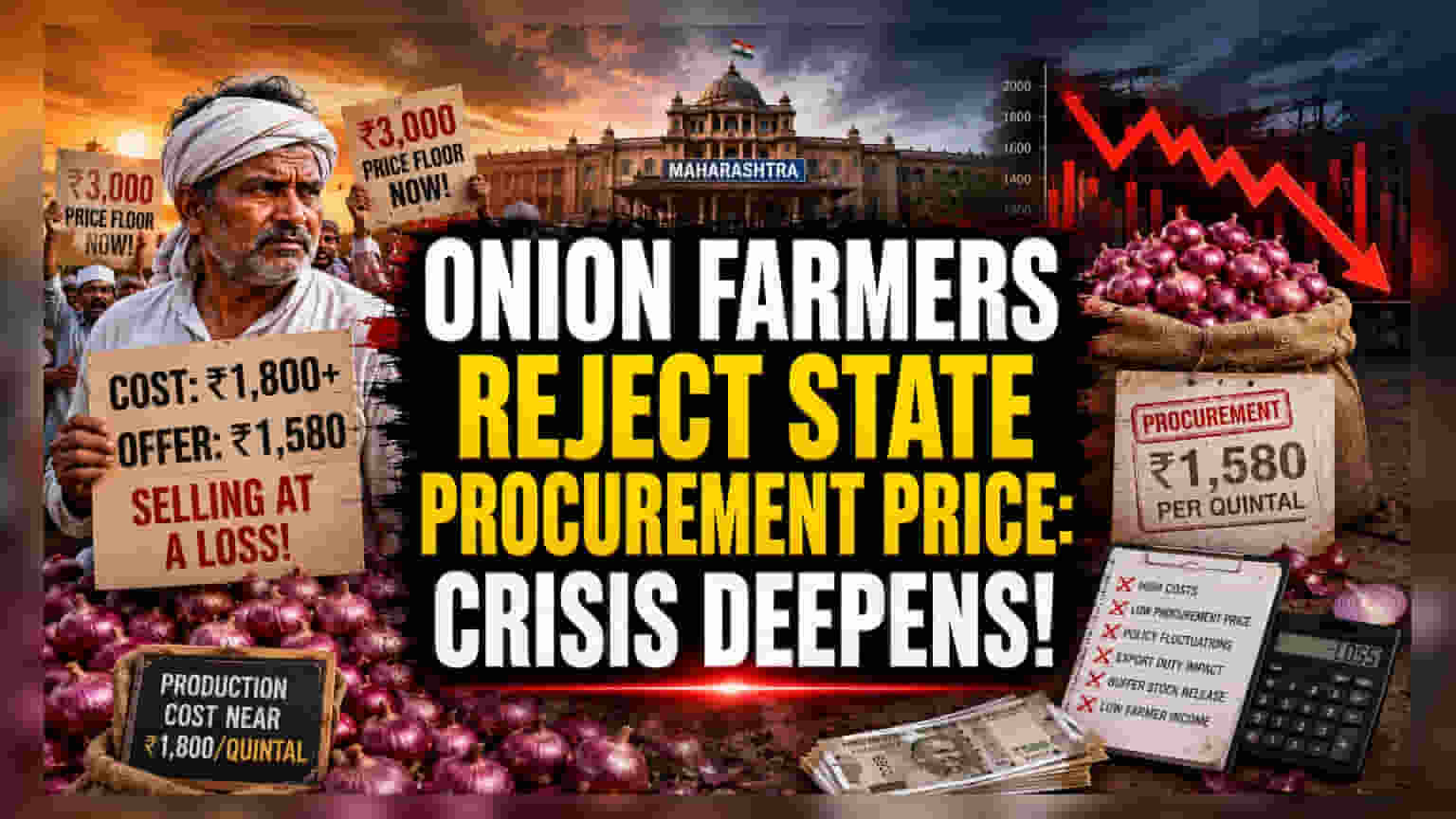


The Procurement Disconnect
The gap between government intervention and on-the-ground economic reality has widened, as Maharashtra’s onion producers reject the state-backed procurement price of ₹1,580 per quintal. Although the central government recently moved to expand acceptable bulb diameters from 45-65 mm to a broader 35-70 mm range and eased standards regarding skin defects and sun damage, farmer leaders argue that these adjustments address logistics rather than the fundamental insolvency of their operations. With production costs hovering near ₹1,800 per quintal, current procurement offers effectively force growers to sell at a loss, deepening a multi-year cycle of financial instability.
Analytical Deep Dive: Sectoral Pressure
The current crisis in Maharashtra follows a pattern of erratic policy interventions that have long plagued the sector. Farmers have faced recurring losses due to oscillating export duties, minimum export price (MEP) fluctuations, and the release of buffer stocks that frequently suppress domestic market rates. While the complete removal of MEP and export duties in April 2026 was intended to stabilize the global competitiveness of Indian onions, the transition has been marred by sluggish local procurement execution. Data shows that NAFED and NCCF struggled to meet previous volume targets, leading to high rejection rates at collection centers. The new directive to initiate direct procurement from Agricultural Produce Market Committees (APMCs) is a tacit acknowledgment that previous centralized efforts failed to reach the majority of growers, yet the pricing remains the primary barrier to adoption.
The Forensic Bear Case
Structural weaknesses in the procurement mechanism continue to leave farmers vulnerable. The dependence on NAFED and NCCF as sole price-stabilizers creates a monopsony risk where farmers have little leverage to negotiate. Furthermore, the reliance on buffer stock models often prioritizes urban consumer price stability at the direct expense of rural income. Critics point out that the administrative hurdles, including licensing issues for cooperative societies and the lack of transparency in daily procurement lists, have historically favored intermediaries. Without a shift toward a guaranteed minimum support price that accounts for actual cultivation and inflationary costs, the sector remains trapped in a cycle of protest, with recent demands for a ₹10,000 crore revival package highlighting the severity of the liquidity crunch facing these 25 lakh affected households.
Future Outlook
The immediate focus shifts to the implementation of the revised procurement norms starting June 8, 2026. While the Maharashtra government has waived APMC fees to encourage participation, the success of this intervention hinges on whether agencies can bridge the gap between their current offer and the market’s demand for a ₹3,000 price floor. Brokerage and industry analysts remain cautious, noting that unless policy shifts from reactive, spot-price interventions to long-term stable export-led pricing, the risk of supply chain disruption during future harvests will persist.