 Whalesbook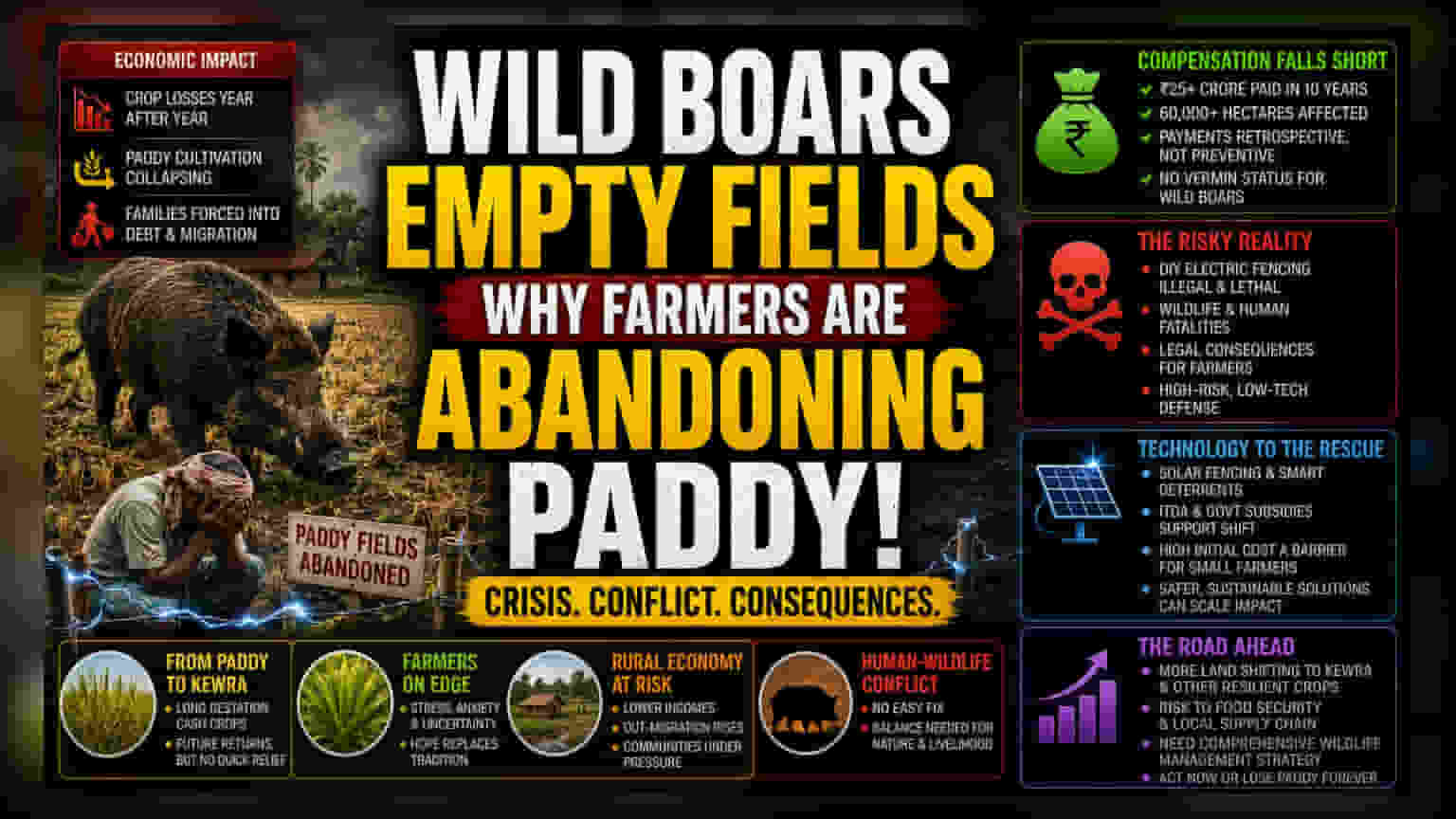


The Economic Impact of Wildlife Conflict
The systematic abandonment of paddy cultivation in Ganjam represents a breakdown in traditional agrarian economics. When the cost of planting and labor consistently exceeds the yield value due to consistent crop raiding, farmers are forced to declare a de facto crop holiday. This is not merely a localized nuisance but a structural crisis that has decimated localized food security, pushing households toward either long-gestation cash crops like kewra or out-migration to urban labor markets. The transition to kewra, which requires years to reach maturity, highlights the desperate search for crops that are less palatable to or more resilient against wildlife predation.
The Failure of Conventional Mitigation
The reliance on state-provided compensation mechanisms has proven insufficient to stem the tide of agricultural withdrawal. While government data suggests over Rs 25 crore in payouts over a decade, the disbursement reach—covering over 60,000 hectares—demonstrates the sheer scale of the conflict. However, these payments are often retrospective, failing to provide the immediate cash flow needed to sustain a farming family after a total harvest loss. The refusal of authorities to grant vermin status to wild boar populations has effectively left farmers without legal recourse to manage the population density, creating a regulatory vacuum that the private sector is now attempting to fill with defensive technology.
Risk Factors and The Infrastructure Gap
The proliferation of DIY electrical fencing represents a significant liability for both the agricultural sector and regional biodiversity. By tapping into public power grids for illegal crop protection, farmers are inadvertently participating in a lethal lottery that claims both wildlife and human lives. This practice carries severe legal repercussions and serves as a indicator of the extreme pressure felt by local growers. Unlike large-scale industrial farming operations that utilize standardized, government-approved solar fencing to minimize liability, small-hold farmers are trapped in a cycle of high-risk, low-tech defense that frequently results in prosecution or accidental fatalities.
Technological Adaptation and Future Outlook
The move toward solar-powered deterrents and sophisticated fencing systems marks a pivot toward capital-intensive farming. While initiatives from bodies like the Integrated Tribal Development Agency are subsidizing these transitions, the barrier to entry remains high for the average rural household. The future of the region's agricultural viability hinges on whether these technological interventions can scale fast enough to protect current harvests, or if the continued loss of traditional staples like paddy will permanently alter the regional supply chain. Analysts anticipate that without a more robust, centralized approach to wildlife management, the trend of land conversion toward less labor-intensive or resilient species will continue to accelerate, further diminishing the importance of paddy in the local economic portfolio.