

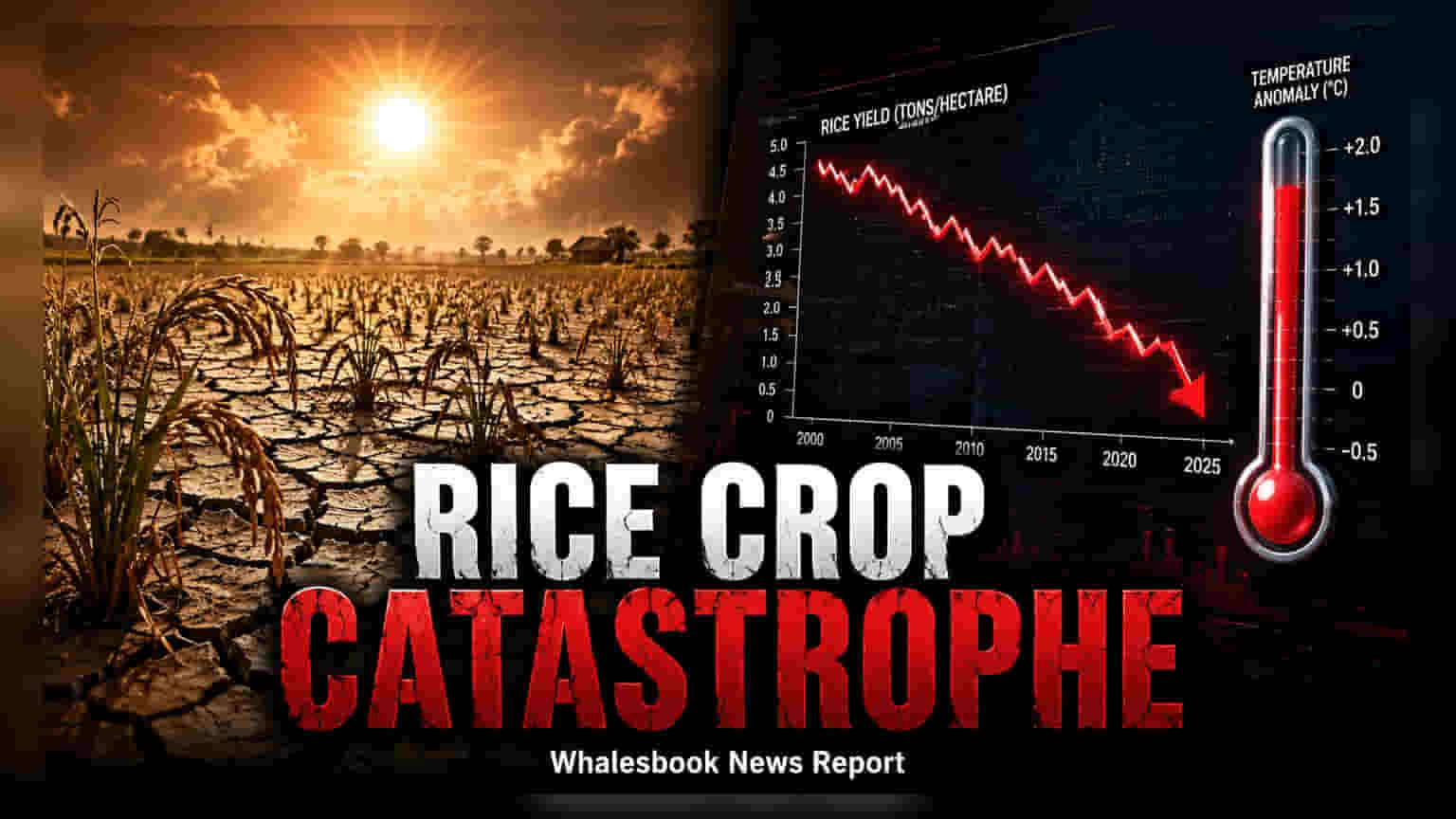
Recent research from the Helmholtz Centre for Environmental Research suggests rice yields in India could fall by 6.6% for every 1°C increase in temperature. This new estimate is triple previous projections, highlighting potential long-term risks for India's food security and agricultural productivity as climate conditions change.
A new research study led by the Helmholtz Centre for Environmental Research has identified a heightened risk for India’s rice production due to rising global temperatures. The findings indicate that rice yields could decrease by 6.6% for each degree Celsius of warming, a figure that is more than three times higher than previous estimates. This significant downward revision challenges earlier agricultural models, which failed to fully account for the impact of extreme heat during the crop's critical reproductive stages.
Heat Exposure Above 30°C Identified as Key Risk
The study compared field data from 214 locations against existing crop models to understand why yields vary. It discovered that exposure to temperatures exceeding 30°C is the primary factor driving production losses. In over 70% of the sites analyzed, high-temperature stress during the reproductive phase accounted for more than half of the observed yield declines. This suggests that the timing of heat waves is as critical as the overall temperature increase, particularly for India, which relies heavily on rice as a staple food and export commodity.
Comparative Risks in South and Southeast Asia
South and Southeast Asian countries face the most severe projected impacts from these temperature shifts. For India, Pakistan, and Bangladesh, the estimated sensitivity of rice yields to a 1°C temperature rise has been adjusted upward from 2.1% to 6.6%. Comparable nations like Thailand, the Philippines, and Myanmar are facing even steeper projected declines, with sensitivities potentially increasing from 3.7% to 7.7%. These findings highlight a regional vulnerability that may influence future agricultural output and food price stability.
Implications for Future Food Security
Existing agricultural models have historically struggled to simulate the specific heat-related damage that occurs during the reproductive growth phases of rice. Because these models often overlooked this vulnerability, many past assessments likely underestimated the long-term impact of climate change on food supply. This new data provides a more precise look at how sensitive the sector has become. For investors and policymakers, the primary monitorable will be the development of heat-resistant crop varieties and adaptive farming techniques designed to mitigate these losses. As India continues to manage its food security amidst climate volatility, the ability of the agricultural sector to invest in and adopt climate-resilient technologies will be a key factor in maintaining production levels and controlling inflationary pressures on food staples.