 Whalesbook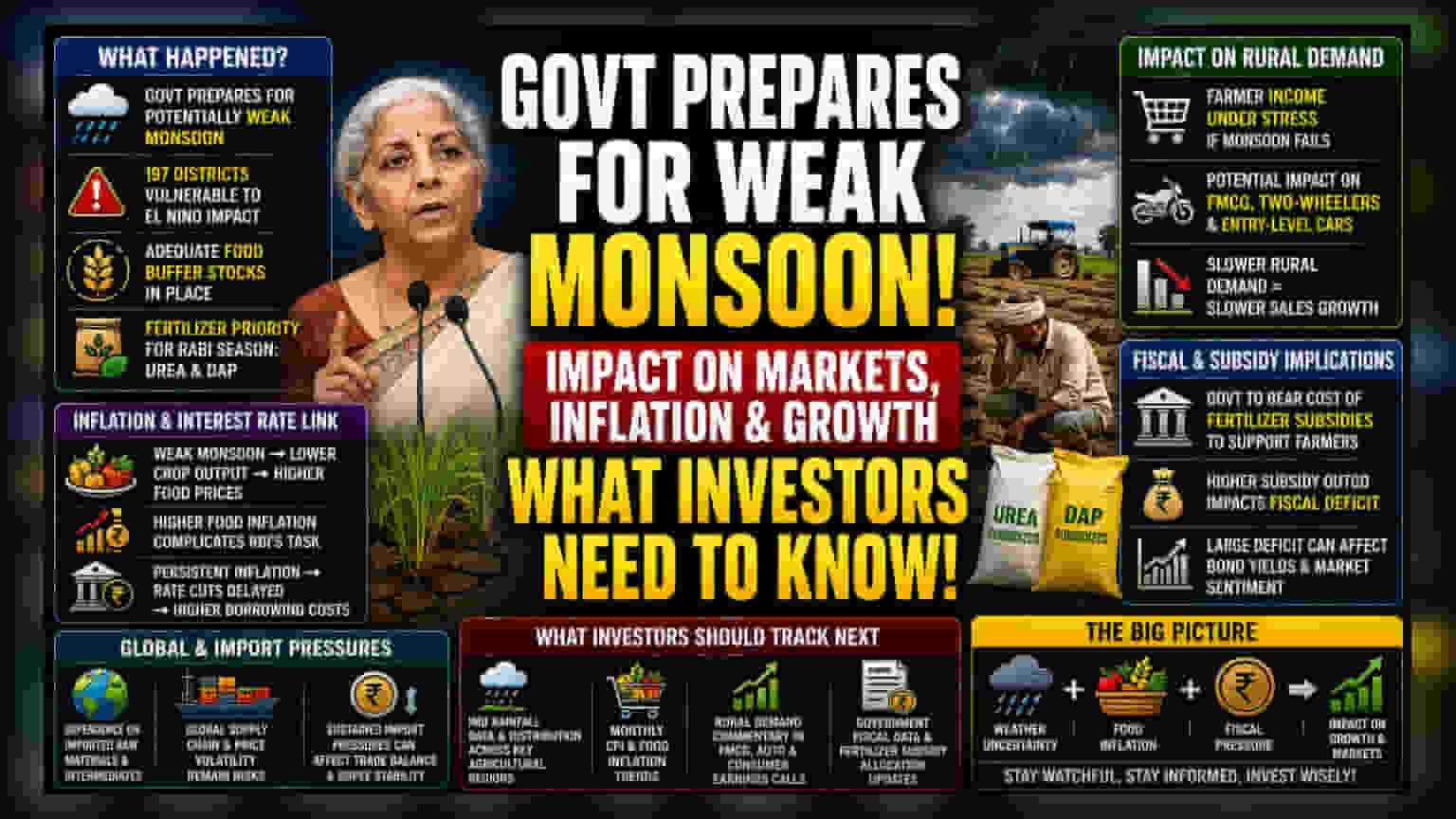


Finance Minister Nirmala Sitharaman has signaled that the government is preparing for a potentially weak monsoon. While food security is assured, the situation poses risks to farmer incomes, rural demand, and inflation. Investors should track how this impacts food price trends, corporate earnings in rural-focused sectors, and government spending on subsidies.
What Happened
Finance Minister Nirmala Sitharaman recently announced that the government is proactively preparing for a potentially weak monsoon season. Speaking at the Mindmine Summit, the minister noted that while the government has adequate food buffer stocks to ensure national food security, there are concerns regarding the upcoming agricultural cycle. The Agriculture Ministry has identified 197 districts as highly vulnerable to the impact of El Nino, a weather pattern often associated with deficient rainfall in India. Agriculture Minister Shivraj Singh Chouhan has emphasized that the government is prioritizing fertilizer availability, specifically for the Rabi season, to support farmers despite the anticipated weather-related challenges.
Impact on Rural Demand
For investors, a weak monsoon often serves as a primary indicator for potential changes in rural demand. Many sectors, including Fast-Moving Consumer Goods (FMCG), two-wheelers, and entry-level automobiles, rely heavily on agricultural income. When monsoons are erratic or weak, farmer income faces stress, which can lead to reduced discretionary spending in rural markets. If the monsoon does not provide sufficient rainfall across key agricultural states, companies operating in these sectors may report slower sales growth in the coming quarters. Investors typically look for commentary in corporate earnings calls regarding "rural growth" or "demand sentiment" to gauge if the weather is impacting the bottom line.
The Inflation and Interest Rate Link
Food inflation is a significant component of India's Consumer Price Index (CPI). A poor monsoon often leads to lower crop production, which can cause supply shortages and push food prices higher. If food prices rise sharply, headline inflation may increase, complicating the Reserve Bank of India's (RBI) task of managing price stability. Historically, persistent inflation can prevent central banks from easing interest rates. High interest rates generally increase borrowing costs for businesses and can affect valuation multiples in the equity market. Therefore, the trajectory of food prices following the monsoon will be a key factor for market participants.
Fiscal and Subsidy Implications
The government's commitment to supporting the agriculture sector, particularly through fertilizer subsidies, can impact the fiscal deficit. The Agriculture Minister confirmed that the government is prepared to bear the financial burden to ensure fertilizers like Urea and DAP are available at subsidized rates. While this protects farmers, it increases government expenditure. Investors often monitor the fiscal deficit because large deviations from targets can influence bond yields and overall market sentiment.
Global and Import Pressures
Beyond domestic weather patterns, the Finance Minister also highlighted ongoing challenges regarding import pressures. As India continues to balance rising domestic consumption with a dependence on imported intermediate products, the economy remains sensitive to global supply chain disruptions and price volatility. This external dependency means that even if domestic supply is managed through buffer stocks, the broader economic cost of imports remains a factor to watch.
What Investors Should Track Next
Investors may want to monitor several data points over the coming months to assess the economic impact. Key monitorables include the actual rainfall distribution across major agricultural regions as reported by the India Meteorological Department (IMD), monthly retail inflation (CPI) data to track food price trends, and management commentary from FMCG and automotive companies regarding rural demand trends. Additionally, any updates on government fiscal data and announcements regarding fertilizer subsidy allocations will provide clarity on the impact on the national exchequer.