 Whalesbook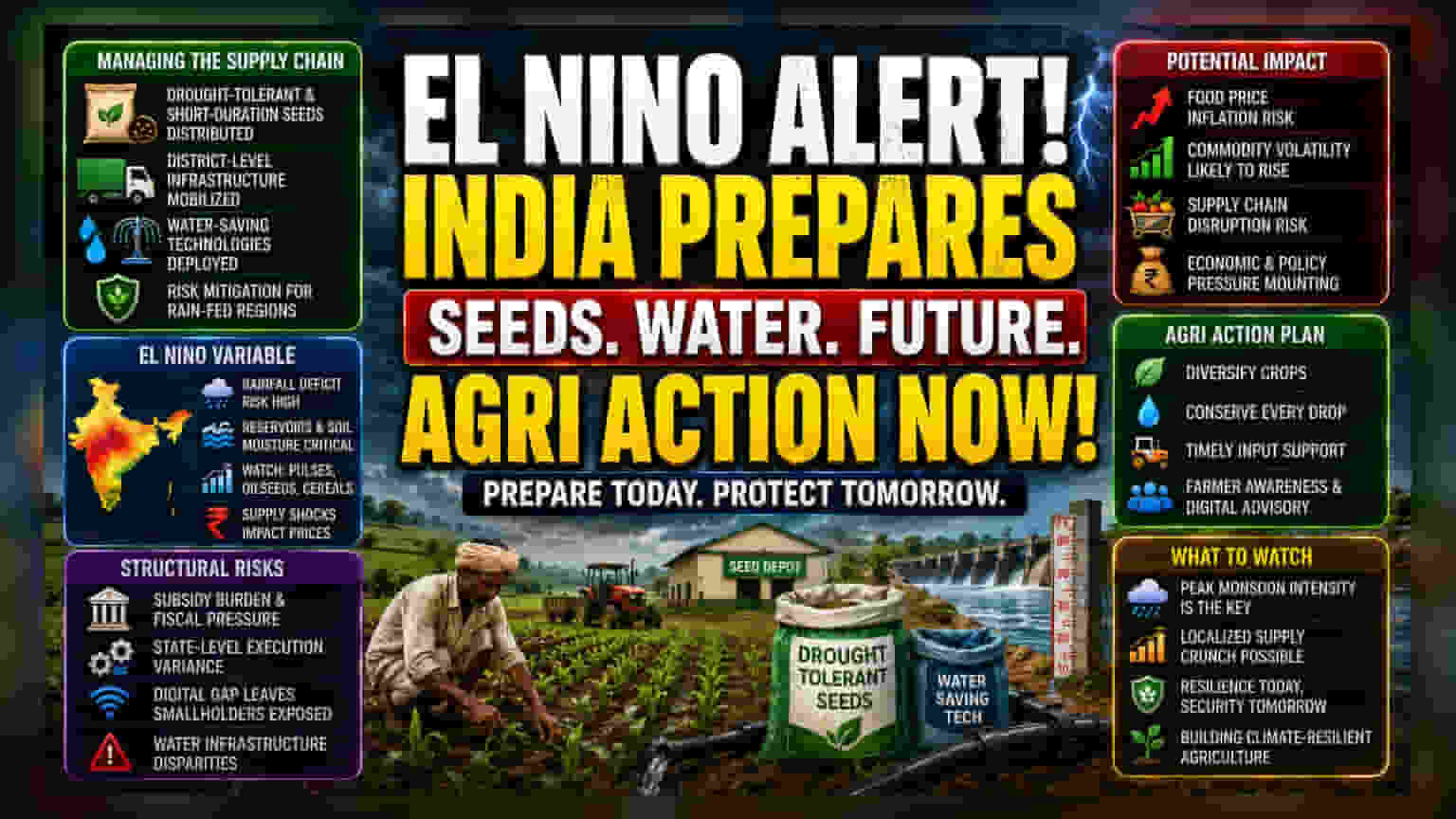


Managing the Supply Chain Squeeze
The proactive mobilization of district-level agricultural infrastructure represents a strategic shift from reactive crisis management to pre-emptive risk mitigation. By mandating the immediate distribution of drought-tolerant and short-duration seed varieties, the administration aims to buffer the rural economy against rainfall deficits that historically destabilize crop yields and inflationary expectations for food staples. This administrative urgency reflects heightened sensitivity to the correlation between monsoon volatility and wholesale food price indices, which have remained a persistent concern for policymakers monitoring systemic economic stability.
The El Nino Variable and Market Impact
The anticipation of El Nino conditions necessitates a re-evaluation of agricultural throughput in regions heavily reliant on rain-fed irrigation. While national seed reserves are currently reported as sufficient, the operational challenge lies in the rapid, localized deployment of water-saving technologies and adaptive cropping patterns. Market observers are closely tracking reservoir levels and soil moisture indices, as these metrics serve as leading indicators for potential supply-side shocks in pulses, oilseeds, and cereals. Historical data suggests that even moderate rainfall deficiencies can trigger aggressive speculative pressure on agricultural commodities if market participants perceive a breakdown in the logistical chain of subsistence farming.
Structural Risks and Institutional Exposure
The fiscal burden of subsidizing emergency irrigation and re-sowing inputs poses a secondary risk to public expenditure targets. While the government provides a safety net for farmers, the reliance on state-level execution introduces significant variance in efficacy. The decentralized nature of these contingency plans creates a patchwork of implementation quality, where regions with weaker water infrastructure may face disproportionate yield degradation. Furthermore, the reliance on digital advisory systems assumes a level of technological penetration that remains uneven across rural markets, potentially leaving smallholders in remote areas vulnerable to climate-driven losses despite national-level directives.
Forward-Looking Sensitivity
Agricultural output in the coming months will be defined by the intensity of rainfall during the peak monsoon months rather than early-season forecasts alone. Financial analysts and commodity traders are adjusting their outlooks to account for the potential of localized supply crunches if moisture conservation efforts fail to offset meteorological irregularities. The government's emphasis on diversifying cropping patterns and climate-resilient farming is a long-term hedge against recurring atmospheric uncertainty, yet the immediate outlook remains tethered to the actualized rainfall distribution throughout the remainder of the growing season.