 Whalesbook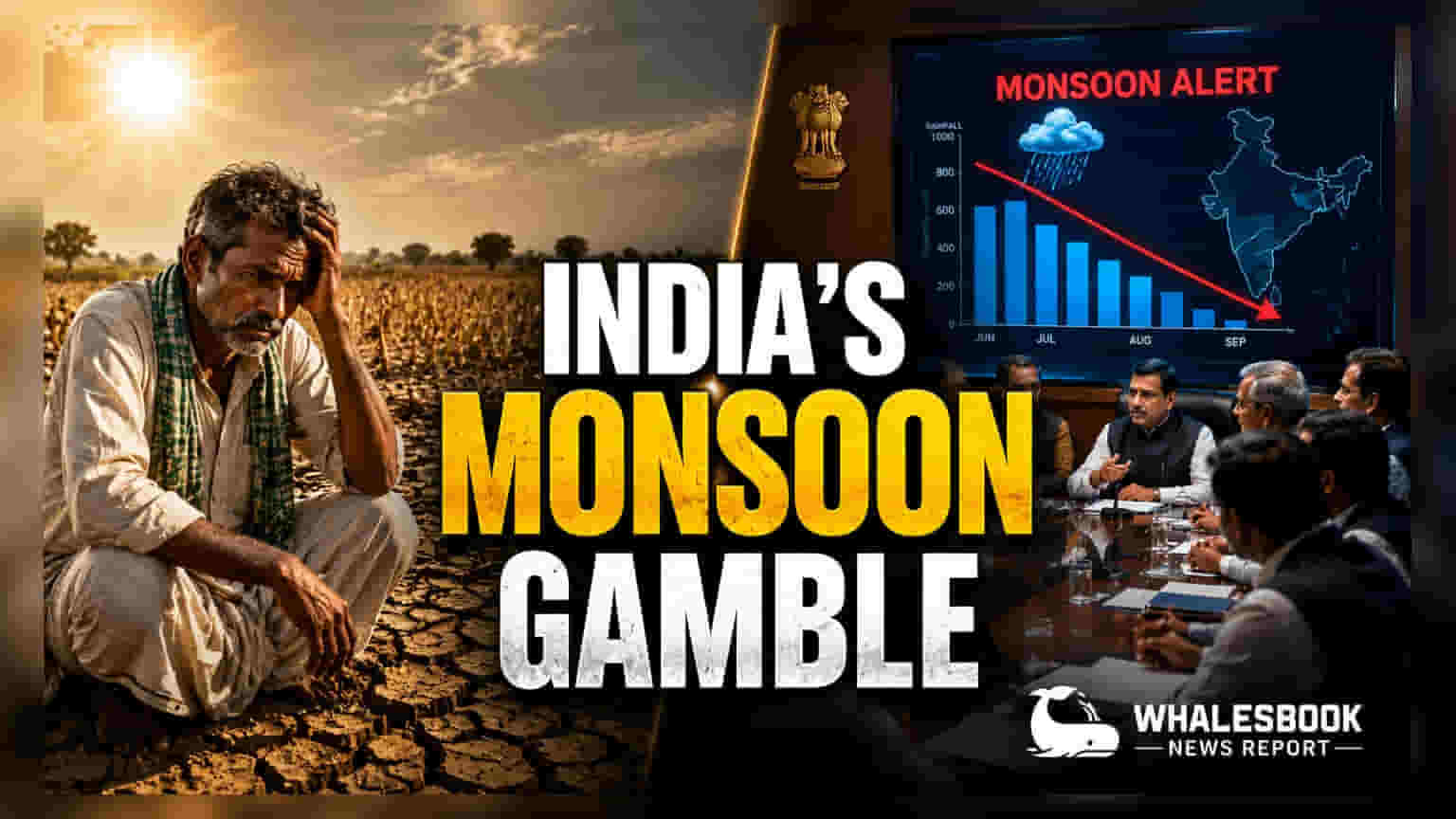


The Valuation Gap
The Indian market’s recent reaction to the revised monsoon outlook reflects deep-seated concerns regarding rural consumption and agricultural output. By lowering the seasonal rainfall forecast to 90% of the long-period average, the India Meteorological Department has inadvertently signaled a shift in the outlook for agricultural input providers. While government officials have moved to reassure the public by citing robust fertilizer inventories—notably 51% of kharif requirements already in position—investors have largely looked past these buffers to focus on the compounding risks of El Niño and geopolitical headwinds.
The Analytical Deep Dive
Unlike previous seasons where irrigation improvements provided a stable floor, the 2026 forecast carries an additional layer of volatility. Historically, El Niño events in the Pacific have shown a strong correlation with rainfall deficits in India, particularly in the critical months of August and September. Analysts at major brokerages note that a 1% decline in monsoon rainfall can reduce agricultural growth by approximately 0.4%. Furthermore, while domestic fertilizer production capacities remain functional, they are currently operating under pressure due to gas allocation caps and international logistics hurdles. This creates a challenging environment for companies such as Fertilisers and Chemicals Travancore, Rashtriya Chemicals and Fertilizers, and Chambal Fertilisers, which face both volume risks from reduced farmer spending and cost pressures from global commodity price swings.
The Forensic Bear Case
Investors must weigh the government’s protective measures against the structural weaknesses inherent in the sector. The reliance on imported fertilizers, particularly di-ammonium phosphate (DAP), remains a significant vulnerability; the recent disruption in the Strait of Hormuz has already exposed the fragility of these supply chains, causing import bid prices to spike. Additionally, the agricultural sector is sensitive to the "distribution" of rainfall rather than just the total aggregate volume. Even with record-high reservoir storage levels, a spatially uneven monsoon can decimate crop yields in rain-fed regions. Furthermore, the potential for food inflation to remain elevated complicates the monetary policy environment, potentially limiting the scope for interest rate cuts that would otherwise support rural demand. Market participants have also noted that rural-centric sectors, including tractor and two-wheeler manufacturers like Escorts Kubota and Hero MotoCorp, are already reflecting a cautious sentiment as they brace for potential contraction in rural income flows.
The Future Outlook
Looking ahead, the next few weeks of rainfall distribution will be the ultimate arbiter of performance for the kharif season. While the Reserve Bank of India has suggested that the emergence of positive Indian Ocean Dipole conditions in the latter part of the season could act as a partial buffer against El Niño, consensus remains conservative. Analysts suggest focusing on companies with strong balance sheets and diversified business models that provide insulation from the pure agricultural cycle, while closely monitoring subsidy disbursement patterns and actual sowing progress data throughout June.