

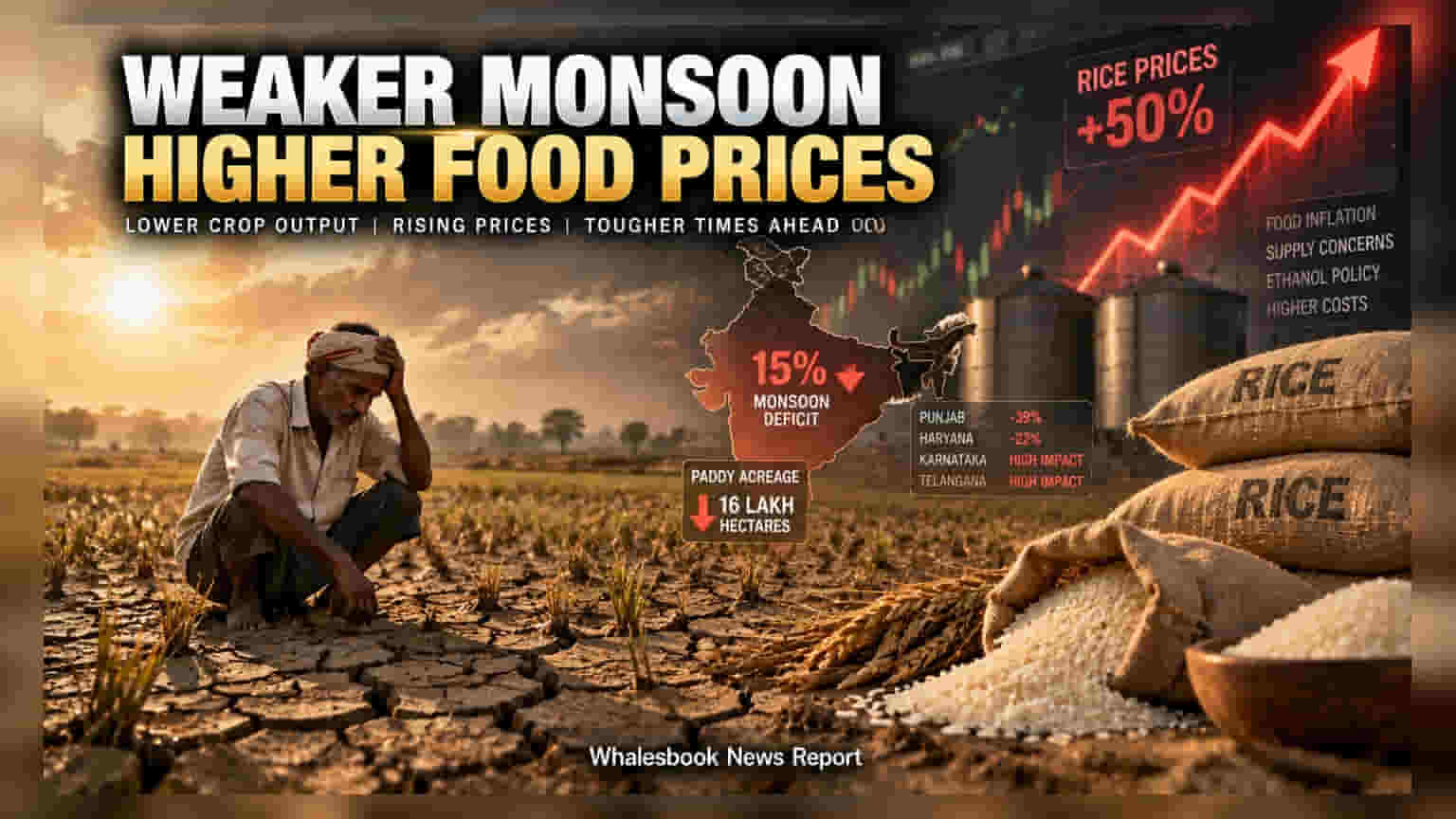
A 15% monsoon shortfall has reduced paddy planting by 16 lakh hectares, pushing up rice prices. While India holds 60 million tonnes in buffer stocks, the situation pressures food inflation and risks policy changes for ethanol blending, which investors should track for potential impact on agricultural and sugar sector supply chains.
India is facing a significant challenge as a 15 per cent monsoon deficit affects the kharif harvest, particularly for paddy. Data shows a reduction of 16 lakh hectares in paddy acreage, with states like Karnataka and Telangana seeing the biggest impact. Even regions like Punjab and Haryana, which typically have better irrigation, are reporting rain shortages of 39 per cent and 22 per cent respectively. This shortage threatens to lower total crop output, creating concern about the stability of future supply.
Retail food inflation is already near 6 per cent, and prices for fine rice have jumped by as much as 50 per cent in some southern markets. Investors should note a disconnect here: while retail prices are rising, farmers in many regions, such as Rajasthan, are seeing low farm-gate returns for pulses and oilseeds, often trading below the mandated Minimum Support Price. This means the current price surge is not necessarily increasing income for producers but is creating higher costs for households, which can dampen overall consumer spending power.
For the broader economy, this situation puts pressure on food inflation, which is a key factor monitored by the Reserve Bank of India. If food prices remain elevated, it limits the central bank's ability to adjust interest rates, which would otherwise support economic growth and credit demand.
There is also a direct policy risk for the sugar and ethanol sector. India currently maintains a 60 million tonne rice buffer stock, which provides a safety net. However, the government is under pressure to rethink its ethanol blending mandates. Currently, a large volume of rice from the Food Corporation of India is diverted for ethanol production. If the government decides to limit this diversion to prioritize food security and animal feed, companies involved in ethanol production may face a sudden disruption in their raw material supply.
Investors in the FMCG and sugar sectors should closely monitor future government decisions regarding these ethanol allocations. FMCG companies also face potential margin pressure if raw material costs, such as rice and other grains, continue to rise without a clear end in sight. The shift toward more resilient, water-efficient crops like millets is a long-term trend, but the immediate concern remains the impact of the monsoon on current crop volumes and prices. Tracking the upcoming production estimates and official government policy on grain storage and ethanol blending will be essential for assessing how these factors play out over the next few quarters.